

Table of Contents
- Why Hormonal Fluctuations Trigger Cold Sores
- Cold Sores and the Menstrual Cycle
- Menopause and Cold Sores
- Cold Sore Treatment Timeline: What to Expect
- How to Hide a Cold Sore Fast While It Heals
- Preventing Hormonal Cold Sore Outbreaks
- When to See a Doctor
- Frequently Asked Questions
Last Updated: September 3, 2026
Why Hormonal Fluctuations Trigger Cold Sores
Hormonal changes weaken your immune system's ability to suppress the herpes simplex virus that causes cold sores. When estrogen and progesterone levels shift, your immune system becomes temporarily less effective, allowing the dormant virus in your nerve cells to reactivate. Many people notice outbreaks during specific menstrual cycle phases, before menopause, or during pregnancy, when your immune system prioritizes managing hormonal rebalancing over viral suppression.
Stress compounds this effect. A person experiencing both hormonal changes and stress is far more likely to develop a cold sore than someone with only one trigger present. Understanding this connection lets you anticipate outbreaks based on your cycle, life stage, and stress levels rather than viewing them as random bad luck. LipCur addresses this by providing fast-acting relief that works within 24 hours, stopping outbreaks before they progress to the painful blister stage.
Cold Sores and the Menstrual Cycle
Cold sores cluster around specific cycle phases rather than appearing randomly. Most people experience outbreaks during the luteal phase, the second half of the cycle when progesterone rises and estrogen falls. This hormonal shift creates ideal conditions for viral reactivation, with prodrome symptoms often beginning 24-48 hours before menstruation.
Some people notice a secondary pattern during ovulation when estrogen spikes, though this is less common. Tracking your cycle alongside cold sore occurrences reveals your personal pattern within three months. Once identified, you can plan preventative strategies around your high-risk phase.
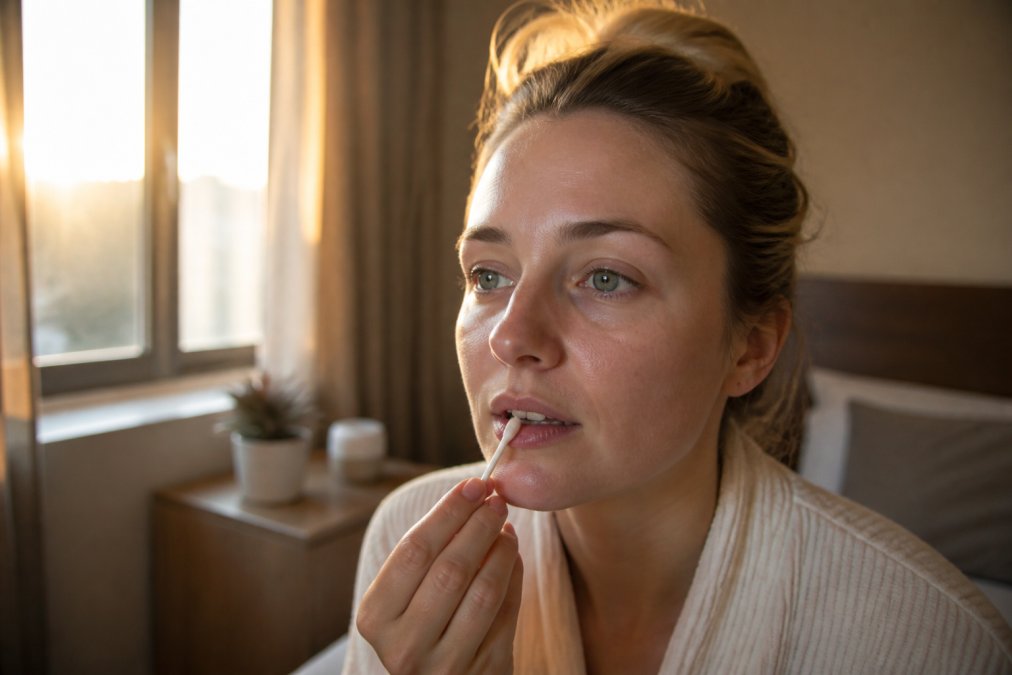
Treating cold sores during hormonal changes means catching them early. The moment you feel tingling, applying treatment immediately stops progression before a visible blister forms. LipCur's formula prevents the uncomfortable itching and tingling that precedes a visible sore, interrupting the outbreak before it becomes noticeable.
Keep a simple log for two to three cycles: mark the first day of your period and note when you experience prodrome symptoms or visible sores. This data transforms cold sore management from reactive to proactive.
Menopause and Cold Sores
Menopause introduces a different hormonal landscape. The transition into menopause spans several years, during which estrogen levels fluctuate wildly before settling at a permanently lower baseline. This extended period of hormonal instability creates recurring opportunities for viral reactivation.
Many people report increased cold sore frequency during perimenopause, the 5-10 year transition before menstruation stops (the NIH). The constant hormonal adjustments keep your immune system partially distracted. Other factors shift simultaneously, sleep quality declines, stress management becomes harder, and anxiety increases, each compounding immune suppression.
Treating cold sores during menopause requires consistency. Because you cannot predict exactly when outbreaks will occur during transition years, maintaining a fast-acting treatment on hand becomes essential. LipCur's 24-hour healing timeline means you can respond immediately when prodrome symptoms appear.
Post-menopausal cold sore frequency often stabilizes once your body adjusts to permanently lower estrogen levels. Some people find outbreaks decrease significantly after menopause, while others continue at pre-menopausal frequency, depending on whether hormonal fluctuation was your primary trigger.
Cold Sore Treatment Timeline: What to Expect
The healing process follows a predictable progression, and intervention timing determines whether you shorten or extend it.
Stage 1: Prodrome (Hours 0-24). You feel tingling, itching, or burning on your lip. This is your window of opportunity. Applying treatment immediately can stop progression entirely, preventing a visible sore.
Stage 2: Blister Formation (Hours 24-48). Small fluid-filled blisters appear. Treatment focuses on pain relief and preventing secondary infection rather than stopping the outbreak.
Stage 3: Ulceration (Days 3-5). The blister ruptures, leaving a painful ulcer. Pain management and topical protection become priorities.
Stage 4: Crusting (Days 5-8). A yellow or brown crust forms as your body rebuilds skin tissue. Avoid picking to prevent secondary infection and scarring.
Stage 5: Healing (Days 8-14). The crust gradually falls away, revealing new skin. Full healing typically completes within 10-14 days if untreated (peer-reviewed research).
Early intervention during prodrome can prevent stages 2-5 entirely. LipCur's formulation helps you heal within 24 hours by stopping outbreaks at their earliest stage.
| Stage | Timeline | Appearance | Priority Action |
|---|---|---|---|
| Prodrome | 0-24 hours | Tingling, no visible sore | Treat immediately to prevent progression |
| Blister | 24-48 hours | Fluid-filled blisters | Pain relief, prevent secondary infection |
| Ulceration | 3-5 days | Open sore, most painful | Pain management, topical protection |
| Crusting | 5-8 days | Yellow or brown crust | Protect crust, avoid picking |
| Healing | 8-14 days | Fading redness | Continue protection until complete |
How to Hide a Cold Sore Fast While It Heals
If a visible sore has formed, your goal shifts from prevention to rapid healing plus damage control. Protect the sore from secondary infection by keeping it clean and avoiding contact with unwashed hands. Don't share lip balm, toothbrushes, or eating utensils.
Apply topical treatment every 2-3 hours during the day and before bed. Consistency matters more than occasional heavy application. A fast-acting formula like LipCur that works within 24 hours provides lasting relief.
For visibility management, concealment products work best once the blister has crusted over (days 5-8). Before that stage, heavy makeup can trap moisture and slow healing. Once crusting begins, a waterproof concealer matched to your skin tone can effectively hide residual redness.
Avoid triggers that slow healing: spicy, salty, or acidic foods irritate the sore. Stay hydrated, get adequate sleep, and manage stress through exercise, meditation, or time with friends, since stress hormones suppress immune function.
Preventing Hormonal Cold Sore Outbreaks
Once you understand your personal hormonal trigger pattern, prevention becomes possible. Track your outbreaks against your cycle for at least three months. After three cycles, a pattern emerges.
During your high-risk phase, prioritize immune support: get 7-9 hours of sleep nightly, manage stress consistently, and engage in regular moderate activity. Intense training during vulnerable phases can backfire if it creates additional stress.
Lysine, an amino acid that suppresses herpes simplex virus replication, can be increased through foods like fish, chicken, eggs, and dairy, or through supplementation (peer-reviewed research). Some people take lysine supplements prophylactically during their high-risk phase, starting a week before expected outbreak timing.
Stress management is critical. Cortisol suppresses immune function, and people under chronic stress experience more frequent outbreaks. During your high-risk hormonal phase, stress reduction becomes even more important.
Keep a fast-acting treatment like LipCur on hand during your high-risk phase. The moment you feel prodrome symptoms, apply it immediately. Because LipCur works within 24 hours, early application can prevent a visible outbreak entirely.
Some people find that hormonal birth control stabilizes their cold sore patterns. The consistent hormone levels in certain contraceptives reduce dramatic fluctuations that trigger outbreaks. Discuss this with your healthcare provider if you're considering hormonal contraception.
When to See a Doctor
Most cold sores resolve within 10-14 days, but certain situations warrant professional evaluation. See a doctor if your sore shows signs of secondary bacterial infection: increasing pain after day 5, spreading redness, pus or thick yellow drainage, or swelling affecting eating or speaking.
If you experience cold sores more frequently than every 6-8 weeks, or if outbreaks are unusually severe, mention this to your healthcare provider. Frequent outbreaks can indicate compromised immune function from stress, sleep deprivation, nutritional deficiency, or underlying health conditions.
Pregnant people should consult their healthcare provider before using any cold sore treatment. Most treatments are safe during pregnancy, but your doctor can confirm which options are appropriate for your situation.
If you develop cold sores in your eye area, experience vision changes, or have sores that don't improve after 2-3 weeks, seek medical evaluation promptly.
Cold sores triggered by hormonal changes are manageable with the right approach. The key is recognizing your personal hormonal trigger pattern and intervening early, during the prodrome stage when tingling first appears. Fast-acting treatment makes all the difference. LipCur's specialized formula stops outbreaks in their tracks and helps you heal within 24 hours, preventing the visible blisters and extended healing timelines that come with delayed treatment. Shop LipCur now and experience the confidence of reliable, rapid relief when hormonal changes strike.

Frequently Asked Questions
Q: Can hormone changes actually trigger cold sores?
A: Yes. Hormonal fluctuations affect your immune system's ability to suppress herpes simplex virus. Estrogen and progesterone changes during your menstrual cycle, pregnancy, menopause, or hormonal birth control can weaken immune defenses, allowing dormant virus to reactivate. This is why many people experience outbreaks at predictable times in their cycle.
Q: What is the fastest way to treat a cold sore caused by hormonal changes?
A: Start treatment at the first sign of tingling or itching, the prodrome stage, before a visible blister forms. Antiviral creams and prescription antivirals work fastest when applied early. LipCur is formulated to work within 24 hours and stops the outbreak progression. Combine topical treatment with stress management and adequate sleep to support your immune system during hormonal shifts.
Q: Is it safe to treat cold sores during pregnancy?
A: Most topical treatments are safe during pregnancy, but always consult your doctor or dermatologist first. Prescription antivirals like acyclovir are generally considered safe in pregnancy, especially in the later stages. Avoid any treatment you haven't discussed with your healthcare provider. Hormonal changes during pregnancy can trigger frequent outbreaks, so having a safe, approved treatment plan is important.
Q: How long does it take for a cold sore to heal?
A: Without treatment, cold sores typically last 7-10 days, progressing through tingling, blistering, crusting, and healing stages. With fast-acting treatment like LipCur applied early, healing can accelerate significantly. Starting treatment during the prodrome stage (tinkling sensation) gives you the best chance of stopping the outbreak before a visible blister develops.
This article was written using GrandRanker