

Table of Contents
- What You'll Need Before You Start
- How to Get Rid of a Cold Sore Fast: Treatment First
- Cold Sore Healing Stages: What's Actually Happening
- How to Cover a Cold Sore with Makeup Safely
- Medicated Patches and Bandages: Hide Cold Sore While It Heals
- Hygiene, Ingredient Safety, and Avoiding Irritants
- The Psychological Impact of Cold Sores and How to Cope
- Post-Healing Care and Scar Prevention
Last Updated: August 6, 2026
What You'll Need Before You Start
Cold sores are caused by the herpes simplex virus (HSV-1), a highly contagious infection affecting a large portion of the U.S. adult population. At LipCur, we've helped countless people navigate outbreaks with less stress and fewer visible symptoms. Preparation matters as much as treatment itself.
Before you begin, gather:
- A fast-acting topical treatment or antiviral cream to start at the first tingle
- A medicated hydrocolloid patch for coverage that also heals
- A green color corrector to neutralize redness before concealer
- A full-coverage, silicone-based concealer matched to your skin tone
- Clean Q-tips for sterile, precise application (never use fingers directly on a blister)
- Gentle, fragrance-free moisturizer to keep the area hydrated without irritation
- Ice wrapped in a clean cloth to reduce swelling in early stages
Treat the cold sore and cosmetic cover-up as one integrated process. What you apply during an outbreak affects healing speed, cross-contamination risk, and post-healing discoloration. Always wash your hands before and after touching the area, HSV-1 spreads easily through contact.
How to Get Rid of a Cold Sore Fast: Treatment First
The fastest way to hide a cold sore is to shrink it before it fully forms. Cosmetic cover-up is a tool; treatment is the strategy.
Start Treatment at the First Tingle
That early tingling or itching sensation is your window. The herpes simplex virus replicates rapidly in the first 24-48 hours. Starting treatment during this prodromal phase, before any visible blister appears, gives you the best chance of reducing severity or stopping the sore from becoming fully visible.
Ice, Antiviral Cream, and Soothing Agents
Three tools work well together in the early stage:
Ice: Wrap ice cubes in a clean cloth and hold it against the area for 10-15 minutes. Ice reduces swelling and inflammation, slowing the blister's growth and meaningfully reducing its size during the critical first hours.
Antiviral cream or topical treatment: Apply a targeted treatment directly to the affected area as early as possible. LipCur's fast-acting formula is designed to stop outbreaks early and help you heal within 24 hours, with a gentle, soothing formula that repairs and protects the skin without harsh ingredients that worsen inflammation.

Soothing agents: Aloe vera gel and fragrance-free lip balms reduce discomfort and prevent drying. Dry, flaky skin around a cold sore is harder to cover and more prone to cracking, extending the healing process.
Cold Sore Healing Stages: What's Actually Happening
Understanding the cold sore healing stages helps you choose the right concealment approach for each phase.
Stage 1 - Tingling and itching (hours 1-24): The virus is activating beneath the skin. No visible sore yet. This is your prime treatment window.
Stage 2 - Blister formation (day 1-2): A fluid-filled blister appears. The skin is fragile. Avoid heavy makeup directly on the blister, as it can break the skin and increase infection risk.
Stage 3 - Weeping/open sore (day 2-4): The blister may rupture. This is the most contagious phase. Medicated patches are ideal here because they provide barrier protection and absorb fluid while keeping the area covered.
Stage 4 - Crusting (day 4-6): A scab or crust forms. Flaky skin around the crust makes makeup application tricky. Gentle moisturizer and careful application technique are essential.
Stage 5 - Healing (day 6-10): The crust falls away and new skin forms. Redness and residual discoloration may remain even after the sore is gone.
According to the American Academy of Dermatology's cold sore guidance, cold sores typically resolve within 7-10 days without treatment. With early intervention, that timeline can shorten considerably.
| Stage | What's Happening | Best Approach |
|---|---|---|
| Tingling (day 1) | Virus activating, no blister | Apply treatment immediately, use ice |
| Blister (day 1-2) | Fluid-filled sore forming | Topical treatment, avoid makeup on blister |
| Weeping (day 2-4) | Blister ruptures, most contagious | Medicated hydrocolloid patch |
| Crusting (day 4-6) | Scab forming, less contagious | Gentle moisturizer, careful concealer |
| Healing (day 6-10) | New skin forming | Light coverage, scar prevention |
How to Cover a Cold Sore with Makeup Safely
Covering a cold sore with makeup is possible at every stage except when the blister is open and weeping. For the crusting and healing stages, careful makeup application can make the sore nearly invisible.
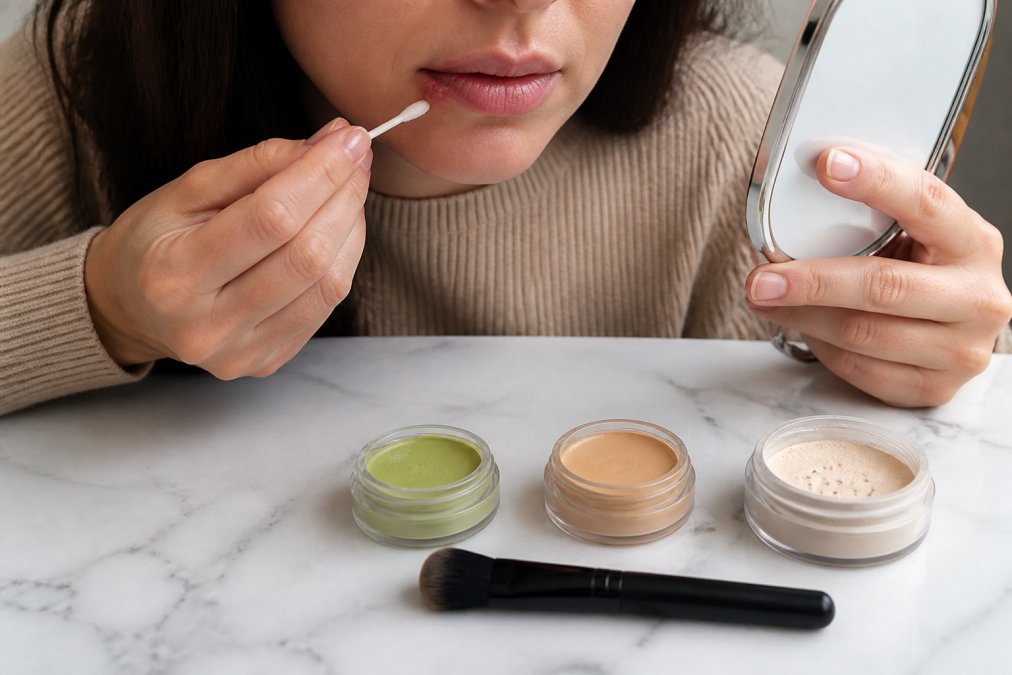
Color Theory for Neutralizing Redness
Most people reach straight for a skin-tone concealer and wonder why the redness still shows through. A green color corrector applied first solves this problem.
Green sits opposite red on the color wheel, neutralizing redness before you apply skin-tone coverage. Apply a small amount of green corrector with a clean Q-tip directly over the reddest parts of the sore. Let it set for 30 seconds, then apply your concealer over the top. For purple or dark discoloration, a peach or salmon corrector works better.
Step-by-Step Application Technique
- Clean the area with a gentle, fragrance-free cleanser. Pat dry with a clean tissue.
- Apply a thin layer of fragrance-free moisturizer to the area. Let it absorb for 2 minutes.
- Apply a silicone-based primer over the moisturizer. Silicone-based formulas grip makeup better and are less irritating than water-based alternatives.
- Apply green color corrector with a Q-tip using a light dabbing motion, not rubbing. Rubbing disturbs the sore and spreads virus particles.
- Apply full-coverage concealer with a clean Q-tip or small brush. Build coverage in thin layers rather than one thick application.
- Set with translucent powder using a clean cotton swab. This prevents transfer and extends coverage throughout the day.
- Avoid touching the area for the rest of the day.
Avoid products containing salicylic acid, retinol, or alcohol near an active cold sore. These break down the skin barrier, worsen inflammation, and slow healing.
Medicated Patches and Bandages: Hide Cold Sore While It Heals
Medicated patches are often the smarter choice for hiding a cold sore during the weeping and early crusting stages. A hydrocolloid patch covers the sore and creates a moist healing environment that speeds recovery.
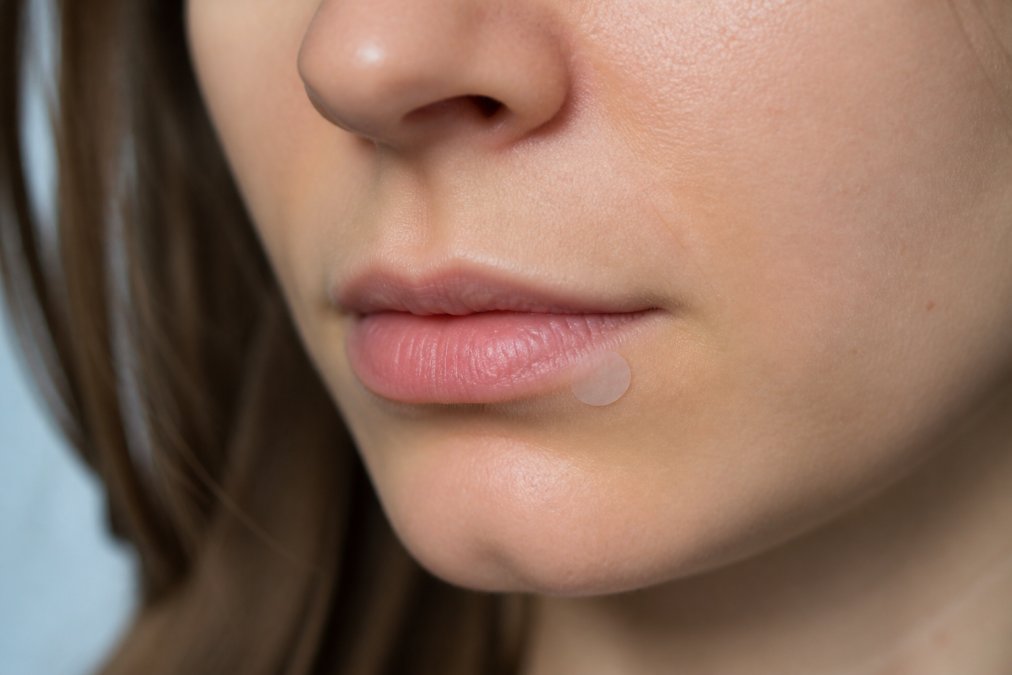
Hydrocolloid is a dermatological material originally developed for wound care. When placed over a cold sore blister, it absorbs fluid, reduces inflammation, and protects the area from external irritants. Many people find their sores heal noticeably faster when using patches consistently through the weeping stage.
A well-placed patch is far less noticeable than an uncovered, weeping blister. You can apply a small amount of concealer over the top to blend it further.
- Change the patch every 8-12 hours, or sooner if saturated
- Do not peel the patch off dry. Wet the edges gently with water first
- Avoid patches with added fragrances or strong adhesives if your skin is sensitive
- Non-stick bandages can work as an alternative, though they won't provide the same healing benefit
According to guidance from the National Institutes of Health on wound healing, moist wound environments produce faster healing and less scarring than dry environments.
Hygiene, Ingredient Safety, and Avoiding Irritants
The biggest mistake during a cold sore outbreak is a hygiene lapse that spreads the virus to other areas or to other people.
HSV-1 is highly contagious during active outbreaks, particularly during the weeping stage. Touching the sore then touching your eye can cause ocular herpes, a serious condition. Sharing lip products, utensils, or towels spreads the virus between people.
Strict hygiene practices during an outbreak:
- Wash hands before and after any contact with the sore
- Use a Q-tip or clean brush for all product application; never use fingers
- Do not share lip products, face towels, or utensils
- Dispose of Q-tips and tissues immediately after use
- Avoid kissing or close facial contact until fully healed
Many common cosmetic products worsen an active cold sore. Alcohol-based products dry out the skin and delay healing. Fragrances trigger inflammation. Exfoliating ingredients like AHAs and BHAs should be kept away from the affected area.
The FDA's consumer guidance on cosmetic safety recommends checking ingredient lists carefully for known irritants, particularly for products applied near broken skin.
The Psychological Impact of Cold Sores and How to Cope
Cold sores carry a social stigma disproportionate to their medical severity. Many people with recurring HSV-1 outbreaks report significant social anxiety around visible sores, including avoiding events or feeling self-conscious in professional settings. Stress, ironically, is one of the most common triggers for HSV-1 reactivation, creating a frustrating cycle.
Normalize it. HSV-1 is one of the most common viral infections in the United States. The stigma is cultural, not medical.
Act early. Much anxiety is tied to how visible the sore becomes. Catching the outbreak at the tingle stage and treating it immediately with a product like LipCur, designed to stop the outbreak before it peaks, dramatically reduces the window of visible symptoms.
Have a plan. Keeping your treatment and concealment kit stocked and ready removes the feeling of helplessness. You know exactly what to do the moment you feel that tingle.
One verified LipCur customer, Carrie Clark, described her experience: "My sore stayed small and was gone completely in two days. It never got itchy or tingly or anything."
Post-Healing Care and Scar Prevention
What you do after the sore heals determines whether you're left with lasting discoloration or a clean slate.
Cold sores can leave behind post-inflammatory hyperpigmentation, a darkening of the skin caused by the inflammatory response. This is more common in people with deeper skin tones, but it can affect anyone. With the right approach, it's largely preventable.
During healing (stages 4-5):
- Keep the area moisturized. Dry skin during crusting leads to premature scab removal, increasing scarring risk.
- Do not pick or peel the crust. Let it fall away naturally.
- Avoid sun exposure on the healing area. UV light worsens post-inflammatory hyperpigmentation and can trigger recurrent outbreaks. Apply SPF lip balm once the skin has closed.
After healing:
- A fragrance-free, gentle moisturizer applied twice daily helps new skin stay supple and reduces lasting discoloration.
- If redness or dark spots persist after healing, a gentle vitamin C serum can help fade discoloration over several weeks.
- Avoid picking at any residual dry skin. The new skin beneath is fragile.
For people with frequent outbreaks, consistent post-healing care combined with early treatment to reduce outbreak severity is the most effective way to prevent long-term changes to the skin in that area.
As noted in clinical dermatology resources from the American Academy of Dermatology, post-inflammatory hyperpigmentation from recurrent skin conditions is best managed through a combination of sun protection and consistent moisturization during and after the healing phase.
Frequently Asked Questions
Can a cold sore disappear in 24 to 48 hours?
Most cold sores caused by herpes simplex virus take 7 to 10 days to complete the full healing process without treatment. However, starting an antiviral cream or fast-acting treatment like LipCur at the very first tingle can significantly reduce the blister's size, duration, and visibility. Some people who catch outbreaks early report sores resolving within two days. Verified LipCur buyer Carrie Clark noted her sore stayed small and was completely gone in two days after using the product from the start of symptoms.
What is the best way to hide a cold sore without making it worse?
The safest approach combines a hydrocolloid medicated patch with minimal, carefully applied makeup. Apply a sterile patch first to protect the blister and prevent cross-contamination, then use a green color corrector to neutralize redness, followed by a silicone-based primer and a full-coverage concealer applied with a clean Q-tip. Avoid touching the sore with your fingers, sharing products, or using anything with alcohol or fragrance, which can inflame the area and slow the healing process.
Should you cover a cold sore or let it breathe?
Both approaches have merit depending on the healing stage. During the blistering and weeping phase, a hydrocolloid patch provides barrier protection while still allowing some air circulation and absorbing fluid, which supports faster healing. Heavy makeup alone during this stage can trap bacteria and irritate the blister. Once crusting begins and the sore is drying out, light coverage with non-comedogenic concealer applied with a Q-tip is generally safe and does not significantly interfere with the healing process.
Are there specific makeup products that are safe to use on cold sores?
Yes. Look for products labeled non-comedogenic and fragrance-free. A green color corrector neutralizes redness without harsh ingredients. A silicone-based primer creates a smooth base without clogging the area. Full-coverage concealer matched to your skin tone, applied with a disposable Q-tip or sterile brush, minimizes contamination risk. Avoid products containing alcohol, menthol, or heavy emollients directly over an active sore, as these can cause inflammation or slow the dermatological healing process.
Recurring cold sore outbreaks are disruptive, uncomfortable, and often happen at the worst possible time. The most effective approach combines early treatment to stop the outbreak before it peaks, smart concealment techniques during the visible stages, and consistent post-healing care to prevent lasting marks. LipCur's fast-acting formula is designed to do exactly that: stop outbreaks early, soothe the skin, and help you heal within 24 hours. Shop LipCur and get back to feeling like yourself.
This article was written using GrandRanker