

Table of Contents
- Act Fast: The First 24 Hours When You Feel a Tingle
- How to Heal Cold Sores Fast with Antiviral Treatment
- Best Concealer for Cold Sores: Makeup Application Techniques
- Preventing Cold Sore Spread: Hygiene and Cross-Contamination Protocols
- Reduce Swelling and Inflammation Instantly
- Natural Remedies and Soothing Agents
- When to See a Doctor
- Frequently Asked Questions
Last Updated: August 31, 2026
Act Fast: The First 24 Hours When You Feel a Tingle
The moment you feel that familiar tingle on your lip, you have a narrow window to stop a cold sore before it becomes visible. How to hide a cold sore quickly starts with understanding that the first 24 hours are critical. At this stage, the herpes simplex virus is replicating, but the blister hasn't formed yet. This is when intervention works best (peer-reviewed research).
Most people wait until they see a visible sore before taking action. That's the mistake. By then, you're already managing an outbreak instead of preventing one. If you catch the tingling sensation early, you can dramatically reduce both the severity and duration of what develops.
The immediate goal is twofold: stop the virus from progressing, and keep inflammation minimal. LipCur is specifically designed for this early-stage response, working to soothe the area and prevent the outbreak from advancing into a full blister. Starting treatment within the first few hours of that tingle makes an enormous difference in how quickly you can hide a cold sore.

Apply your chosen treatment every two to three hours during this critical window. Don't wait for symptoms to worsen. The antiviral action works best when viral shedding is highest, which happens right at the beginning. Keep the area clean and dry between applications, and avoid touching it unnecessarily.
How to Heal Cold Sores Fast with Antiviral Treatment
Healing a cold sore fast requires understanding why antiviral creams outperform basic moisturizers. The distinction matters because your approach determines whether you're just managing symptoms or actually shortening the outbreak.
Why Antiviral Creams Work Better Than Basic Moisturizers
A standard moisturizer hydrates and protects, but it doesn't target the virus itself. Antiviral creams contain active ingredients that interrupt viral replication at the cellular level. This is the fundamental difference between treating the symptom and treating the cause.
Antiviral formulations work by reducing the number of virus particles your body must fight off. When viral load decreases, your immune system recovers faster, and healing accelerates. This is why prescription antivirals like acyclovir have been the gold standard for decades (the FDA). Over-the-counter antiviral creams operate on similar principles, though with different active ingredients.
LipCur's fast-acting formula is engineered to work within 24 hours by combining soothing agents with ingredients that support your skin's natural healing response. The formula prevents itching and tingling while protecting the skin barrier, which is essential because a compromised barrier allows secondary bacterial infection.
Apply antiviral cream at the first sign of symptoms. Frequency matters: every two to three hours during the day, and before bed. Consistency beats occasional applications. Many people apply once or twice and assume it's not working. The antiviral effect is cumulative. Sustained treatment produces visible results.
The Role of Hydrocolloid Patches in Rapid Healing
Hydrocolloid patches have become popular because they work through a different mechanism than creams. Instead of targeting the virus chemically, they create an optimal healing environment by maintaining moisture and protecting the sore from external irritants.
These patches absorb fluid from the blister, which accelerates the crusting and healing process (peer-reviewed research). They also provide a physical barrier that prevents you from touching the sore, which reduces the risk of secondary infection and cross-contamination. For many people, combining a hydrocolloid patch with an antiviral cream produces faster results than either alone.
The patches are particularly useful during the day when you need the sore to be less visible. They're discreet enough to wear under makeup, though applying concealer over a patch requires careful technique to avoid shifting it. Change the patch every 6-8 hours or when it turns white (indicating it's absorbed fluid). Some people find they need to switch between creams during active viral stages and patches during the crusting phase.
Best Concealer for Cold Sores: Makeup Application Techniques
Once you've started antiviral treatment and reduced swelling, concealing the sore becomes your focus. The goal is to hide a cold sore quickly without aggravating it or causing infection. This requires a specific application sequence that prioritizes skin health while achieving coverage.
Color Theory for Neutralization
Most people reach for their regular skin-tone concealer and wonder why the sore still shows through. The issue is that active cold sores have a reddish or purplish undertone that standard concealer doesn't neutralize. Color theory solves this.
Red and purple tones are neutralized by their opposite colors on the color wheel. Green neutralizes red, and yellow neutralizes purple. A green-tinted color corrector applied first creates a neutral base that your concealer can then cover seamlessly. This two-step approach is what professional makeup artists use for tattoo coverage and scar camouflage.
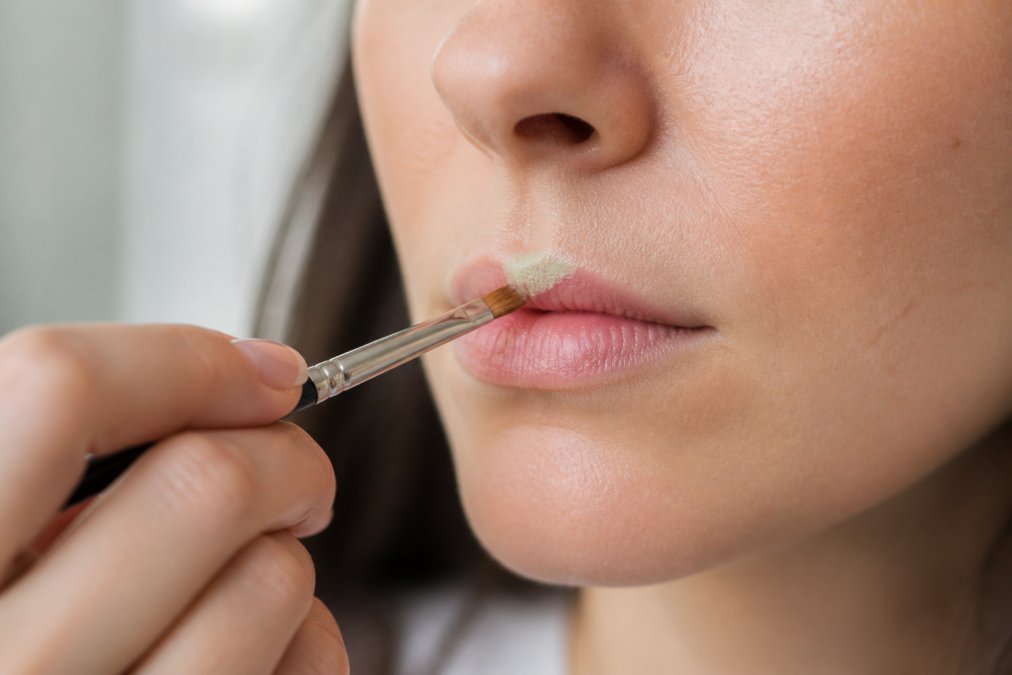
Apply a thin layer of green color corrector directly to the sore. Let it set for 30 seconds. Then apply your concealer in short dabbing motions, never rubbing or dragging. The combination of corrector and concealer creates opacity that a single product can't achieve.
If your sore has moved into the crusting phase, it may have a yellowish or brownish tone instead. In that case, a yellow-toned concealer works better than green. Adjust your approach based on the sore's current color, not its original appearance.
Step-by-Step Concealment Application
The sequence matters as much as the products. Here's the exact process that minimizes irritation while maximizing coverage:
-
Cleanse and dry thoroughly. Wash your hands first. Use a clean, soft tissue to gently pat the area dry. Any moisture prevents concealer from adhering properly.
-
Apply antiviral treatment. If using a cream, apply a thin layer and let it dry completely (2-3 minutes). This protects the sore and provides a base for color correction.
-
Apply color corrector. Using a small, clean brush or your pinky finger, apply a thin layer of color corrector directly to the sore. Avoid the surrounding healthy skin. Set for 30 seconds.
-
Apply concealer. Using a small brush or sponge, dab concealer over the corrected area in short motions. Build coverage gradually with multiple thin layers rather than one thick layer. Thick concealer cracks and highlights the sore instead of hiding it.
-
Set with powder. A light dusting of translucent or skin-tone powder locks everything in place and prevents smudging. Use a small brush and apply sparingly to avoid a cakey appearance.
-
Avoid touching. Once applied, don't touch your lips. Every touch risks shifting the concealer and exposing the sore.
Long-Wear Setting Techniques
If you need your concealment to last through a full workday or event, setting techniques make the difference between coverage that holds and coverage that fails by noon.
After applying powder, use a setting spray designed for long-wear makeup. These sprays create a flexible film that holds everything in place without feeling stiff. Apply in light misting motions, holding the bottle 6-8 inches from your face. Let it dry completely before eating or drinking.
Avoid matte liquid lipsticks during an active outbreak. The drying agents in these products can crack the concealer and irritate the sore. If you want lip color, use a hydrating tinted balm over your concealer instead. This maintains moisture while adding subtle color.
Reapply concealer midday if needed, but do it carefully. Remove old concealer gently with a makeup remover or micellar water on a cotton pad. Don't rub. Apply fresh concealer using the same layering technique. Avoid reapplying color corrector unless you're removing and redoing the entire look.
Preventing Cold Sore Spread: Hygiene and Cross-Contamination Protocols
A cold sore is contagious from the moment you feel the tingle until it's completely crusted over. Understanding transmission prevents spreading the virus to others and prevents reinfection of your own skin.
Herpes simplex virus spreads through direct contact with the sore or through saliva. If you touch the sore and then touch your eye, you risk spreading the virus there. If you share a drink, utensil, or towel, you spread it to whoever uses that item next. During an outbreak, isolation protocols matter.
Never share lip balm, lipstick, toothbrushes, or eating utensils. Wash your hands immediately after touching the sore. If you apply treatment with your finger, wash your hands before and after. Use a separate towel for your face. Change your pillowcase daily because the sore can contact it while you sleep.
Disinfect any tools you use. If you apply concealer with a brush, clean it before using it on other parts of your face. Sanitize your phone if you've touched it after touching the sore. These steps sound excessive, but they're the difference between a single outbreak and recurring infections.
Sexual contact spreads the virus. If you have an active sore, avoid kissing and oral contact until it's completely healed. Even with concealer, the virus is still present and contagious. Your partner's risk is real, regardless of whether they can see the sore.
Reduce Swelling and Inflammation Instantly
Swelling makes a cold sore more visible and more uncomfortable. Reducing inflammation quickly is one of the fastest ways to hide a cold sore and accelerate healing.
Using Ice and Cold Compresses
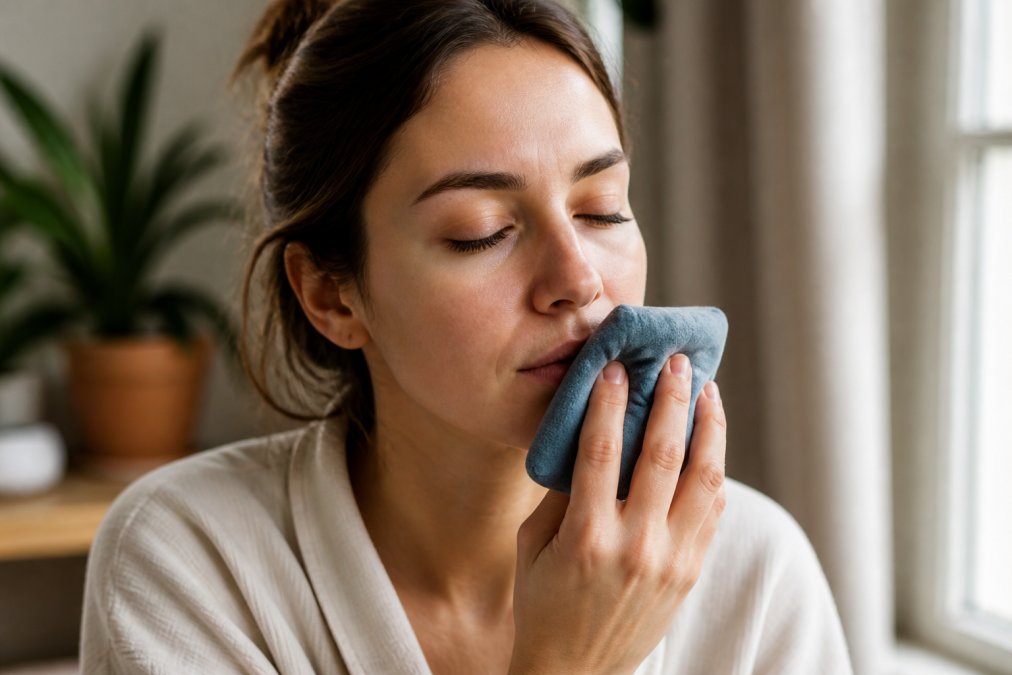
Cold therapy reduces inflammation by constricting blood vessels and slowing inflammatory response. Apply ice or a cold compress for 10-15 minutes at a time, several times daily. The earlier you start, the more effective it is.
Wrap ice in a clean cloth rather than applying it directly to skin. Direct ice can cause tissue damage. Hold the compress against the sore gently, without pressure. You'll notice swelling decrease within the first application.
Cold compresses work best in the first 48 hours when inflammation is building. After that, warmth sometimes feels more soothing, though cold remains more effective for reducing swelling. Alternate between cold and room temperature if the cold becomes uncomfortable.
Pain Relief Options
Over-the-counter pain relievers reduce both pain and inflammation. Ibuprofen works better than acetaminophen for this purpose because it targets inflammation directly. Take ibuprofen according to package directions, typically 200-400 mg every 4-6 hours as needed.
Topical pain relievers like benzocaine provide immediate numbing. These work well if you're eating or speaking and the sore is painful. Apply sparingly because overuse can irritate the sore further. Many antiviral creams include pain relief agents, so check your product's ingredients to avoid doubling up.
Avoid spicy, acidic, or hot foods during an outbreak. These irritate the sore and increase pain. Stick to soft, cool foods like yogurt, smoothies, and soup. Staying hydrated helps your body fight the virus, but sip through a straw to minimize contact between the sore and the drink.
Natural Remedies and Soothing Agents
While antiviral treatment is most effective, certain natural agents provide soothing relief and support healing. These work best as complements to medical treatment, not replacements.
Tea tree oil has antimicrobial properties, but it's too strong to apply directly to a sore. Dilute it in a carrier oil like coconut oil or jojoba oil before application. Many people find the cooling sensation soothing, though some experience irritation. Test on a small area first.
Petroleum jelly protects the sore from drying out and provides a barrier against external irritants. It doesn't treat the virus, but it prevents secondary cracking and bleeding. Apply it over your antiviral treatment or concealer to maintain moisture.
Honey has been studied for wound healing properties. Raw honey applied to a cold sore may support the healing process, though research on cold sores specifically is limited. Use food-grade honey only, and apply sparingly because it's sticky and attracts bacteria if not covered.
L-lysine is an amino acid that some people believe reduces cold sore frequency and severity. Evidence is mixed, but it's generally safe. Some take it as a supplement during outbreaks, while others take it daily as a preventive. If you're considering supplementation, discuss it with a healthcare provider first.
When to See a Doctor
Most cold sores heal on their own within 7-10 days with proper treatment. However, certain situations warrant professional evaluation.
See a doctor if your sore doesn't improve after 10 days of treatment. Persistent sores may indicate a secondary bacterial infection or a different condition entirely. If you develop fever, swollen lymph nodes, or systemic symptoms, contact a healthcare provider. These signs suggest the infection has spread beyond the local sore.
If you have frequent outbreaks (more than six per year), ask about prescription antiviral options. These are stronger than over-the-counter treatments and can be taken preventively or at the first sign of symptoms. For people with compromised immune systems, frequent outbreaks are more serious and require medical management.
If the sore spreads to your eye, seek immediate care. Eye infections from herpes simplex can cause serious complications. Similarly, if the sore appears in unusual locations or spreads across a large area, professional evaluation is important.
Hiding a cold sore quickly is achievable when you act fast and use the right combination of antiviral treatment, inflammation reduction, and concealment technique. LipCur's fast-acting formula is designed to stop outbreaks within 24 hours by combining soothing relief with skin-repairing ingredients. The key is starting treatment the moment you feel that tingle, before a visible blister forms. Combined with proper concealment technique and hygiene protocols, you can minimize both the duration and visibility of a cold sore outbreak. Shop LipCur Cold Sore Relief and take control of your outbreaks today.
Frequently Asked Questions
Q: What kills cold sores the fastest?
Antiviral creams like LipCur Cold Sore Relief work fastest when applied at the first sign of tingling or itching. Starting treatment immediately can stop the outbreak from progressing and help you heal within 24 hours. Hydrocolloid patches also accelerate healing by protecting the sore and maintaining moisture. Cold compresses reduce swelling quickly, while ibuprofen or acetaminophen manage pain and inflammation. The key is acting fast, waiting until a visible blister forms makes treatment slower and more noticeable.
Q: Can you really get rid of a cold sore in 24 hours?
Yes, when you catch it early and use the right treatment. LipCur Cold Sore Relief is formulated to deliver results within 24 hours if applied at the first tingle. Early intervention is critical, once a visible blister forms, healing takes longer. Combining antiviral treatment with hydrocolloid patches, cold therapy, and proper moisture management maximizes your chances of rapid healing. Individual healing times vary based on outbreak severity and when you start treatment, so acting immediately gives you the best outcome.
Q: How do you prevent makeup from irritating a cold sore?
Prime the sore with a non-comedogenic, soothing moisturizer before any concealer application. Use a dedicated makeup brush or sponge to apply products gently without tugging or rubbing, which can spread the virus and increase pain. Choose concealer formulas designed for sensitive skin and avoid heavy, long-wearing products that can trap bacteria. Remove makeup gently with a clean cloth, never with your fingers. Sanitize your makeup brushes and sponges regularly, and never share applicators. If the sore is actively weeping or crusting, consider using a hydrocolloid patch under makeup for extra protection.
Q: What are the best hygiene practices when concealing a cold sore?
Cold sores are contagious until fully healed, so minimize viral shedding by washing your hands before and after touching the area. Disinfect any makeup brushes, applicators, or tools with rubbing alcohol after each use. Never share lip balm, lipstick, or other lip products with others. Avoid touching your eyes or other body parts after contact with the sore. Use a fresh applicator for each product application, and keep the area clean by gently washing with mild soap and water. These steps protect both your healing process and prevent spreading the virus to others.
This article was written using GrandRanker