

Table of Contents
- Do You Need a Prescription for Cold Sores?
- How Long Do Cold Sores Last Without Treatment
- Best Over-the-Counter Medicine for Cold Sores
- Prescription vs. OTC Cold Sore Treatment: What's the Real Difference?
- When to See a Doctor for Cold Sores
- How Antiviral Medication Works Against Cold Sores
- Preventing Cold Sore Outbreaks
- Conclusion
Last Updated: August 25, 2026
Do You Need a Prescription for Cold Sores?
Whether you need a prescription for cold sores depends on how quickly you want relief and how severe your outbreak is. Many people find that over-the-counter treatments work well for mild cases, but prescription antivirals deliver faster results for those who catch the infection early or experience frequent, painful outbreaks. At LipCur, we understand that cold sores aren't just uncomfortable, they're a confidence issue, especially when they appear before important events or client meetings.
The short answer: no, you don't always need a prescription. But prescription antiviral medication works significantly faster than most OTC options, particularly if you apply treatment during the prodromal phase (that tingling sensation before the blister fully forms). For people with recurring cold sores triggered by stress, hormonal changes, or weakened immunity, prescription strength antivirals can be a game-changer.
The real question isn't whether you need a prescription, it's whether the speed and strength of prescription medication is worth the cost and inconvenience compared to what you can grab from the drugstore shelf.
How Long Do Cold Sores Last Without Treatment
A cold sore typically runs its course in 7-10 days without any intervention (the CDC). The herpes simplex virus works through predictable stages: tingling and itching appear first, followed by fluid-filled blisters that eventually crust over and heal. Left completely untouched, most cold sores will resolve on their own as your immune system fights off the viral infection.

However, "resolving on its own" doesn't mean comfortable. During those 7-10 days, you're dealing with visible blisters, potential secondary infections if you touch or pick at them, and the social awkwardness of having a noticeable sore on your lip. For professionals who need to maintain appearance or people with important events coming up, waiting a week isn't realistic.
This is where treatment changes the timeline. Early intervention, especially during that initial tingling stage, can cut healing time dramatically. Some people report seeing significant improvement within 24-48 hours when they use the right approach at the right moment. The key is recognizing those early warning signs and acting immediately rather than waiting until the blister fully develops.
Best Over-the-Counter Medicine for Cold Sores
Over-the-counter cold sore treatments fall into a few categories, each with different strengths. Topical creams containing docosanol are the most commonly recommended OTC option. These antivirals work by preventing the virus from entering healthy cells, but they're most effective when applied multiple times daily during the early stages.
Anesthetic gels and topical numbing products provide fast symptom relief, they reduce pain and itching within minutes, but they don't actually speed up healing. They're useful if you need immediate comfort, but they're treating the symptom, not the infection itself.
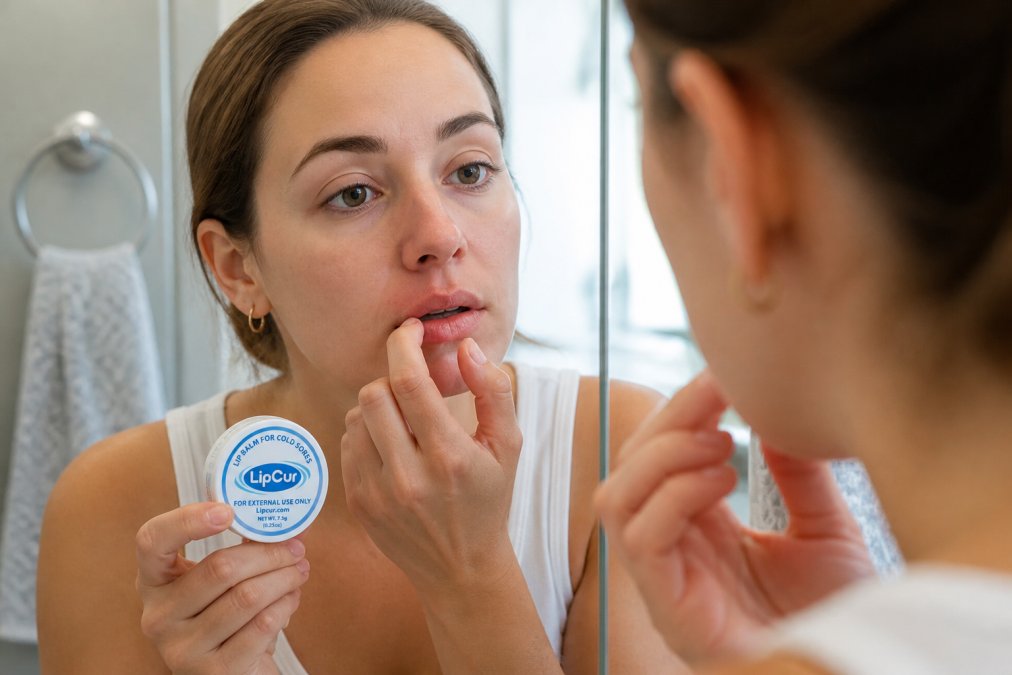
Oral tablets are also available over the counter in some formulations, though these tend to be less potent than prescription-strength versions. Many people find them convenient because you don't have to remember to reapply cream multiple times throughout the day.
For many users, LipCur Cold Sore Relief offers a faster alternative to traditional OTC options. Designed to work within 24 hours, it combines a fast-acting formula with gentle, soothing ingredients that both treat the outbreak and prevent the uncomfortable itching and tingling that makes cold sores so bothersome. The formula is clinically formulated to reduce redness and promote faster healing, addressing both the visible symptoms and the underlying viral infection. At $24.95, it's positioned as a premium OTC choice for people who've been disappointed by slower drugstore alternatives.
The trade-off with OTC treatments is clear: they're accessible without a doctor visit, but they typically require more frequent application and deliver slower results than prescription antivirals. If you're dealing with a mild outbreak and can wait 5-7 days, OTC options are usually sufficient. If you're in the middle of an important week or have a history of severe outbreaks, prescription strength might be worth exploring.
Prescription vs. OTC Cold Sore Treatment: What's the Real Difference?
The fundamental difference comes down to strength and speed. Prescription antiviral medications, primarily valacyclovir and famciclovir, are oral tablets that work systemically, meaning they circulate through your bloodstream to attack the herpes simplex virus throughout your body, not just at the surface of the sore (peer-reviewed research).
OTC treatments, by contrast, are mostly topical. They sit on the surface of your lip and work locally. This means they have a harder time reaching the virus deep in the infected cells. They also require multiple daily applications to maintain effectiveness, whereas prescription oral tablets typically require just two or three doses per day.
The speed difference is measurable. People using prescription antivirals during the prodromal phase often report that the blister never fully develops or that it appears much smaller and heals in 3-5 days instead of the typical 7-10. OTC topical treatments might reduce healing time by a day or two, but the difference is less dramatic.
Cost is another consideration. A prescription for valacyclovir or famciclovir typically costs between $20-50 depending on your insurance and pharmacy, though many insurance plans cover antivirals for recurrent herpes labialis (the medical term for recurring cold sores). A tube of OTC cream runs $5-15 but requires frequent reapplication and may need to be replaced multiple times during an outbreak.
Accessibility matters too. You can buy OTC treatments immediately without a doctor's appointment. Prescription antivirals require either a telehealth consultation or an in-person visit. For people who get cold sores frequently, having a standing prescription on file means you can start treatment immediately when symptoms appear.
Here's what most guides miss: prescription antivirals are most effective when you've had cold sores before and recognize the early warning signs. If this is your first outbreak, you might not catch it in time to benefit from the speed advantage. If you get cold sores occasionally and they're mild, OTC is probably fine. But if you're someone who gets them regularly, especially triggered by stress, hormonal cycles, or immune challenges, prescription strength makes a real difference in both healing time and outbreak severity.
When to See a Doctor for Cold Sores
You should see a doctor for cold sores if any of these situations apply: this is your first outbreak and you're unsure what you're dealing with, the sore is unusually large or painful, you're experiencing symptoms beyond the typical blister (fever, swollen lymph nodes, difficulty eating or drinking), the sore hasn't healed after 10-14 days, or you're experiencing frequent recurrent outbreaks.
Additionally, see a healthcare provider if you have a weakened immune system (due to HIV, cancer treatment, or immunosuppressive medications), you're pregnant and experiencing your first cold sore outbreak, or you have a history of severe cold sores that significantly impact your quality of life or work.
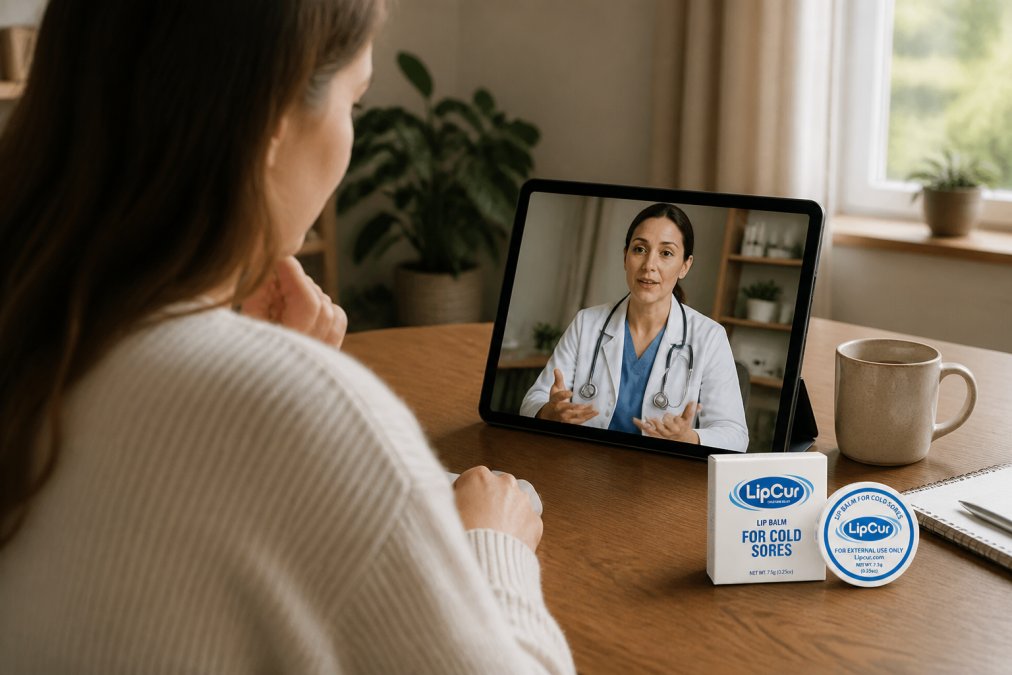
Telehealth has made this easier. Many people can now get a prescription for antiviral medication without leaving home. A quick video consultation with a nurse practitioner or doctor takes 10-15 minutes, and you can often have a prescription filled within hours. This is particularly useful for people who get cold sores at inconvenient times or who feel self-conscious about visiting a clinic during an active outbreak.
Your doctor can also help identify triggers specific to you. If you're getting cold sores frequently, there's often an underlying pattern, stress, certain foods, hormonal cycles, or a sign that your immune system needs attention. A medical professional can help you understand whether prevention strategies might reduce your outbreak frequency.
For people who work in client-facing roles or have important social events coming up, early intervention is worth the doctor visit. The difference between catching a cold sore in the tingling stage versus waiting until the blister fully develops can mean the difference between a barely-visible blemish and a noticeable sore.
How Antiviral Medication Works Against Cold Sores
Antiviral medications work by interfering with the herpes simplex virus's ability to replicate inside your cells. Once the virus enters a cell, it needs to make copies of itself to spread the infection. Antivirals block this process at the molecular level, essentially stopping the virus from multiplying.
Prescription oral antivirals like valacyclovir and famciclovir are nucleoside analogues, they mimic the building blocks the virus needs to reproduce (peer-reviewed research). When the virus tries to use these fake building blocks, its replication machinery breaks down. The virus can't make new copies, so the infection can't spread to new cells.
This is why timing matters so much. During the prodromal phase, that tingling sensation before any visible blister, the virus is actively replicating and spreading within your skin cells. If you start antiviral medication during this window, you're stopping the virus before it causes significant cellular damage. By the time a visible blister forms, much of the damage is already done, and antivirals can only slow the remaining replication.
OTC topical antivirals like docosanol work similarly but on a smaller scale. They prevent viral entry into cells at the surface, but because they're applied topically, they don't reach the deeper layers of skin where the virus is replicating most actively. They're helpful for slowing the infection's spread, but they're fighting an uphill battle against a virus that's already well-established.
The immune response also plays a role. Antivirals buy your immune system time to mount an effective defense. Your body's natural defenses, antibodies, white blood cells, and interferon production, are what ultimately clear the infection. Antivirals just give those defenses a better chance to work before the virus causes too much damage.
Preventing Cold Sore Outbreaks
If you're someone who gets cold sores regularly, prevention is worth exploring. Identifying your personal triggers is the first step. Common triggers include stress, lack of sleep, fever or illness, intense sun exposure, hormonal changes, and certain foods (particularly those high in arginine, an amino acid the virus prefers).
Once you know your triggers, you can often prevent outbreaks by managing them. If stress is your trigger, stress management techniques help. If sun exposure causes problems, use a lip balm with SPF protection. If hormonal cycles trigger outbreaks, you might notice a pattern and plan accordingly.
For people with frequent outbreaks, some doctors recommend suppressive therapy, taking antiviral medication daily to reduce outbreak frequency and severity. This is typically reserved for people with more than six outbreaks per year or those whose outbreaks significantly impact their work or social life. Suppressive therapy requires a prescription and ongoing medical supervision, but for the right person, it can be life-changing.
Lysine supplementation is often recommended as a natural prevention strategy. The theory is that lysine competes with arginine (which the virus prefers) and may reduce outbreak frequency. Some people report good results; others see no difference. It's a low-risk option to try if you're interested in natural approaches.
Avoiding triggers during vulnerable periods helps too. If you know you're about to undergo a stressful event or period, prioritize sleep, manage stress actively, and consider applying preventive lip protection. These small habits can sometimes be enough to prevent an outbreak from developing.
LipCur Cold Sore Relief can be part of your prevention strategy as well. By treating early symptoms aggressively, especially that tingling sensation, you can often stop an outbreak before it becomes a visible, painful sore. Having an effective treatment on hand means you're not caught off guard when you feel the first warning signs.
The thing nobody tells you about prevention is that it's not about finding one magic solution. It's about recognizing your specific pattern and building a multi-layered approach. For some people, that's stress management plus sun protection. For others, it's lysine supplementation plus early treatment when symptoms appear. For people with very frequent outbreaks, it might mean daily antiviral medication. The key is understanding your own triggers well enough to intervene before the outbreak takes hold.
The bottom line: You don't need a prescription for cold sores, but prescription antiviral medication delivers faster healing and better results for most people, especially if you catch the outbreak during the early tingling stage. For occasional, mild outbreaks, over-the-counter treatments are sufficient. For frequent or severe outbreaks, prescription strength antivirals are worth the doctor visit.
If you're tired of waiting 7-10 days for cold sores to heal or dealing with the social impact of visible blisters, LipCur Cold Sore Relief offers a fast-acting alternative that works within 24 hours. With its clinically formulated blend designed to stop outbreaks in their tracks and prevent uncomfortable itching and tingling, it's the choice for professionals and anyone who can't afford downtime. Shop LipCur Cold Sore Relief now and experience the confidence of rapid, effective relief.
Frequently Asked Questions
Are prescription antivirals more effective than OTC creams for cold sores?
Prescription antiviral medications like valacyclovir and famciclovir work systemically to reduce viral replication and can shorten outbreak duration by 1-2 days when started early. OTC topical treatments like docosanol provide localized relief and symptom management. Prescription strength options may offer faster healing for severe or frequent outbreaks, while OTC treatments work well for mild cases or prodromal phase intervention. The choice depends on outbreak frequency, severity, and how quickly you catch the tingling stage.
What clears up cold sores quickly?
Starting treatment during the prodromal phase (tingling stage) before blister formation produces the fastest results. Prescription antiviral medications shorten healing by 1-2 days, while fast-acting OTC options like LipCur Cold Sore Relief work within 24 hours to reduce symptoms and accelerate the healing process. Keeping the area clean, avoiding triggers, and maintaining immune health also support faster recovery. Early intervention is key, waiting until the sore is fully formed delays results regardless of treatment type.
When should I see a doctor for a cold sore?
Contact a healthcare provider if you experience frequent outbreaks (more than 6 per year), severe pain, signs of secondary infection, or if the sore doesn't heal within 2-3 weeks. Immunocompromised individuals, pregnant people, or those with atypical symptoms should seek medical evaluation. A telehealth consultation can quickly determine if prescription antiviral medication is appropriate for your situation and provide personalized guidance on outbreak management.
Can I use OTC cold sore treatment if I'm already in the middle of an outbreak?
Yes, OTC treatments remain effective even after a sore has fully formed, though starting during the prodromal phase (tingling or itching) produces the best results. Fast-acting formulas like LipCur work to reduce redness, soothe irritation, and promote healing at any stage. However, if the outbreak is severe or you're in the blister formation phase, a prescription antiviral may provide faster systemic relief. The key is consistent application and starting as soon as you notice symptoms.
This article was written using GrandRanker