

Table of Contents
- Understanding Cold Sores and Why They Strike at the Worst Times
- How to Hide a Cold Sore Fast During Work and Social Situations
- Cold Sore Healing Stages Timeline: What to Expect Each Day
- Treatment Options That Actually Work for Cold Sore Relief
- Stress-Induced Cold Sore Prevention for High-Pressure Careers
- Speed Up Healing: Pain Management and Recovery Strategies
- When to See a Doctor About Your Cold Sore
- Conclusion
Last Updated: August 21, 2026
Understanding Cold Sores and Why They Strike at the Worst Times
A cold sore is a painful blister caused by the herpes simplex virus (HSV-1), and it tends to appear exactly when you can't afford it: before a client presentation, right before a date, or during your busiest week. The prodromal stage, that tingling sensation 24 to 48 hours before a visible blister appears, is your window of opportunity. Most people miss it, assuming nothing can be done once they feel that familiar itch.
At LipCur, we understand that professionals need solutions that work fast and work discreetly. This guide walks you through the science of what's happening on your lip, practical strategies for concealment, and treatment options that deliver results when you need them most.
How to Hide a Cold Sore Fast During Work and Social Situations
The first 48 to 72 hours determine whether a cold sore stays small or escalates into a larger, more visible lesion. If you catch the tingling sensation early, a fast-acting antiviral treatment applied immediately can prevent the blister from fully forming.
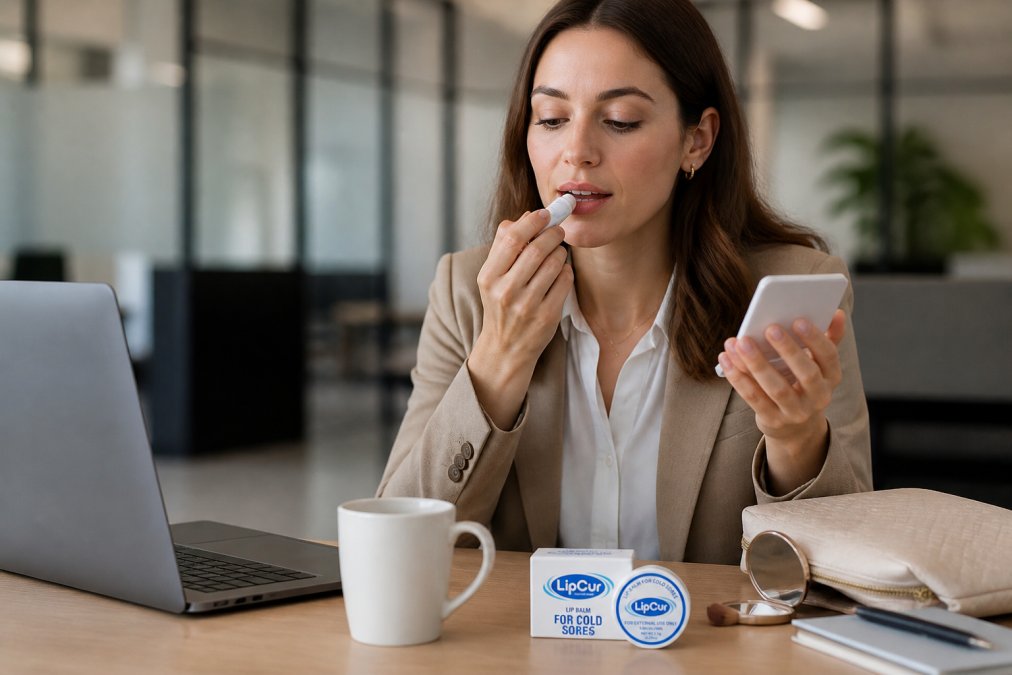
For visibility management during an active outbreak, layering is your strategy. A thin application of medicated treatment followed by a lip balm creates a protective barrier while reducing redness. Glossy or hydrating formulations reflect light away from the lesion better than matte products. Avoid touching or picking at the sore, this spreads the virus, delays healing, and increases infection risk. Use a clean applicator each time you apply treatment.
Most people won't notice a small, well-managed cold sore from across a conference table or during a video call. Early intervention and consistent protection are what separate a manageable outbreak from a visible problem.
Cold Sore Healing Stages Timeline: What to Expect Each Day
Understanding the healing timeline helps you set realistic expectations and plan your professional schedule accordingly.
Day 1-2: Prodromal Stage (Tingling) You feel the familiar itch or tingling sensation on your lip. No visible sore yet, but the virus is replicating beneath the skin. This is the most critical window for treatment intervention. Applying an antiviral treatment now can often prevent the blister from forming entirely or significantly reduce its severity.
Day 2-3: Blister Formation A small cluster of fluid-filled blisters appears. The area becomes red, swollen, and tender. This is the most contagious stage. Pain is typically at its peak during this phase.
Day 4-5: Crusting Begins The blister ruptures and begins to crust over. The crust is yellowish or brownish and looks worse than the blister itself, this is normal. The sore is still contagious. Avoid picking at the crust, as it protects the healing tissue beneath.
Day 6-7: Active Crusting The crust thickens and darkens. Underneath, new skin is forming. Itching often intensifies during this stage. Resist the urge to pick, as this restarts the healing process and can cause scarring.
Day 8-10: Late Healing The crust begins to flake off naturally as new skin forms. The area may remain slightly red or tender. Most people are no longer contagious by this point.
Day 10-14: Resolution The sore has healed completely or is nearly invisible. Some residual redness may linger for a few more days. For many professionals using fast-acting treatments like LipCur, visible healing occurs more rapidly.
The timeline varies based on outbreak severity, your immune response, and how aggressively you treat it. Early treatment can compress this timeline significantly, some users report that catching the outbreak at the tingling stage prevents a visible blister from ever forming.
Treatment Options That Actually Work for Cold Sore Relief
Cold sore relief comes down to stopping viral replication and managing symptoms. Options range from over-the-counter topicals to prescription antivirals, each with different mechanisms and timelines.
Over-the-Counter Topical Treatments
Docosanol is the most common active ingredient in OTC topical treatments. It prevents the virus from entering healthy cells (the FDA). Applied early and frequently (up to five times daily), docosanol can reduce healing time by a day or so, but it's most effective during the prodromal stage.
Benzocaine and lidocaine provide temporary numbing relief, reducing pain and discomfort. Zinc oxide and other barrier-forming ingredients protect the sore from further irritation and environmental exposure.
LipCur provides a fast-acting, specialized solution for anyone seeking reliable relief from cold sores, stopping outbreaks in their tracks and helping you heal within 24 hours. Our gentle, soothing formula not only repairs and protects your skin but also prevents the uncomfortable itching and tingling associated with cold sores. Experience the confidence of a targeted treatment that delivers quick, effective results, getting you back to feeling like yourself again.

Prescription Antiviral Medications
Prescription antiviral medications are significantly more effective than topical treatments, especially when started early. These work systemically to reduce viral replication throughout your body.
Valacyclovir is widely prescribed with typical dosing of 500 mg twice daily for 3-5 days during an outbreak, or 500 mg daily for prevention. Many professionals prefer it because the dosing schedule is simpler during a busy workday.
Acyclovir is the oldest and most widely prescribed antiviral. Taken orally (typically 400-800 mg, four to five times daily for 7-10 days), it reduces healing time and can prevent future outbreaks if taken daily as a preventative.
Famciclovir and penciclovir work similarly with comparable effectiveness. Penciclovir is a topical cream that works faster than docosanol when applied every two hours.
Prescription antivirals are most effective when started during the prodromal stage or within 24 hours of blister formation. For professionals who get frequent outbreaks, a daily preventative dose can reduce outbreak frequency by 70-80% (peer-reviewed research).
At-Home Remedies and Comfort Measures
Ice therapy reduces inflammation and numbs pain. Apply an ice pack wrapped in a clean cloth for 10-15 minutes at a time, several times throughout the day.
Avoid acidic foods and drinks during an outbreak. Citrus, tomatoes, pineapple, and acidic beverages irritate the sore and slow healing.
Don't share personal items. Cold sores are contagious. Avoid sharing lip balm, toothbrushes, utensils, or drinking glasses.
Stay hydrated and get adequate sleep. Your immune system fights the virus more effectively when you're rested and well-hydrated.
Manage stress actively. Even 10-15 minutes of deep breathing, meditation, or a walk outside can reduce stress hormones and support faster healing.
Many professionals combine medication with these comfort measures for the best results.
Stress-Induced Cold Sore Prevention for High-Pressure Careers
For busy professionals, stress is often the primary trigger for cold sore outbreaks. High cortisol levels reduce the number and effectiveness of immune cells that keep the herpes simplex virus suppressed (peer-reviewed research).
Recognizing your personal stress triggers matters. Once you identify the pattern, you can plan preventative measures in advance.
Daily stress-reduction practices are the foundation. Even 10-15 minutes of meditation, deep breathing, or yoga reduces cortisol levels and strengthens immune function.
Exercise is one of the most effective stress reducers and immune boosters. Regular aerobic activity (30 minutes most days) reduces stress hormones and increases immune cells that suppress the herpes virus.
Sleep prioritization is non-negotiable during high-stress periods. When you're sleep-deprived, your immune system is compromised and cortisol levels stay elevated.
Nutritional support matters more than many professionals realize. B vitamins, vitamin C, zinc, and lysine all support immune function. During high-stress periods, a simple multivitamin plus extra vitamin C can provide measurable support.
Prophylactic antiviral medication is worth discussing with your doctor if you have a predictable pattern of stress-triggered outbreaks. Taking a preventative dose during known high-stress periods can reduce outbreak frequency by 70-80%.
The professionals who manage cold sores most effectively treat prevention as part of their career strategy. When you know stress triggers your outbreaks, managing stress becomes a competitive advantage.
Speed Up Healing: Pain Management and Recovery Strategies
Once you have an active outbreak, your goals shift to managing pain, preventing secondary infection, and supporting the fastest possible healing.
Topical anesthetics like benzocaine or lidocaine numb the area for 30-60 minutes, enough to get through a meeting or a meal.
Oral pain relievers (ibuprofen or acetaminophen) reduce both pain and inflammation. Taking these every 6-8 hours during the first 3-4 days significantly reduces discomfort and supports faster healing.
Protect the sore from further irritation. Avoid touching it, picking at it, or exposing it to harsh conditions. Every time you irritate the sore, you restart the healing clock.
Apply treatment consistently. Whether you're using LipCur, a prescription antiviral, or an OTC treatment, applying it as directed matters. Set phone reminders if needed to maintain a consistent schedule.
Avoid triggering foods. Spicy foods, acidic foods, hot beverages, and rough-textured foods irritate the sore and slow healing. Stick to soft, cool, neutral foods during the acute phase.
Monitor for secondary infection. If the sore becomes increasingly painful, swollen, or produces pus, or if you develop a fever, contact a healthcare provider.
Most professionals can return to normal activities within 5-7 days if they treat aggressively from the start.
When to See a Doctor About Your Cold Sore
Most cold sores resolve on their own within 7-14 days without medical intervention. However, certain situations warrant professional evaluation.
See a doctor if:
- The sore is unusually large, painful, or doesn't improve after 10 days
- You develop a fever, swollen lymph nodes, or feel significantly ill
- The sore becomes increasingly swollen, warm, or produces pus
- You have frequent outbreaks (more than 4-6 per year), which may warrant preventative medication
- You have a weakened immune system and develop a cold sore
- The sore is near your eye or on your eyelid
- You're pregnant and develop a cold sore
Telehealth is a practical option for busy professionals. Many platforms allow you to send photos and describe symptoms, and a provider can recommend treatment without requiring an in-person visit.
For most professionals, the decision to see a doctor comes down to whether home treatment is working. If you're on day 5 and the sore is getting worse rather than better, professional treatment is worth the time investment.
Cold sore outbreaks don't have to derail your career or confidence. The professionals who manage them most effectively start treatment early, protect the sore from further irritation, and manage stress proactively. LipCur delivers fast-acting relief designed to stop outbreaks at the first sign of symptoms, helping you heal within 24 hours and get back to your day without the distraction of pain or visibility concerns. Shop Now and experience the confidence of targeted treatment that actually works when you need it most.
Frequently Asked Questions
Q: What clears up cold sores the fastest?
A: Prescription antiviral medications like acyclovir, valacyclovir, and famciclovir work fastest when taken at the first sign of symptoms, often reducing duration to 3-5 days. Over-the-counter topical treatments containing docosanol or benzocaine provide faster relief than home remedies alone. Starting treatment during the prodromal stage (tingling sensation) before the blister forms gives you the best chance at rapid resolution. LipCur's fast-acting formula is designed to stop outbreaks quickly and help you heal within 24 hours when applied early.
Q: How do I prevent cold sore triggers during high-stress work weeks?
A: Stress is a major trigger for herpes simplex virus reactivation. During demanding work periods, prioritize sleep, exercise, and short breaks to reduce cortisol levels. Avoid acidic foods and beverages that irritate the lips. Maintain consistent use of a protective lip balm with SPF to shield against environmental triggers. If you notice the prodromal tingling sensation, apply cold sore relief immediately. Consider stress-management techniques like deep breathing, meditation, or brief walks to interrupt the stress cycle before it triggers an outbreak.
Q: Can I use cold sore treatment if the outbreak is already visible, or does it only work at the first tingle?
A: While antiviral medications and topical treatments work best during the prodromal stage (when you feel tingling), they remain effective throughout the outbreak. Prescription antivirals can reduce healing time even if applied during the blister or crusting stage. Over-the-counter options like docosanol and LipCur provide pain relief and support the healing process at any stage. The key is starting treatment as soon as you notice symptoms, but don't delay if you miss the early warning signs, treatment still accelerates recovery and reduces discomfort.
Q: How is LipCur different from other over-the-counter cold sore treatments I've tried?
A: LipCur's specialized fast-acting formula is designed to deliver relief within 24 hours with a gentle, soothing approach that prevents itching and tingling while repairing and protecting your skin. Many traditional treatments like Abreva work through docosanol, which requires multiple daily applications over several days. LipCur combines targeted symptom management with accelerated healing, making it ideal for busy professionals who need rapid results. Verified customers report complete resolution in two days, and the formula's focus on preventing discomfort sets it apart from basic lip balms or generic topical options.
This article was written using GrandRanker