

Table of Contents
- What You Need to Know About OTC Cold Sore Relief
- How Long Do Cold Sores Last With Treatment
- Active Ingredients That Actually Work
- Best Cold Sore Patches and Delivery Methods
- Early Intervention: Catching the Prodromal Stage
- When to See a Doctor for Cold Sores
- Prevention and Transmission Control
- Why LipCur Stands Out for Fast Relief
Last Updated: August 13, 2026
What You Need to Know About OTC Cold Sore Relief
Cold sores arrive without warning, signaling the start of a painful outbreak that can last days or weeks. The good news: OTC cold sore relief has evolved significantly, and catching an outbreak early minimizes severity and healing time.

At LipCur, we understand the frustration of recurring cold sores and the urgent need for fast, effective treatment. Knowing which OTC cold sore relief options work and how to use them strategically can cut healing time dramatically and prevent progression from tingling to visible blisters.
The herpes simplex virus (HSV-1) causes cold sores, triggered by stress, hormonal changes, weakened immunity, or sun exposure. The key to managing cold sores is understanding the stages of an outbreak and intervening at the right moment.
This guide covers everything you need to know about OTC cold sore relief in 2026: which active ingredients work, typical healing timelines with proper treatment, delivery methods that make a real difference, and when to see a healthcare provider.
How Long Do Cold Sores Last With Treatment
Cold sores progress through distinct stages, and the timeline depends heavily on when you start treatment. Without intervention, a typical cold sore lasts 7-10 days. With appropriate OTC cold sore relief applied early, many people see dramatic improvement within 24-48 hours.
The healing timeline breaks down like this: the prodromal stage (tingling and itching) lasts 12-24 hours, followed by blister formation over 2-3 days. Blisters then rupture and crust over in another 2-3 days, with the crusting stage lasting 3-5 days as new skin forms. The entire process typically spans 7-10 days without treatment.
When you apply OTC cold sore relief during the prodromal stage, that critical window when you first feel tingling, you can often prevent the blister from forming entirely or significantly reduce its size and severity. Starting treatment at the first sign of symptoms can cut your healing time in half or better.
The active ingredients in quality OTC treatments suppress viral replication and reduce inflammation. Docosanol blocks the virus from entering healthy skin cells, while hydrocortisone reduces the inflammatory response that causes swelling and discomfort.
Active Ingredients That Actually Work
Not all OTC cold sore treatments are created equal. The active ingredients you choose determine how quickly your outbreak resolves and how effectively you prevent progression to visible blisters.
Docosanol and Antiviral Action
Docosanol is the most clinically studied active ingredient in OTC cold sore relief products. This fatty alcohol prevents the herpes simplex virus from fusing with your skin cells, stopping viral replication at the cellular level. When applied early, docosanol can reduce outbreak duration and prevent progression from prodromal symptoms to full blister formation.
Docosanol-based treatments are typically applied five times daily during an outbreak. Many people find that starting docosanol at the very first tingling sensation produces the best results, with outbreaks never fully developing into visible blisters when caught at this stage.
The mechanism is straightforward: docosanol creates a barrier that prevents the virus from spreading to new skin cells. Apply it before the blister forms, and you're stopping the outbreak in its tracks.
Hydrocortisone and Inflammation Reduction
Hydrocortisone is a topical corticosteroid that addresses the inflammatory response driving much of the pain and swelling in a cold sore outbreak. While docosanol targets the virus itself, hydrocortisone reduces the immune system's inflammatory cascade, decreasing redness, swelling, and discomfort.
Many modern OTC cold sore relief formulations combine both ingredients, docosanol for antiviral action and hydrocortisone for inflammation control. This dual approach addresses the outbreak from two angles: stopping viral spread while simultaneously reducing uncomfortable symptoms.
Best Cold Sore Patches and Delivery Methods
The delivery method you choose affects how quickly the active ingredients reach your skin and how long they remain in contact with the affected area.
Topical creams and ointments are the most common delivery method, allowing for frequent reapplication throughout the day. Creams absorb quickly and work well during the prodromal and early blister stages, though they can be messy and may wear off quickly.
Medicated patches represent a significant advancement in OTC cold sore relief technology. These discrete patches adhere directly to the affected area and deliver active ingredients continuously over several hours. Patches are ideal for discreet treatment at work or in social situations and don't require frequent reapplication. Many use hydrocolloid technology that protects the sore from bacteria and further irritation.
Gel formulations provide a middle ground between creams and patches. They're less messy than traditional ointments, absorb more quickly, and can be reapplied easily throughout the day.
| Delivery Method | Best For | Reapplication Frequency | Discretion Level |
|---|---|---|---|
| Topical cream | Early intervention, frequent dosing | Every 2-3 hours | Low |
| Medicated patch | Work/social situations, sustained delivery | Every 6-8 hours | High |
| Gel formulation | Balance of coverage and convenience | Every 3-4 hours | Medium |
| Lip balm | Prevention, very early symptoms | As needed | High |
Early Intervention: Catching the Prodromal Stage
The prodromal stage is your golden window for cold sore intervention. This 12-24 hour period when you feel tingling, itching, or mild burning, but before any visible blister appears, is when the herpes simplex virus is actively replicating at the skin surface. Aggressive early treatment can prevent full outbreak development.
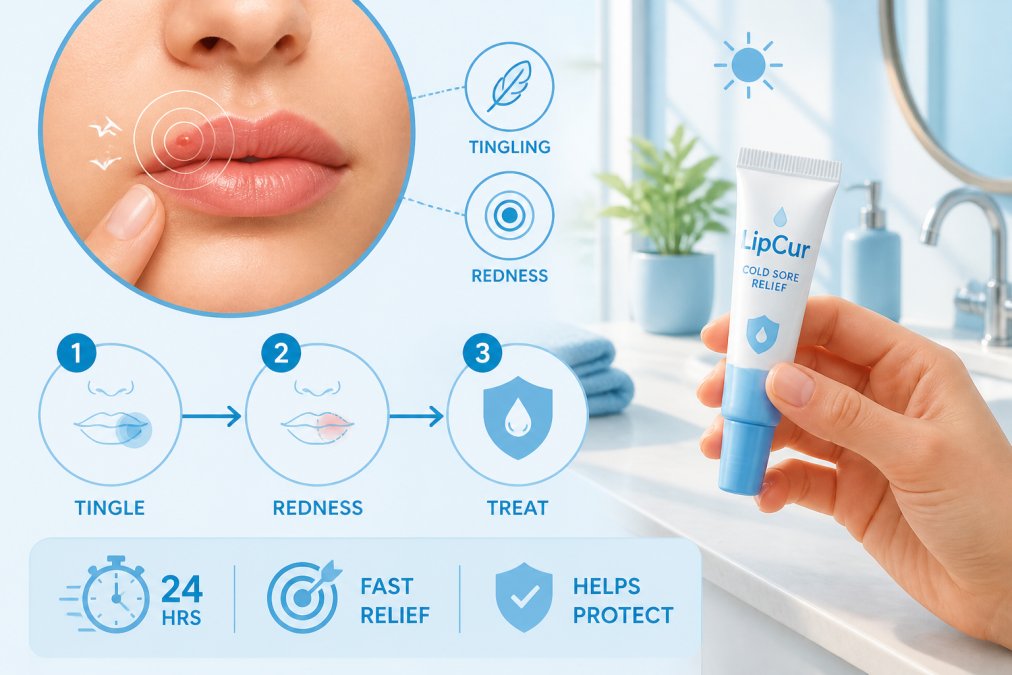
Most people miss this critical window because they don't recognize prodromal symptoms. That tingling might feel like minor irritation, and by the time you realize it's a cold sore outbreak starting, several hours have passed. Keeping your preferred OTC cold sore relief immediately accessible, at work, in your car, in your bag, matters significantly.
During the prodromal stage, apply your chosen treatment every 2-3 hours without fail. Consistency during this window determines whether your outbreak progresses to visible blisters or remains subclinical. Many experienced cold sore sufferers report that aggressive treatment during prodromal symptoms prevents any visible outbreak entirely.
The prodromal stage is also when you're most contagious. The virus is shedding actively from your skin surface even though no blister is visible. Take precautions: avoid kissing, sharing utensils, or touching your face and then touching others.
When to See a Doctor for Cold Sores
Most cold sores resolve completely with appropriate OTC cold sore relief and don't require professional medical attention. However, certain situations warrant a consultation with a healthcare provider.
See a doctor if your cold sore is accompanied by fever, swollen lymph nodes, or signs of secondary bacterial infection (increasing pain, pus, or spreading redness beyond typical sore boundaries). These symptoms suggest complications requiring prescription antiviral medication or antibiotics.
If you experience cold sore outbreaks more frequently than every 6 weeks, or if they're severe enough to interfere with eating or speaking, discuss this pattern with your healthcare provider. Your doctor might recommend prescription antivirals like acyclovir or valacyclovir for more aggressive management.
People with weakened immune systems, including those with HIV, those undergoing chemotherapy, or those taking immunosuppressant medications, should consult their healthcare provider about cold sore management rather than relying solely on OTC options.
If a cold sore appears near your eye or involves your eyelid, seek medical attention promptly. Ocular herpes can cause serious complications requiring professional evaluation and treatment.
Prevention and Transmission Control
Preventing cold sore outbreaks is far more effective than managing them after they develop. Understanding your personal triggers and taking preventive action can dramatically reduce outbreak frequency.
Common triggers include stress, hormonal fluctuations, sun exposure, fever or illness, and physical trauma to the lip area. If you notice patterns, for example, always getting a cold sore after a stressful work week, you can implement preventive measures during high-risk periods.
Sun exposure is one of the most controllable triggers. UV radiation directly activates latent herpes simplex virus in your skin. Using a lip balm with SPF 30 or higher during outdoor activities can prevent sun-triggered outbreaks.
Stress management reduces outbreak frequency significantly. People who practice regular stress reduction, exercise, meditation, and adequate sleep report fewer outbreaks than those under chronic stress.
Immune support matters year-round. Maintaining consistent sleep, eating a balanced diet, and staying current on vaccinations all support immune function and reduce outbreak risk.
Transmission prevention is critical if you have close contacts. During the prodromal stage and while blisters are present, avoid kissing, sharing utensils, towels, or razors. Even after the blister crusts over, transmission is still possible until the skin has completely healed.
Why LipCur Stands Out for Fast Relief
When searching for OTC cold sore relief that actually delivers results, LipCur provides a fast-acting, specialized solution for anyone seeking reliable relief from cold sores.
LipCur's formula works within 24 hours because it targets the outbreak at multiple levels simultaneously. The active ingredients suppress viral replication while the supporting formula reduces inflammation, prevents itching and tingling, and protects your skin barrier during vulnerable healing stages.
LipCur's key differentiator is its focus on the prodromal stage. The formula is specifically designed to be applied immediately when you first feel that warning tingle, preventing progression to visible blisters entirely. This early-intervention positioning acknowledges that timing is everything with cold sores.
Real customers report consistent results. One verified buyer noted: "I was skeptical when I got the sample but decided to give it a go. My sore stayed small and was gone completely in two days. It never got itchy or tingly or anything. Don't sleep on this, even if you're skeptical!" This experience reflects what many LipCur users report: faster healing, reduced symptom severity, and prevention of progression that makes cold sores so bothersome.
At $24.95, LipCur positions itself as a premium option compared to basic drugstore alternatives, but the faster results and superior formulation justify the investment for anyone who experiences regular outbreaks.
| Feature | LipCur | Basic OTC Alternatives |
|---|---|---|
| Healing time | Within 24 hours | 7-10 days typical |
| Prevents prodromal progression | Yes | Variable |
| Reduces itching/tingling | Yes | Limited |
| Skin barrier protection | Repairs and protects skin | Basic |
| Price | $24.95 | $5-12 |
Finding the right OTC cold sore relief means understanding your outbreak patterns and choosing a treatment that matches your needs. If you're managing frequent outbreaks or need reliable fast-acting relief, LipCur's specialized formula delivers results. Stop waiting for cold sores to heal on their own; intervene early with a treatment designed for speed. Shop LipCur Cold Sore Relief today and experience healing within 24 hours.
Frequently Asked Questions
What is the strongest OTC cold sore treatment?
Docosanol-based treatments like LipCur are among the most effective OTC options for cold sore relief. These antiviral topical ointments work by blocking viral replication and are most effective when applied during the prodromal stage (tingling sensation). LipCur's fast-acting formula is designed to stop outbreaks and help you heal within 24 hours, making it a leading choice for rapid symptom management and healing time reduction.
How long do cold sores last with OTC treatment?
Without treatment, cold sores typically last 7-10 days. With effective OTC cold sore relief applied early, healing time can be significantly reduced. LipCur users report visible improvement within 24 hours when applied at the first sign of tingling. Starting treatment during the prodromal stage, before blister formation occurs, offers the best chance for faster healing and preventing the sore from becoming fully visible.
Can OTC cold sore patches prevent an outbreak if caught early?
Yes, best cold sore patches and topical treatments work best when applied during the prodromal stage, before blisters form. If you catch the tingling sensation and apply treatment immediately, you can often stop the outbreak from progressing to the blister and crusting stages. LipCur's gentle formula is designed to interrupt viral replication at this critical early window, preventing visible sores and reducing contagious period duration.
When should I see a doctor instead of using OTC cold sore relief?
Seek medical advice if you experience frequent outbreaks (more than 6 per year), severe symptoms, signs of secondary infection, or if OTC treatments aren't providing relief after 7-10 days. A dermatologist or healthcare provider may recommend prescription antivirals like acyclovir or valacyclovir for severe cases. Also consult a doctor if cold sores affect your eyes, if you have a weakened immune system, or if outbreaks are triggered by hormonal changes or medical treatments.
This article was written using GrandRanker