

Table of Contents
- What Are Cold Sores and Why Abreva Alternatives Matter
- Abreva Alternatives: Comparison of Top Options
- Lysine for Cold Sores: Supplement vs. Topical Solutions
- Prescription Cold Sore Medication: When Antivirals Make Sense
- How Long Do Cold Sores Last With Each Treatment Type
- Patch vs. Cream: Choosing the Right Delivery System
- Cost-Benefit Analysis: Generic vs. Name-Brand Options
- Lifestyle and Dietary Triggers: Prevention Beyond Treatment
Last Updated: August 11, 2026
What Are Cold Sores and Why Abreva Alternatives Matter
Cold sores are painful fluid-filled blisters caused by the herpes simplex virus (HSV-1) that typically appear on or around the lips, progressing through tingling, blister formation, crusting, and healing over 7-10 days. Finding effective Abreva alternatives for cold sores matters because not everyone responds equally to the same treatment. Many people seek alternatives for faster healing, better pain relief, different delivery systems, discreet solutions, or prescription-strength antivirals.
Treatments differ in mechanism: some target the virus directly through antivirals like acyclovir, others provide symptom relief through analgesics and numbing agents, and still others use hydrocolloid technology or light therapy to accelerate healing physically.
Abreva Alternatives: Comparison of Top Options
The market offers seven compelling alternatives to Abreva, each with distinct advantages depending on whether you're catching the outbreak early, treating an established blister, managing visibility, or considering cost.
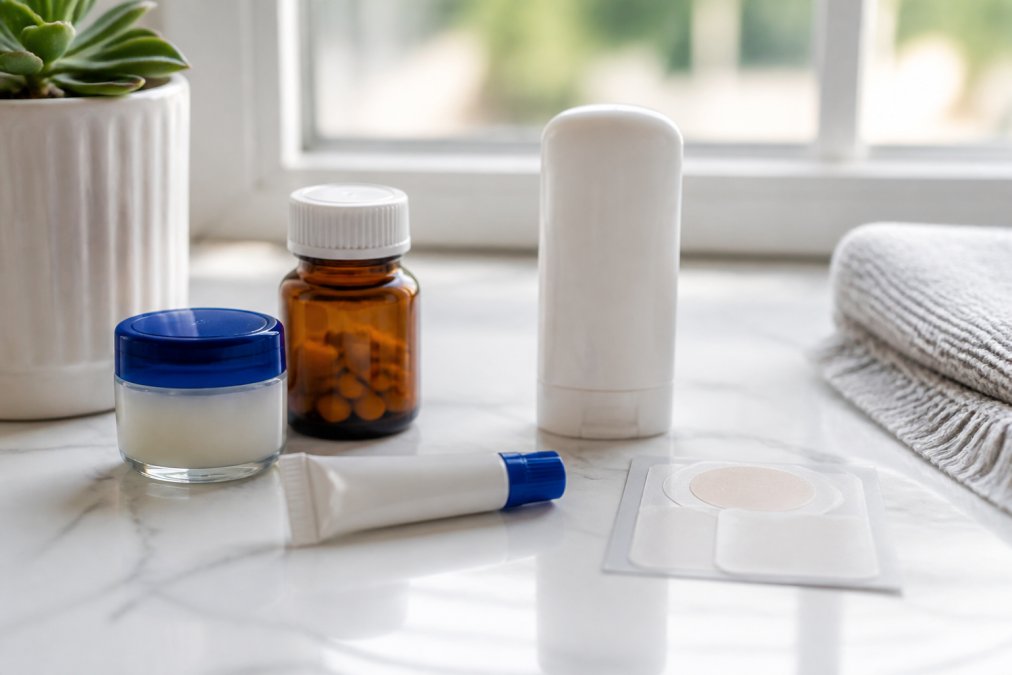
| Product | Type | Key Benefit | Best For | Price Range |
|---|---|---|---|---|
| LipCur | Topical cream | Fast-acting, 24-hour healing | Early detection, rapid results | $24.95 |
| Zovirax Cream | Prescription antiviral | Potent viral inhibition | Severe outbreaks, prescription access | $244 (brand) |
| Compeed Patches | Hydrocolloid patch | Discreet healing and protection | Work/social situations, visibility concerns | $14.52-15.87 |
| Carmex Multi-Symptom | Topical cream | Pain relief and redness coverage | Symptom management, cosmetic masking | $8.27-11.59 |
| ViruLite CS | Light therapy device | Drug-free acceleration | Long-term users, reusable preference | $149.00 |
| Quantum Health Super Lysine+ | Herbal ointment | Natural ingredients with lysine | Preference for botanical formulas | $7.38-7.48 |
| Releev 1 Day | Topical solution | Rapid symptom relief | Quick relief seekers | $22.99 |
LipCur: Fast-Acting Relief Within 24 Hours
LipCur combines fast-acting ingredients with a soothing base that prevents itching and tingling. When caught at the prodromal phase before the blister forms, LipCur often prevents the outbreak from advancing to full blister formation. Customers report visible improvement within hours and complete healing within 24 hours in many cases. At $24.95 per tube, the cost justifies the investment for anyone who gets cold sores regularly.

Zovirax Cream: Prescription-Strength Antiviral Power
Zovirax Cream contains acyclovir, a prescription-strength antiviral that inhibits herpes simplex virus replication by blocking viral DNA polymerase. Acyclovir has decades of clinical evidence showing it reduces outbreak duration and severity when applied early. The trade-off is access and cost: you need a prescription, and the brand-name version costs around $244, though generic acyclovir cream is significantly cheaper. For people with recurrent outbreaks, getting a prescription filled is straightforward; for those caught off-guard, the delay can mean missing the critical early window when antivirals are most effective.
Compeed Cold Sore Patches: Discreet Healing Technology
Compeed patches use hydrocolloid technology to create an optimal healing environment while providing invisible protection. The patches absorb fluid from the blister, maintain moisture balance, and act as a physical barrier against contamination, staying in place for up to 12 hours and working under makeup. Hydrocolloid particles promote faster skin cell regeneration compared to air-exposed healing. At $14.52 for 15 patches or $15.87 for 30 patches, the cost per use is reasonable for frequent users. Patches work best on established blisters, not the prodromal tingling phase.
Carmex Multi-Symptom Treatment: Pain Relief and Coverage
Carmex Multi-Symptom uses benzocaine to numb pain, natural minerals to hide redness, and a protective moisture barrier to prevent further irritation. At $8.27 to $11.59 per tube, it's one of the most affordable options. The limitation is that Carmex doesn't shorten healing time significantly, it treats symptoms, not the underlying viral infection. It works best as a complementary product: use it during the day for pain and coverage, then switch to an antiviral treatment at night.
ViruLite CS: Light Therapy for Faster Healing
ViruLite CS is an FDA-cleared handheld device that uses invisible infrared light therapy to accelerate cold sore healing by triggering cellular responses that enhance immune function. At $149.00, it represents a significant upfront investment, but the cost per use becomes negligible with frequent outbreaks. Clinical evidence supports light therapy: consistent use three times daily for two days can meaningfully reduce outbreak duration. The drawback is the commitment required and the upfront cost barrier for infrequent sufferers.
Lysine for Cold Sores: Supplement vs. Topical Solutions
Lysine for cold sores exists in two forms: oral supplements and topical applications. The theory is that lysine inhibits herpes virus replication by interfering with arginine metabolism. L-lysine supplements cost around $7.56 to $9.08 for a 30-count bottle of 1000mg tablets, making them one of the cheapest preventative approaches.
The evidence for oral lysine supplementation is mixed. Some studies show modest benefits in reducing outbreak frequency and severity, particularly in people with recurrent outbreaks who take lysine consistently. Topical lysine products like Quantum Health Super Lysine+ combine lysine with herbal ingredients like propolis, olive oil, and vitamin E at $7.38 to $7.48 per tube, but the scientific evidence for topical lysine specifically is weaker than for oral supplementation.
The practical approach: if you experience frequent outbreaks, oral lysine supplementation is inexpensive enough to trial for 2-3 months. Topical lysine products work as soothing treatments but shouldn't be your primary strategy if faster healing is the goal.
Prescription Cold Sore Medication: When Antivirals Make Sense
Prescription cold sore medication refers primarily to acyclovir-based treatments like Zovirax Cream or oral acyclovir tablets. These are prescribed when outbreaks are frequent, severe, or significantly impact quality of life. If you experience more than six outbreaks per year, your doctor may recommend prophylactic oral acyclovir taken daily to reduce outbreak frequency and severity.
The barrier is the time and cost of obtaining it. A telehealth visit costs $50-150, and the prescription itself may run $20-244. One often-missed option is asking your doctor for a standing prescription to keep at home for when the next outbreak occurs, eliminating the delay of scheduling an appointment during an outbreak.
How Long Do Cold Sores Last With Each Treatment Type
How long do cold sores last depends entirely on what you do and when you start. Without treatment, an untreated cold sore progresses through prodromal tingling (1-2 days), blister formation (2-3 days), crusting (3-5 days), and complete healing (7-10 days total).
With early antiviral intervention, you can reduce this significantly. Starting acyclovir or LipCur at the first tingling sensation can prevent blister formation entirely or reduce the outbreak to 3-5 days total. Treating an established blister accelerates the transition from crusting to healing, typically reducing the total duration by 2-3 days. Light therapy with ViruLite shows similar benefits when used consistently.
Symptom-management treatments like Carmex or hydrocolloid patches don't necessarily shorten healing time, but they reduce pain and visibility during the healing process. The timing of treatment is critical: a treatment started within 24 hours of the first tingling delivers 2-3x better results than the same treatment started on day 3 or 4.
Patch vs. Cream: Choosing the Right Delivery System
The choice between patches and creams isn't about which is objectively better, but which matches your situation and priorities. Creams and topical solutions like LipCur, Zovirax, Carmex, and Releev offer easy multiple-daily application, work at any outbreak stage, are portable and discreet, and cost $8-25 per tube. The disadvantage is that creams can be rubbed off by eating, drinking, or touching your lip, requiring frequent reapplication.
Patches like Compeed stay in place for up to 12 hours without reapplication and are invisible under makeup, making them ideal for professional settings. They create an optimal healing environment through hydrocolloid technology. The disadvantage is that they work best on established blisters, not the tingling phase, and require a clean, dry surface for proper adhesion.
The practical strategy: use both. Apply a fast-acting cream like LipCur at the first sign of tingling. If a blister develops despite treatment, switch to Compeed patches during work or social situations for discretion, then return to cream at night.
Cost-Benefit Analysis: Generic vs. Name-Brand Options
Generic acyclovir cream costs a fraction of brand-name Zovirax ($244), often running $20-50 for the same active ingredient and potency. The FDA requires generic drugs to be bioequivalent to their brand-name counterparts, so efficacy is identical.
Over-the-counter generics are less straightforward. Store-brand versions of Compeed patches or Carmex-style products may differ in subtle ways that affect performance. For specialized formulations like LipCur or Releev, there's no generic equivalent because they're proprietary formulations.
The practical rule: spend the extra few dollars on name-brand or specialized products when they target your specific need. Spend less on generics when the active ingredient is identical. A $20 treatment that works beats a $5 treatment that doesn't.
Lifestyle and Dietary Triggers: Prevention Beyond Treatment
Cold sores are triggered by specific factors that activate latent herpes simplex virus. Understanding and managing these triggers prevents outbreaks more effectively than treating them after they appear.

Stress is the most common trigger by suppressing immune function. Manage your stress response through exercise, meditation, adequate sleep, and social support.
Hormonal changes trigger outbreaks in many women, particularly around menstruation. If you notice outbreaks clustering around specific points in your cycle, discuss this with your healthcare provider.
Dietary factors matter significantly. Arginine, abundant in nuts, seeds, chocolate, and processed foods, promotes herpes virus replication. Lysine, found in dairy, eggs, and legumes, inhibits it. Reducing arginine-rich foods and increasing lysine-rich foods can reduce outbreak frequency meaningfully.
Sun exposure triggers outbreaks in many people by suppressing local immune function on your lips. Use sunscreen with SPF 30 or higher on your lips during outdoor activities.
Sleep deprivation weakens immune function generally, making outbreaks more likely. Prioritize 7-9 hours of consistent sleep to reduce outbreak frequency.
Identify your personal triggers through observation. Keep a simple log of when outbreaks occur and what was happening in the days before. After 2-3 outbreaks, patterns emerge. Address the modifiable triggers and discuss the hormonal ones with your healthcare provider.
The cold sore treatment landscape has evolved far beyond waiting it out. Whether you prioritize speed, discretion, cost, or natural ingredients, an effective alternative exists. LipCur delivers the fast-acting relief many people seek when standard over-the-counter treatments fall short, with clinically-formulated ingredients that stop outbreaks and help you heal within 24 hours. The key is matching the treatment to your situation: catch it early with a fast-acting cream, manage visibility with patches during work, and address underlying triggers to prevent future outbreaks. Start with FDA guidance on cold sore treatment options to understand the regulatory landscape, then choose the product that fits your specific needs and outbreak patterns.
Frequently Asked Questions
What clears up a cold sore the fastest?
Prescription antiviral treatments like acyclovir (Zovirax) work fastest when started at the first sign of tingling or prodromal phase, potentially reducing healing time to 3-5 days. Over-the-counter alternatives like LipCur and hydrocolloid patches can deliver results within 24 hours for many users. Light therapy devices (ViruLite) also show rapid results when used consistently. The key is early application, starting treatment during viral shedding's initial stages yields the best outcomes.
Is lysine as effective as docosanol for cold sores?
Lysine supplements show mixed results in clinical studies. While some users report reduced outbreak frequency and severity, docosanol (the active ingredient in Abreva) has stronger FDA-approved evidence for topical application. Lysine works differently, it may help inhibit viral replication when taken internally, but topical lysine lacks sufficient scientific evidence. For active cold sores, prescription antivirals or specialized creams typically outperform lysine supplements alone.
How do prescription antivirals compare to over-the-counter treatments?
Prescription antivirals like acyclovir directly target herpes simplex virus replication, reducing healing time significantly when applied early. Over-the-counter options range from symptom relief (benzocaine creams) to antiviral creams and patches. Prescription strength offers stronger pharmacological intervention, but OTC alternatives like LipCur, patches, and lysine provide faster relief than traditional remedies. Choice depends on outbreak severity, access, and budget, mild cases often respond well to quality OTC solutions.
Can I use these treatments if I catch the cold sore during the blister formation stage?
Yes, but effectiveness decreases as the outbreak progresses. Treatments work best during the prodromal phase (tingling/itching) and early blister formation. Once crusting begins, healing is already underway. Topical creams and patches still provide symptom management and may prevent secondary infection, but won't dramatically shorten duration. Prescription antivirals remain effective even in later stages, though results are less dramatic than early intervention.
This article was written using GrandRanker