

Table of Contents
- Catch It Early: The Prodrome Stage Is Your Best Chance to Stop Cold Sores Fast
- Start Treatment Immediately: How to Stop Cold Sores Early With Antivirals
- Over-the-Counter Cold Sore Treatment: What Actually Works at the Drugstore
- Home Care That Speeds Healing: Compresses, Moisture, and Protection
- How Long Do Cold Sores Last? Realistic Timelines at Each Stage
- Break the Cycle: Stress, Diet, and Habits That Trigger Outbreaks
- When to See a Doctor for a Cold Sore
- Conclusion: Your Fast-Healing Action Plan
- Frequently Asked Questions
Last Updated: September 5, 2026
Cold sores are a race against the clock. The moment you feel that telltale tingling sensation on your lip, you have a narrow window to act before the herpes simplex virus produces a visible blister. This guide from LipCur explains exactly how to stop cold sores fast, covering medical treatments, home care, and the lifestyle habits that keep outbreaks from returning. Most people wait until the sore appears to start treatment, the single biggest mistake you can make.

The key to stopping a cold sore quickly is understanding that the virus follows a predictable timeline. The prodrome stage, that initial burning or itching feeling, is when the virus is most vulnerable to treatment. Catching it in this window can mean the difference between a tiny red spot that fades in a day and a full-blown blister that lingers for a week.
Catch It Early: The Prodrome Stage Is Your Best Chance to Stop Cold Sores Fast
The prodrome stage is the warning signal your body sends before a cold sore becomes visible. It typically feels like a localized tingling, itching, or mild burning on or around the lip, beginning 12 to 24 hours before any blister appears (mayoclinic.org). This is your earliest and most effective opportunity to intervene.
During this phase, the virus is actively replicating at the skin surface but has not yet caused visible tissue damage. Antiviral treatment started now can significantly reduce the severity and duration of the outbreak. Keep a treatment product in your bag, car, and bathroom so you are never caught without it when the tingling starts.
Start Treatment Immediately: How to Stop Cold Sores Early With Antivirals
Prescription antiviral medications are the most effective tools for stopping an outbreak in its tracks. Medications like aciclovir, valaciclovir, and famciclovir work by interfering with viral replication, directly limiting how long the outbreak lasts and how severe it becomes.
These medications come in both oral pills and topical creams. For recurrent infections, many dermatologists recommend keeping a prescription on hand so you can begin treatment at the very first sign of the prodrome stage.
For those who prefer an over-the-counter approach, LipCur offers a fast-acting formula designed to stop cold sores and promote healing within 24 hours when applied at the first tingle. Its gentle, soothing formula repairs and protects the skin while preventing the uncomfortable itching and tingling that accompanies outbreaks.
Over-the-Counter Cold Sore Treatment: What Actually Works at the Drugstore
Not all drugstore remedies are created equal. The most effective over-the-counter cold sore treatment contains an active ingredient that targets the virus directly, typically docosanol, which works by preventing the virus from fusing with healthy skin cells. Products without an antiviral ingredient offer only symptomatic relief.
When you are standing in the pharmacy aisle, look for treatments that address both healing and symptom management. A quality product should reduce redness, soothe irritation, and create a protective barrier over the sore. Many basic lip balms and ointments moisturize but do nothing to fight the underlying viral activity.
LipCur's clinically formulated treatment is designed to soothe irritation, reduce redness, and promote faster healing. For those who have tried other products without success, switching to a targeted antiviral formula can make a measurable difference in healing time.
Home Care That Speeds Healing: Compresses, Moisture, and Protection
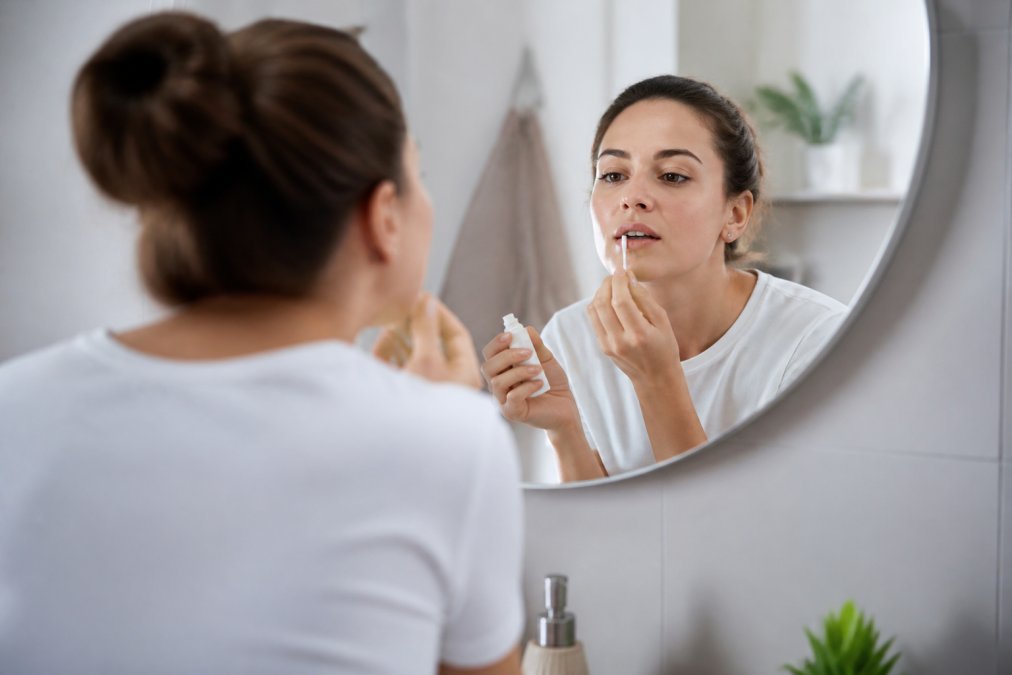
Once antiviral treatment is underway, your home care routine determines how quickly the lesion heals and whether it leaves a scar. The goal is to manage inflammation, prevent secondary bacterial infection, and protect the fragile new skin forming underneath the scab.
The Cold Compress Protocol for the Blister Phase
During the first 48 hours, when the blister is actively forming and weeping, a cold compress is your primary tool for pain and swelling. The cold constricts local blood vessels, reducing the fluid buildup that makes the sore feel tight and throbbing. Apply a clean, damp cloth or an ice pack wrapped in a towel for 10 to 15 minutes every 2 to 3 hours. Do not apply ice directly to the skin, frostbite on already-damaged tissue will delay healing and increase pain.
Switching to Warm Compresses at the Crust Stage
Once the blister has ruptured and a crust begins to form (usually day 3 or 4), switch to a warm compress. Warmth increases local blood flow, bringing immune cells to the area and accelerating tissue repair. Soak a clean cloth in warm, not hot, water and hold it against the sore for 5 to 10 minutes once or twice daily. This also softens the crust, reducing the urge to pick at it and preventing painful cracks when you move your mouth.
Moisture Management: The Trade-Off Between Wet and Dry
Conventional wisdom once said to dry out a cold sore, but modern dermatology has reversed that advice. A dry, cracked crust is more likely to split, bleed, and become infected. The key is controlled moisture: you want the area hydrated but not macerated. A thin layer of petroleum jelly or a fragrance-free ointment (like Aquaphor) creates an optimal environment for cell migration and re-epithelialization. Avoid water-based lotions, which evaporate quickly and can actually pull moisture out of the skin.
How to Conceal a Cold Sore Without Delaying Healing
This is the question patients ask most often in the clinic, yet it is almost never answered in online guides. The short answer: yes, you can cover a cold sore, but only after the weeping phase has ended and a dry crust has formed. Applying makeup to an open, oozing lesion traps bacteria against the wound and dramatically increases your risk of a secondary infection that will extend the outbreak by days.
When the sore has crusted over, follow this protocol to minimize both visibility and healing time:
- Cleanse gently with a mild, fragrance-free cleanser and pat dry with a clean paper towel, never a shared cloth towel.
- Apply a thin layer of your antiviral cream or petroleum jelly and let it absorb for 5 minutes. This creates a barrier between the sore and the makeup.
- Use a new, disposable applicator (a cotton swab or a fresh makeup sponge) to apply a green-tinted color corrector. Green neutralizes the red tone of the lesion.
- Dab, don't rub, a non-comedogenic concealer over the corrector. Rubbing can dislodge the crust.
- Set with a light dusting of translucent powder to keep the product in place.
Crucially, never dip your fingers or a reusable brush directly into your makeup containers after touching the sore. The herpes simplex virus can survive on inanimate surfaces for several hours, and you will contaminate the entire product, risking reinfection or transmission to your eyes or other areas. Use disposable applicators every time, and discard them immediately after use. Wash your hands thoroughly with soap and water before and after the application process.
The Picking Problem: Why It Always Backfires
The crust is not a nuisance to be removed; it is a biological bandage composed of dried serum, dead cells, and fibrin. Picking it off exposes immature keratinocytes that are not yet resistant to bacterial invasion. This almost always results in a deeper wound, a longer healing timeline, and a higher likelihood of permanent hyperpigmentation or scarring. If the crust cracks and bleeds, reapply a small amount of petroleum jelly and leave it alone.
When to Stop Active Care
Continue the moisturizing and protection routine for 2 to 3 days after the crust has fallen off. The new skin underneath is thin, pink, and highly vulnerable to sun damage. Apply a lip balm with SPF 30 or higher daily for at least two weeks after the sore resolves to prevent post-inflammatory hyperpigmentation and to reduce the risk of a UV-triggered recurrence in the same spot.
How Long Do Cold Sores Last? Realistic Timelines at Each Stage
A common question is how long do cold sores last without treatment. The full lifecycle of an untreated cold sore typically runs 8 to 12 days, moving through the prodrome, blister, ulcer, crusting, and healing stages (the CDC). With prompt antiviral treatment, that timeline can shrink to just a few days.
The table below summarizes what to expect at each stage:
| Stage | Duration | Key Actions |
|---|---|---|
| Prodrome (tingling) | 12-24 hours | Start antiviral treatment immediately |
| Blister formation | 1-2 days | Apply cold compresses, continue treatment |
| Ulcer / weeping | 1-2 days | Keep clean, avoid touching |
| Crusting | 2-3 days | Moisturize, do not pick |
| Healing | 1-3 days | Protect skin, continue moisturizing |
Treatment that begins during the prodrome stage offers the best chance of stopping the process before the blister forms. Many users of fast-acting formulas report the sore never progresses beyond a small red mark.
Break the Cycle: Stress, Diet, and Habits That Trigger Outbreaks
For the estimated 50 to 80 percent of American adults who carry the herpes simplex virus, the real battle is not treating a single sore, it is preventing the next one (the NIH). Recurrent outbreaks are rarely random. They follow patterns tied to your immune system's fluctuating defenses. Understanding the physiological mechanisms behind your triggers gives you the power to interrupt the cycle before the tingling even starts.
The Cortisol-Immunity Connection: Why Stress Literally Causes Outbreaks
The link between stress and cold sores is not psychosomatic, it is biochemical. When you experience psychological stress, your adrenal glands release cortisol. Elevated cortisol levels suppress the function of T-cells and natural killer cells, the immune components responsible for keeping the herpes simplex virus latent in your trigeminal nerve ganglion. When this immune surveillance drops, the virus seizes the opportunity to reactivate and travel down the nerve fiber to the skin surface.
What most articles fail to mention is that the type of stress matters. Acute stress, a job interview, a fight with a partner, can trigger an outbreak within 24 to 48 hours. But chronic, low-grade stress (ongoing work pressure, financial worry, poor sleep quality) creates a persistently suppressed immune state that makes you vulnerable to more frequent recurrences. A common pattern is that patients report outbreaks during the "let-down" period after a stressful event concludes, when cortisol levels are normalizing but the immune system is still recovering.
A Practical Stress-Reduction Protocol for Outbreak Prevention
Generic advice to "manage stress" is useless without a protocol. The following evidence-informed habits have the strongest track record for reducing outbreak frequency in clinical practice:
- Prioritize sleep quantity and consistency. Sleep deprivation for even one night can reduce natural killer cell activity by up to 30 percent. Aim for 7 to 9 hours per night, and maintain a consistent sleep-wake schedule even on weekends. Your immune system performs its viral surveillance during deep sleep stages.
- Use box breathing during acute stress spikes. When you feel the physiological symptoms of stress (racing heart, shallow breathing), the virus may already be sensing the cortisol surge. Practice 4-4-4-4 box breathing: inhale for 4 counts, hold for 4, exhale for 4, hold for 4. Repeat for 3 to 5 minutes. This activates the parasympathetic nervous system and begins to lower cortisol within minutes.
- Schedule deliberate physical recovery. Moderate exercise (brisk walking, cycling, swimming) for 30 minutes most days improves immune surveillance. However, overtraining, intense exercise sessions lasting over 90 minutes without adequate recovery, can temporarily suppress immunity and trigger outbreaks in susceptible individuals. Listen to your body's recovery signals.
The Lysine-Arginine Balance: What the Research Actually Shows
The dietary trigger conversation centers on the amino acid balance between L-lysine and L-arginine. The herpes simplex virus requires arginine to replicate. Lysine, by contrast, competes with arginine for absorption in the gut and transport into cells. The theory is that a higher lysine-to-arginine ratio in your diet starves the virus of the arginine it needs to multiply.
Clinical evidence on oral lysine supplementation is mixed, but the practical experience of many chronic sufferers is compelling enough that most practitioners consider it a low-risk adjunct. The typical recommendation is 1,000 to 3,000 mg of L-lysine daily during an outbreak, and 500 to 1,000 mg daily for prevention. If you choose to supplement, take it on an empty stomach for better absorption, and be aware that high doses can cause gastrointestinal upset in some people.
More actionable than supplementation is adjusting your dietary ratio. Foods high in arginine that are commonly implicated in triggering outbreaks include:
- Nuts and seeds (especially peanuts, walnuts, almonds, and sunflower seeds)
- Chocolate (cocoa is exceptionally high in arginine)
- Whole grains (oats, wheat germ, brown rice)
- Caffeine (coffee and black tea)
Foods that tip the balance toward lysine include:
- Dairy products (milk, yogurt, cheese)
- Fish (especially salmon, sardines, and cod)
- Poultry (chicken and turkey)
- **Eggs)
- Legumes (lentils, chickpeas, black beans)
This does not mean you must eliminate nuts and chocolate forever. It means being strategic: if you know a high-arginine meal is coming (a handful of almonds, a chocolate dessert), pair it with a lysine-rich food or take a lysine supplement beforehand to balance the ratio.
The Sun Trigger: UV Exposure and the SPF Habit
Ultraviolet radiation is one of the most well-documented physical triggers for cold sore recurrence. UV light suppresses local skin immunity and directly stimulates viral reactivation in the nerve endings. The lips are particularly vulnerable because they lack melanin, the pigment that provides natural UV protection.
The fix is simple and non-negotiable for recurrent sufferers: apply a lip balm with SPF 30 or higher every morning, year-round, regardless of cloud cover. Reapply every 2 hours when outdoors, after eating, and after swimming. This single habit has been shown in clinical observation to dramatically reduce the frequency of sun-triggered outbreaks.
Tracking Your Personal Trigger Pattern
Every individual has a unique trigger profile. The most effective way to identify yours is to maintain a simple outbreak journal. For each recurrence, record the following:
- Date of the prodrome (tingling) onset
- Stress level in the preceding 72 hours (scale of 1-10)
- Sleep quality in the preceding 48 hours
- Any unusual dietary intake (especially high-arginine foods)
- Sun exposure without SPF protection
- Any illness, fever, or hormonal changes (for women, note menstrual cycle phase)
After 3 to 4 outbreaks, patterns will emerge. One patient may find that every outbreak follows a night of fewer than 5 hours of sleep. Another may trace recurrences to days after consuming large amounts of chocolate. Armed with this data, you can preemptively increase your antiviral vigilance (keep medication on hand, apply SPF diligently, prioritize sleep) during your personal high-risk windows.
For those who experience more than 6 outbreaks per year, discuss suppressive antiviral therapy (typically once-daily valaciclovir) with your healthcare provider. This approach reduces outbreak frequency in clinical trials.
When to See a Doctor for a Cold Sore
Most cold sores resolve without medical intervention, but certain situations warrant a professional consultation. If your outbreak lasts longer than two weeks, spreads to other parts of the body such as the eyes or genitals, or is accompanied by a high fever, you should seek medical advice promptly.
Individuals with weakened immune systems, whether from chronic illness or medical treatments, should consult a doctor at the first sign of an outbreak. Cold sores that become unusually large, painful, or frequent may indicate an underlying health issue that requires evaluation. A doctor can prescribe oral antivirals for severe or frequent cases and rule out other conditions.
Conclusion: Your Fast-Healing Action Plan
The formula for stopping a cold sore quickly is simple: recognize the prodrome stage, start antiviral treatment immediately, and support healing with proper home care. Waiting to act is the most common reason outbreaks become severe and long-lasting.
For a reliable, fast-acting solution, LipCur offers a targeted treatment that works within 24 hours to stop outbreaks, prevent itching and tingling, and repair damaged skin. With a 120-day money-back guarantee, you can try it with confidence. Get started with LipCur and shorten your next outbreak from a week to a day.
Frequently Asked Questions
What kills cold sores the quickest?
Prescription antiviral pills like valaciclovir or famciclovir work fastest when taken at the first tingle. Over-the-counter docosanol cream (Abreva) is the most effective non-prescription option. For the quickest results, combine early antiviral treatment with a cold compress to reduce swelling. LipCur's formula is designed to soothe irritation and support healing within 24 hours when applied at the first sign of an outbreak.
Are there FDA-approved over-the-counter treatments for cold sores?
Yes. Docosanol 10% cream is the only FDA-approved over-the-counter antiviral ingredient specifically for cold sores. It works by preventing the herpes simplex virus from fusing with your skin cells, which shortens healing time. Other OTC products like Blistex or Orajel may soothe symptoms but do not have antiviral properties. For a targeted approach, look for treatments formulated to both protect the sore and support faster healing.
How long do cold sores last without treatment versus with treatment?
Without treatment, a cold sore typically lasts 8 to 10 days from the first tingle to full healing. With early antiviral treatment, you can shorten that to about 5 days. Catching the outbreak during the prodrome stage, when you feel tingling or itching, gives you the best chance to stop cold sores fast. Consistent use of a protective balm also prevents cracking and reduces the risk of a secondary infection that can prolong healing.
Can you stop a cold sore from breaking out once you feel the tingling?
Sometimes yes, but you need to act within hours. The tingling sensation is the prodrome stage, when the virus is replicating but blisters have not formed yet. Taking a prescription antiviral or applying a docosanol cream immediately can stop the sore from fully developing in some cases. Even if a blister appears, early treatment keeps it smaller and speeds up the crusting stage significantly.
This article is for informational purposes only and does not constitute medical advice. Consult a qualified healthcare professional for diagnosis and treatment of cold sores or recurrent infections.
This article was written using GrandRanker