

Table of Contents
- Why Cold Sores Feel So Visible (and What Actually Helps)
-
Step-by-Step: How to Hide a Cold Sore Naturally
- Start With a Clean, Dry Base
- Choose the Right Formula: What to Look For and What to Avoid
- Use a Green Concealer to Neutralize Redness
- Apply a Cream Concealer With a Sterile Applicator
- Set With Powder, But Choose the Right Kind
- The Texture Problem: When Makeup Won't Stick
- A Note on Lip Liner and Gloss
- Natural Remedies for Cold Sores That Speed Up Healing
- How to Get Rid of Cold Sores Fast: Catch It in the Prodrome Stage
- Cold Sore Healing Stages: What to Expect Day by Day
- Hygiene Rules to Prevent Spreading and Reinfection
- When to See a Doctor and What to Avoid
- Frequently Asked Questions
Last Updated: September 7, 2026
Why Cold Sores Feel So Visible (and What Actually Helps)
A cold sore can derail your confidence faster than almost any other skin issue. You wake up, glance in the mirror, and there it is, a red, swollen mark right where everyone will look. Cold sores are caused by the herpes simplex virus (HSV-1), and once the blister appears, it becomes a focal point for your attention and, you fear, everyone else's (the CDC).
The good news is that you don't have to cancel your plans. With the right techniques, you can effectively hide a cold sore naturally while supporting your skin's healing process. This guide walks you through practical makeup methods and natural remedies that reduce visibility without irritating the delicate skin on your lip.
The key insight most guides miss is that hiding a cold sore and healing it are not separate tasks. The best concealment strategy protects the skin barrier and allows the healing process to continue underneath.
Step-by-Step: How to Hide a Cold Sore Naturally
Concealing a cold sore requires a different technique than covering a blemish. The skin is often cracked, weeping, or swollen, so standard makeup application can make the area look worse or delay healing. The goal is to neutralize the redness, smooth the texture, and protect the area from further irritation. The real difference between a flawless cover-up and a cakey, irritated mess comes down to product formulation and sanitary technique.
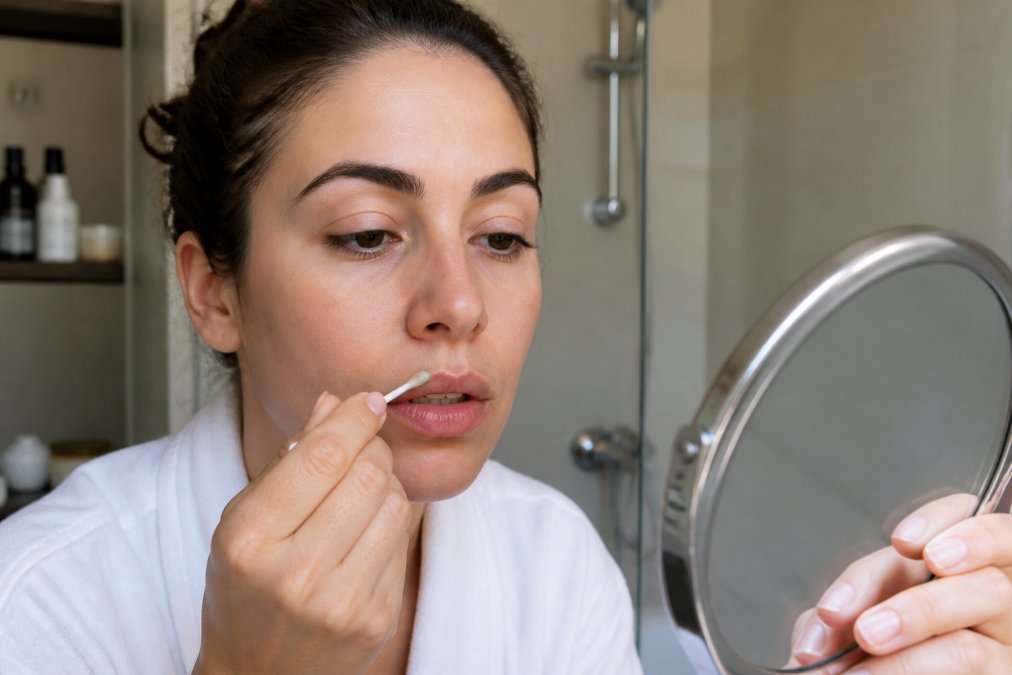
Start With a Clean, Dry Base
Begin with clean hands and a clean face. Gently wash the area around the cold sore with a mild cleanser and pat it dry with a fresh towel. Do not rub, as friction can cause cracking or bleeding. The skin needs to be completely dry before you apply any product; moisture will cause the concealer to slide off and can trap bacteria against the sore. If the sore is weeping, gently dab (never wipe) the area with a sterile tissue to absorb excess fluid.
Choose the Right Formula: What to Look For and What to Avoid
Not all concealers are safe to use on an active lesion. The skin on your lip is thin and highly permeable, and the broken skin of a cold sore allows ingredients to penetrate deeper than they would on intact skin. Before applying anything, check the ingredient list for the following:
Avoid these ingredients:
- Fragrance and essential oils (e.g., limonene, linalool): These are common irritants that can cause stinging and prolong inflammation.
- Alcohol denat. or SD alcohol: These solvents strip the skin barrier and will dry out the sore, causing cracking and making it more visible.
- Camphor or menthol: While these are common in cold sore treatments, they are too harsh for a makeup base and can cause a burning sensation under occlusion.
- Comedogenic oils like coconut oil or cocoa butter in heavy layers: While moisturizing, they can trap bacteria and cause folliculitis around the lip line.
Look for these ingredients:
- Dimethicone or cyclopentasiloxane: These silicone-based ingredients create a smooth, breathable barrier that fills in texture without clogging the sore. They are non-comedogenic and help the concealer glide over uneven scabs.
- Glycerin or hyaluronic acid: Humectants that draw moisture into the skin without adding heavy oils, preventing the dry, flaky look that makes cold sores obvious.
- Bisabolol or allantoin: Soothing agents that reduce redness and calm the surrounding inflamed skin.
Use a Green Concealer to Neutralize Redness
Green concealer is your best tool here. On the color wheel, green cancels out red, which is why makeup artists use it to hide blemishes and cold sores. Apply a thin layer of green color corrector directly to the red areas using a sterile cotton swab. Let it sit for a minute to dry slightly. This step reduces the appearance of inflammation without caking on thick layers of skin-toned makeup. For more precise application, use a synthetic flat brush (non-porous and easier to sanitize) rather than a fluffy brush.
Apply a Cream Concealer With a Sterile Applicator
Once the green corrector is set, apply a cream concealer that matches your skin tone exactly. Use a fresh cotton swab or a disposable applicator to dab the product on gently, building coverage in thin layers rather than one heavy swipe. Cream formulas are more moisturizing than liquid ones and are less likely to settle into cracks. Use a stippling motion, lightly tapping the product with your fingertip (after washing your hands) or a damp sponge, rather than swiping. Swiping drags the product and can lift the scab, while stippling presses the pigment into the skin's texture for a more natural finish.
Set With Powder, But Choose the Right Kind
Set the area with a light dusting of translucent powder to keep the makeup in place. Avoid pressed powders that contain talc and bismuth oxychloride, which can flashback in photos and look chalky on dry skin. Instead, use a finely milled loose powder with silica or rice starch. Apply it with a clean, fluffy brush using a gentle pressing motion, then brush off the excess. If the sore is in the crust stage, skip the powder entirely, it will cling to the scab and make it more noticeable. Instead, use a matte lip balm over the area to blur the texture.
The Texture Problem: When Makeup Won't Stick
If the sore is in the blister or ulcer stage, the surface is too wet for makeup to adhere properly. Skip the color corrector and concealer entirely. Instead, apply a hydrocolloid patch over the sore. These patches (available at most drugstores under brands like Compeed or generic store labels) create a smooth, flat surface that you can then apply concealer over. The patch also absorbs weeping fluid and protects the area from bacteria. Apply the patch, wait 30 minutes for it to adhere fully, then apply your concealer directly over the patch.
A Note on Lip Liner and Gloss
Avoid using lip liner directly on the sore, as the waxy formula can tug at the skin and the pencil itself can harbor bacteria. If you need to define your lip shape, line just outside the border of the sore to distract the eye. Skip high-shine glosses during the blister and ulcer stages, gloss reflects light and draws attention to texture. A satin or matte lipstick in a shade close to your natural lip color is less conspicuous than a bold red.
Natural Remedies for Cold Sores That Speed Up Healing
While makeup hides the sore for a few hours, natural remedies address the root of the problem: the viral activity and inflammation. A combination of soothing ingredients and antiviral agents can reduce the time the sore remains visible.
Cold Compress and Aloe Vera for Swelling
A cold compress is one of the simplest ways to manage swelling and redness. Wrap an ice cube in a clean cloth and hold it against the sore for a few minutes at a time. This constricts blood vessels, reducing the inflammation that makes the sore prominent. Afterward, apply pure aloe vera gel, which soothes the skin and keeps it hydrated to prevent cracking as the sore heals.
Lemon Balm and Tea Tree Oil: What the Evidence Says
Some natural ingredients show promise in managing cold sores. Lemon balm is a traditional herb used for its antiviral properties against the herpes simplex virus. Tea tree oil, applied in a heavily diluted form, may help dry out the blister. However, these are not substitutes for clinical treatment. If you use tea tree oil, mix one drop with a carrier oil like coconut oil, as undiluted application can burn the sensitive skin on your lip.
How to Get Rid of Cold Sores Fast: Catch It in the Prodrome Stage
The most effective way to get rid of cold sores fast is to act before the blister appears. Most people experience a prodrome stage, a period of tingling, itching, or burning at the site, 24 to 48 hours before the sore erupts (mayoclinic.org). This is your window to stop the outbreak.
When you feel that first tingle, apply a fast-acting topical treatment immediately. Products designed to stop cold sores work best during this phase. LipCur offers a fast-acting, specialized solution for anyone seeking reliable relief from cold sores, stopping outbreaks in their tracks and helping you heal within 24 hours. Our gentle, soothing formula not only repairs and protects your skin but also prevents the uncomfortable itching and tingling associated with cold sores. The sooner you apply it, the more likely you are to prevent a visible sore.

This approach is critical for professionals who cannot afford a visible mark during important meetings or social events. Catching the outbreak early is the difference between a minor inconvenience and a week of hiding your face.
Cold Sore Healing Stages: What to Expect Day by Day
Understanding the cold sore healing stages helps you manage expectations and adjust your concealment strategy. A typical outbreak progresses through five distinct phases.
| Stage | Duration | What It Looks Like | Best Action |
|---|---|---|---|
| Prodrome | 0-2 days | Tingling, itching, burning | Apply antiviral treatment immediately |
| Blister | 1-2 days | Small, fluid-filled bumps | Keep dry, apply cold compress |
| Ulcer | 1-2 days | Blister bursts, weeping | Use hydrocolloid patch, avoid picking |
| Crust | 2-3 days | Yellowish scab forms | Moisturize to prevent cracking |
| Healing | 1-2 days | Scab falls off, pink skin remains | Protect with balm, avoid lipstick |
The blister and ulcer stages are the most difficult to conceal because the skin is wet and textured. During these phases, a hydrocolloid patch can be a lifesaver, creating a protective barrier that flattens the texture so makeup applies more smoothly while absorbing weeping fluid.
Hygiene Rules to Prevent Spreading and Reinfection
Managing a cold sore is as much about hygiene as it is about treatment. The herpes simplex virus is highly contagious, and you can easily spread it to other parts of your face or to other people.
- Wash your hands thoroughly with soap and water after touching the sore or applying any product.
- Use disposable cotton swabs or applicators instead of your fingers.
- Do not pick at the scab. Picking increases healing time and risks scarring.
- Replace your toothbrush after the outbreak ends to prevent the virus from lingering.
- Avoid kissing and oral contact until the sore is completely healed.
These practices protect others and prevent you from developing a secondary infection. If you wear makeup regularly, consider using a separate concealer specifically for cold sore outbreaks so you do not contaminate your everyday products.
When to See a Doctor and What to Avoid
Most cold sores clear up on their own within 7 to 10 days, but certain situations warrant medical attention. If you have frequent outbreaks (more than six per year), if the sore does not heal within two weeks, if you have a weakened immune system, or if the infection spreads to your eyes, consult a healthcare provider (the American Academy of Dermatology). They may prescribe antiviral medications like valacyclovir (Valtrex) or acyclovir (Zovirax), which are stronger than over-the-counter options and can shorten an outbreak by 1 to 2 days when taken at the first sign of tingling.
There are also ingredients you should avoid during an outbreak. Steer clear of harsh exfoliants, products containing alcohol, and strong acids like salicylic acid or glycolic acid that can strip the skin barrier. These will increase inflammation and slow the healing process. Additionally, avoid picking at the sore to prevent cracking and bleeding, which makes the area harder to hide and more prone to infection.
What Most Guides Miss: Post-Healing Skin Care
Once the scab falls off, the skin underneath is fragile, pink, and prone to hyperpigmentation, especially on the lip border where melanin production can be erratic. This is the stage where most people stop treating the area, which is a mistake. The skin needs targeted care for 2 to 4 weeks after the visible sore disappears to prevent a dark spot or scar from lingering.
Immediately after the scab falls off:
- Switch from cold sore treatments to a gentle, fragrance-free moisturizer. Look for ceramides or squalane, which help rebuild the compromised skin barrier.
- Apply a broad-spectrum sunscreen with SPF 30 or higher to the area every morning. The lip border is one of the most sun-exposed areas of the face, and UV exposure will darken any residual redness or brown discoloration. Most people forget to apply sunscreen to their lips, which is why post-cold-sore marks can persist for weeks.
For the first week after healing:
- Use a product containing niacinamide (at 4-5% concentration) or vitamin C (in a stable form like magnesium ascorbyl phosphate) to fade any residual redness or hyperpigmentation. These ingredients are gentle enough for the lip area when applied in thin layers.
- Avoid retinol or prescription-strength acids on the area for at least two weeks. The skin is still rebuilding its barrier, and these active ingredients can cause peeling and worsen discoloration.
For scarring prevention:
- If the sore left a depressed scar (more common if you picked at it), silicone gel sheets or silicone-based scar creams can help flatten and soften the tissue. Apply them nightly for 4 to 6 weeks.
- Massage the area gently with a clean fingertip for 30 seconds daily. This improves blood flow and prevents the tissue from adhering to underlying layers, which can cause a puckered appearance.
When to See a Dermatologist for Post-Healing Issues
If the pink or brown mark does not fade after 8 weeks, or if you notice the skin becoming raised or thickened, see a board-certified dermatologist. They may recommend prescription-strength hydroquinone (for hyperpigmentation) or a low-dose corticosteroid (for inflammation). Do not attempt to treat persistent discoloration with over-the-counter lightening creams that contain mercury or hydroquinone at unregulated concentrations, these are dangerous and can cause permanent damage.
Hiding a cold sore is a temporary fix, but the real goal is healing, and that includes the weeks after the sore disappears. Treat the post-healing skin with the same care you gave the active outbreak: moisturize, protect from the sun, and avoid harsh actives. This prevents the long-term reminder of a cold sore from sticking around after the virus has gone dormant.
Frequently Asked Questions
What kills cold sores the fastest?
The fastest approach is catching the outbreak during the prodrome stage, when you feel tingling but no blister has formed yet. Applying a fast-acting cold sore treatment like LipCur at that first tingle can stop the sore from becoming visible. For an active sore, a cold compress reduces swelling and a hydrocolloid patch protects the area while it heals. Avoid picking or touching the blister, since that prolongs healing and increases the risk of spreading the herpes simplex virus.
How can I hide a cold sore without makeup?
If you prefer to avoid makeup, focus on reducing the sore's appearance. A cold compress shrinks swelling and redness. Hydrocolloid patches create a smooth, less noticeable surface while protecting the blister. Keeping the area moisturized with aloe vera prevents cracking and flaking, which makes the sore less obvious. If you catch it early, a fast-acting treatment can stop it from becoming a visible blister altogether, which is the most effective way to hide a cold sore naturally.
What natural remedies help speed up the healing of cold sores?
Several natural remedies show promise for cold sores. A cold compress applied for 10-15 minutes several times a day reduces inflammation and pain. Aloe vera gel soothes the skin and supports the skin barrier. Lemon balm and tea tree oil have antiviral properties, but always dilute tea tree oil with a carrier oil to avoid irritation. Lysine supplements may help reduce outbreak frequency for some people. These remedies work best when combined with a fast-acting treatment to address the herpes simplex virus directly.
How can I prevent cold sores from becoming more noticeable?
Prevention starts at the first tingle. Apply a fast-acting treatment immediately to stop the blister from forming. Keep the area clean and dry between applications to prevent cracking and bleeding. Avoid touching or picking the sore, which causes scabbing and makes it more visible. If you use makeup to cover it, always use a sterile applicator and never share products. Managing your triggers, like stress and sun exposure, helps reduce how often outbreaks appear.