

Table of Contents
- Why Catching a Cold Sore at the Tingling Stage Matters Most
- Cold Sore Stages and Treatment: What Happens and When to Act
- How Long Do Cold Sores Last and What Speeds Up Healing
- Best Over the Counter Medicine for Cold Sores: What to Look For
- Fastest Way to Dry Out a Cold Sore: Step-by-Step
- Cold Compress, Hygiene Practices, and Everyday Care to Stop the Spread
- Cold Sores vs. Pimples and Canker Sores: Getting the Diagnosis Right
- Conclusion: Heal Faster Without the Guesswork
- Frequently Asked Questions
Last Updated: September 22, 2026
Why Catching a Cold Sore at the Tingling Stage Matters Most
The fastest way to dry out a cold sore is to start treatment the moment you feel that first tingle. That window, often called the prodrome stage, is when the herpes simplex virus is still waking up in your nerve cells. Act now, and you can often cut the outbreak short before a blister ever forms.
Cold Sore Stages and Treatment: What Happens and When to Act
A cold sore moves through three clear stages, and each one calls for a slightly different approach. Knowing where you are helps you pick the right treatment at the right time.
Stage 1: Tingling and Itching (Prodrome)
This is the golden window. You feel a tingle, itch, or slight burn, but no blister is visible yet. The virus is active but hasn't fully surfaced. Antiviral treatment works best here because it can interrupt viral replication before the blister forms.
Stage 2: Blister Formation and Ulcer
A small, fluid-filled blister appears, then breaks open into a shallow ulcer. This is the most contagious phase. The sore weeps fluid loaded with virus. Keep your hands off it, and don't share cups, towels, or lip balm.
Stage 3: Scabbing and Healing
A yellow or brown crust forms over the sore. It cracks, itches, and can bleed if you pick at it. This stage is about protection. A moisturizing balm keeps the scab flexible so it heals without splitting.
| Stage | What You See | What to Do | Contagious? |
|---|---|---|---|
| Prodrome | Tingle, itch, no blister | Start antiviral treatment now | Yes |
| Blister/Ulcer | Fluid blister, open sore | Keep clean, don't touch | Highly |
| Scabbing | Crust forms, itching | Moisturize, protect skin | Less so |
How Long Do Cold Sores Last and What Speeds Up Healing
Cold sores typically last 7 to 10 days from the first tingle to the last flake of scab. That timeline holds for most healthy adults. But it's not fixed. How fast you heal depends on when you start treatment and how well you care for the sore.
A few things reliably shorten the healing process:
- Starting an antiviral or soothing treatment at the tingle stage
- Keeping the sore moist so the scab doesn't crack
- Avoiding picking, squeezing, or scrubbing the area
- Getting enough sleep and managing stress
- Using sun protection on your lips, since UV light can trigger outbreaks
Best Over the Counter Medicine for Cold Sores: What to Look For
The best over the counter medicine for cold sores depends on what you are trying to do: interrupt the virus, numb the pain, or protect the skin while it heals. Drugstore shelves mix all three, and the labels rarely make the difference obvious. Here is how to read them.
Antiviral Creams: The Only OTC Category That Targets the Virus
Only one nonprescription ingredient is FDA-approved to shorten a cold sore's healing time: docosanol 10% cream (sold under brand names like Abreva). It works by blocking the herpes simplex virus from fusing with healthy skin cells, which slows the spread of the outbreak. The catch is timing and frequency. Docosanol is meant to be applied at the very first tingle, five times a day, and rubbed in until it disappears (DailyMed).
A few practical notes most guides skip:
- Docosanol is not a cure. In clinical use it typically shortens healing by about a day, not by a week.
- It should not be used on canker sores or inside the mouth.
- Wash your hands before and after applying, and use a clean cotton swab or a fresh fingertip each time so you do not contaminate the tube.
Soothing Balms and Skin-Repair Formulas
Balms and repair formulas do not fight the virus directly. Instead, they calm inflammation, ease pain, and protect the skin barrier so it can heal. Look for gentle ingredients like lemon balm, licorice root, and calendula. These botanicals are common in lip-repair products, including LipCur's formula, which is designed to soothe irritation and support faster healing.

Pain Relievers and Numbing Agents
For discomfort, two OTC categories help:
- Oral pain relievers such as acetaminophen or ibuprofen reduce pain and swelling systemically.
- Topical anesthetics such as benzocaine or lidocaine numb the sore for a short window. Use them sparingly, since overuse can irritate already-compromised skin.
What OTC Options Cannot Do
No OTC product clears the virus from your body. The virus lives dormant in nerve cells and can reactivate. If you get frequent, severe, or slow-healing outbreaks, a clinician can prescribe oral antivirals such as acyclovir, valacyclovir, or famciclovir. These are prescription-only and work best when started within 48 hours of the first symptom.
LipCur - 120 Day Money Back Guarantee →
How to Choose
- First tingle, want to shorten the outbreak: docosanol 10% cream, applied five times daily.
- Blister already open, skin is raw: a soothing balm to protect and moisturize.
- Pain is the main problem: an oral pain reliever, plus a cool compress.
- Frequent or severe outbreaks: talk to a clinician about prescription antivirals.
Here is what most guides miss: you do not have to choose one product for the whole outbreak. Many people use an antiviral early, then switch to a soothing balm once the blister opens and the skin needs protection.
Fastest Way to Dry Out a Cold Sore: Step-by-Step
If you want to dry out a cold sore fast, follow these steps in order. Timing matters more than any single product.
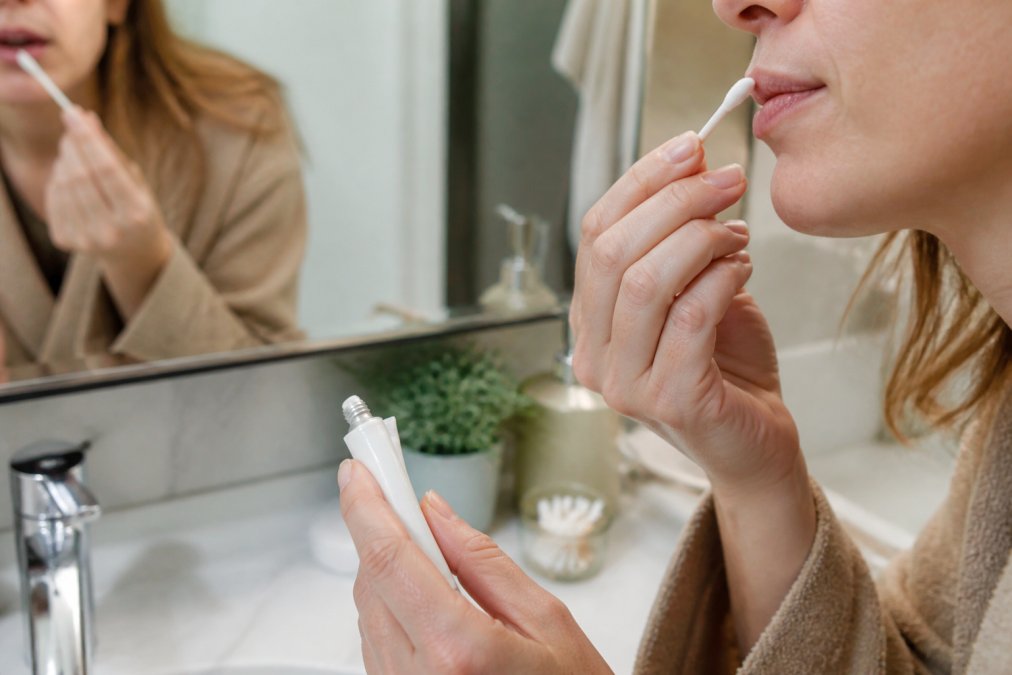
- Act at the first tingle. Apply your treatment the moment you feel itching or burning. Don't wait for a blister.
- Wash your hands first. This protects the sore from bacteria and keeps you from spreading the virus.
- Apply a thin layer of product. Use a clean cotton swab or your fingertip. Don't double-dip back into the tube.
- Repeat up to five times a day. Consistent application keeps the treatment working.
- Add a cold compress for pain. Hold a clean, cool cloth to the area for a few minutes.
- Keep the sore moisturized. A dry, cracked scab heals slower and hurts more.
- Never pick or squeeze. This spreads the virus and can cause a secondary infection.
Cold Compress, Hygiene Practices, and Everyday Care to Stop the Spread
A cold compress does two things: it numbs the pain and calms the inflammation around the sore. Wrap an ice cube in a cloth or use a cool, damp washcloth. Hold it on the area for five to ten minutes at a time.
- Wash your hands often, especially after touching your face
- Don't share lip balm, utensils, cups, or towels
- Avoid kissing and skin-to-skin contact while the sore is active
- Replace your toothbrush after the sore heals
- Don't pop or pick the blister
Cold Sores vs. Pimples and Canker Sores: Getting the Diagnosis Right
Not every bump on your lip is a cold sore, and treating the wrong thing wastes your time and can irritate your skin. This is one of the most common points of confusion, and it is worth getting right before you reach for any product.
A Quick Diagnostic Checklist
Work through these questions in order. The pattern of answers usually points to one condition.
| Question | Cold Sore | Pimple | Canker Sore |
|---|---|---|---|
| Did it start with a tingle, itch, or burn? | Yes, almost always | No | Sometimes a burn, but no tingle |
| Where is it? | On or around the lip, often the lip edge | Anywhere on the face, including the lip line | Inside the mouth: tongue, cheek, gums, inner lip |
| What does it look like? | A cluster of small fluid blisters that crust over | A single raised bump, often with a white or black center | A round, shallow ulcer with a white or yellow center and red rim |
| Is it contagious? | Yes, from first tingle until the scab fully heals | No | No |
| Does it recur in the same spot? | Often, in the same area each time | Not usually | Can recur, but not tied to the lip |
Why the Distinction Matters
A cold sore is caused by the herpes simplex virus, usually type 1 (the CDC). It is contagious and responds to antivirals. A pimple is a blocked pore and responds to nothing a cold sore product offers. A canker sore is an open ulcer inside the mouth, not caused by the herpes virus, and not contagious.
When to See a Clinician
Most cold sores are manageable at home. Seek care if:
- The sore does not improve within 10 to 14 days
- You have frequent outbreaks (more than a few per year)
- You have a weakened immune system
- The sore spreads widely or appears near the eyes
- You are unsure what you are dealing with
The Part Most Guides Skip: The Social Weight
A visible cold sore is not just a physical symptom. Many people feel embarrassed, avoid photos, cancel plans, or worry about passing the virus to a partner or child. That anxiety is real and worth naming. A few things help:
- You are not alone. Most adults carry the virus, and outbreaks are common.
- You are most contagious while the blister is open and weeping, so avoiding kissing and sharing utensils during that window protects the people around you.
- Covering the sore with makeup is possible, but only after the blister has crusted over. Applying makeup to an open blister can introduce bacteria and slow healing. Use clean disposable applicators and remove it gently at night.
- If outbreaks are frequent, a clinician can prescribe a daily antiviral to reduce how often they happen, which often does more for peace of mind than any topical.
Conclusion: Heal Faster Without the Guesswork
Cold sores are stubborn, and waiting for one to run its course is frustrating. The good news is that the fastest way to dry out a cold sore is well within your control: treat at the first tingle, stay consistent, and protect the skin while it heals.
Frequently Asked Questions
Is it better to let a cold sore dry out or stay moist?
Keeping the area moist usually helps it heal faster and reduces cracking and bleeding. Drying agents can help a blister crust over, but harsh drying can irritate skin and slow repair. A balanced approach works best: use a targeted treatment like LipCur that supports the skin barrier, then let the sore crust naturally. Avoid picking at the scab, which can cause a secondary infection and delay healing.
What over-the-counter medications are FDA-approved for cold sores?
The main nonprescription antiviral for cold sores is docosanol 10% cream, which is FDA-approved to shorten healing time when applied at the first sign of tingling. Other OTC options include pain relievers like acetaminophen or ibuprofen and protective lip balms. LipCur is a cosmetic-style balm with soothing botanicals. For prescription antivirals, talk to a doctor.
How can I prevent cold sores from spreading?
Wash your hands often, especially after touching your face or applying treatment. Do not share lip balm, utensils, towels, or drinks during an outbreak. Avoid kissing and oral contact until the sore has fully scabbed and healed. Replace your lip balm after the outbreak ends. These hygiene practices reduce the chance of passing the herpes simplex virus to others and of spreading it to other areas of your own skin.
Can toothpaste dry out a cold sore?
Toothpaste is a common home remedy, but it is not designed for skin and can irritate or burn the lip. Some people try it because it feels drying, yet it may damage the skin barrier and worsen inflammation. A better option is a product made for lip use, such as LipCur, or an OTC antiviral cream. If you want to try a home remedy, a cold compress and petroleum jelly are gentler choices.