

Table of Contents
- What the Cold Sore Crusting Stage Looks Like
- How Long the Crusting Stage Lasts in the Healing Timeline
- How to Speed Up Cold Sore Healing During Crusting
- Cold Sore Scab Care: What to Do and What to Avoid
- When Is a Cold Sore No Longer Contagious?
- Covering a Cold Sore Scab: Makeup, Social Anxiety, and Daily Life
- Nutrition and Immune Support While the Scab Heals
- Frequently Asked Questions
Last Updated: September 21, 2026
What the Cold Sore Crusting Stage Looks Like
The cold sore crusting stage is the point in an outbreak when a blister dries out and forms a yellowish or brownish scab over the sore. This is the fourth phase of a typical outbreak, following the tingling, blister, and weeping stages. In most cases, that crust is a sign your body is healing, not a sign something has gone wrong.
A cold sore, also called a fever blister, is caused by the herpes simplex virus (HSV-1) (the CDC). Once the blister bursts and oozes clear fluid, the raw skin underneath starts to dry and seal. That seal is the crust.
How to Tell You've Entered the Crusting Phase
You'll know you've reached this phase when the open sore stops weeping and develops a hard, dry top layer. Common signs include:
- A yellow, brown, or gray scab sitting on the lip
- Tightness or pulling when you talk or smile
- Itching and mild burning around the edges
- Cracking or light bleeding if the scab is stretched
- A flat, darker patch where the blister used to be
The scab may look worse than the blister did. That's normal. It's a protective layer, not a new infection.
How Long the Crusting Stage Lasts in the Healing Timeline
The crusting stage usually lasts two to four days, though it can stretch longer if the scab cracks or gets picked at. A full cold sore outbreak runs about 7 to 10 days from the first tingle to fully healed skin.
Here's how the timeline typically breaks down:
| Stage | What Happens | Typical Duration |
|---|---|---|
| Prodromal | Tingling, itching, no visible sore | 1-2 days |
| Blister | Fluid-filled vesicles form | 1-2 days |
| Weeping | Blister bursts and oozes | 1-2 days |
| Crusting | Scab forms over the sore | 2-4 days |
| Healing | Scab falls off, skin repairs | 2-3 days |
The final phase, called re-epithelialization, is when new skin closes the wound. If you're using a fast-acting treatment, this whole timeline can shrink. LipCur is designed to help skin heal within 24 hours when used at the first tingle.

How to Speed Up Cold Sore Healing During Crusting
You can speed up healing by keeping the scab moist, clean, and untouched. Dry, cracked scabs heal slower and are more likely to scar or get infected.
Try these steps:
- Apply a soothing ointment several times a day to keep the crust flexible.
- Wash your hands before and after every time you touch your face.
- Use a separate lip balm you can throw away after the sore heals.
- Avoid picking, peeling, or scrubbing the scab, even when it feels loose.
- Get enough sleep and manage stress, since both affect how fast your immune system responds.
Cold air, sun, and spicy food all make cracking worse. Shield your lip when you're outside and skip the hot sauce until the scab is gone.
Cold Sore Scab Care: What to Do and What to Avoid
Good scab care comes down to one rule: leave it alone. The crust is your body's bandage. Every time you pick at it, you reopen the wound and restart part of the healing clock.
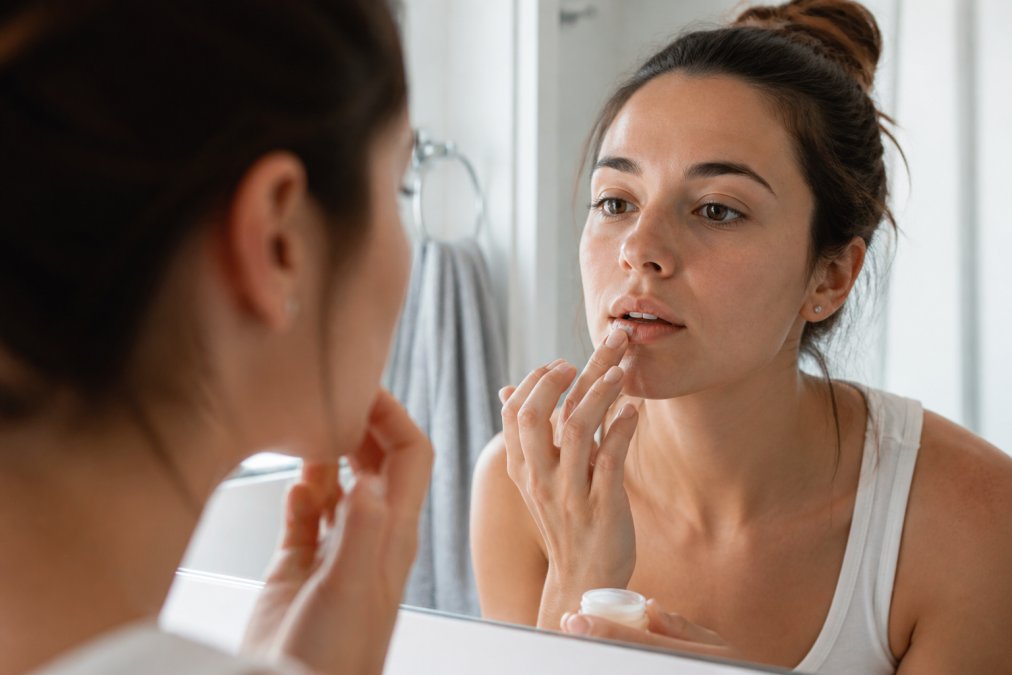
Here's what helps and what hurts:
Do:
- Keep the area clean with mild soap and water
- Use a cotton swab instead of your finger to apply products
- Change your pillowcase every day or two
- Drink water to keep your skin hydrated from the inside
Don't:
LipCur - 120 Day Money Back Guarantee →
- Pick or bite the scab
- Share cups, utensils, towels, or lip balm
- Apply harsh drying agents that crack the skin
- Touch the sore and then rub your eyes or nose
Moisture vs. Drying: Which Approach Helps the Scab Heal
Moisture wins. A soft scab heals faster and cracks less than a dry, brittle one. The old advice to dry out a cold sore with alcohol or astringents often backfires. It dries the surface, then the crust splits, bleeds, and lets bacteria in.
That doesn't mean you should smother the sore in heavy creams. A light, gentle layer that keeps the crust supple is enough.
When Is a Cold Sore No Longer Contagious?
A cold sore is no longer contagious once the scab has completely fallen off and new skin has formed. Until then, the virus can still spread through direct contact, even after the sore looks dry.
- Kissing or sharing lip products
- Sharing drinks, straws, or utensils
- Touching the sore and then touching someone else
- Oral contact during the weeping stage, when fluid is present
Covering a Cold Sore Scab: Makeup, Social Anxiety, and Daily Life
Most cold sore guides stop at the biology. They don't tell you how to sit through a job interview, a first date, or a family photo when there's a scab front and center on your lip. That gap matters, because the emotional weight of a visible sore is real. A common pattern is avoiding social plans entirely during the crusting phase, canceling dinners, skipping the gym, calling in sick, not because of pain, but because of how the scab looks.
When It's Safe to Cover a Scab, and When It Isn't
The rule is simple: you can cover a scab that is dry, intact, and not bleeding. You should not cover a scab that is cracked, weeping, or actively bleeding. Makeup on broken skin can trap bacteria, irritate the wound, and slow healing. It can also contaminate your products.
If the scab is intact, here's a safe routine:
- Wash your hands thoroughly and clean the area gently with mild soap and water. Pat dry with a disposable tissue.
- Apply a thin layer of a soothing, non-irritating ointment or balm first. This creates a barrier between the scab and the makeup.
- Use a disposable sponge or a clean brush you will not reuse on the rest of your face. Never double-dip back into the product.
- Tap, don't swipe, a thick, opaque concealer over the scab. Tapping avoids dragging the scab and lifting it.
- Set with a light dusting of translucent powder so the concealer doesn't slide or crease.
- At the end of the day, remove makeup gently with a fresh cotton swab and throw it away. Do not scrub.
Product Types That Work Best
Not all concealers are equal for this job. Cream and stick concealers with a thick, opaque finish cover better than thin liquids, which tend to settle into cracks and highlight texture. Look for formulas labeled non-comedogenic and fragrance-free, since fragranced products can sting an already sensitive lip.
The Social Side: Scripts and Small Moves
A few practical moves can take the edge off the anxiety:
- If you're on a video call, angle your camera slightly and use soft lighting. Harsh overhead light emphasizes texture.
- If someone asks, you don't owe a detailed explanation. "I've got a cold sore healing up" is a complete sentence.
- Keep a small kit in your bag, disposable sponges, concealer, a fresh lip balm, so you're not improvising in a bathroom mirror.
- Remind yourself that the crusting phase is the tail end of the outbreak. You're closer to done than you were two days ago.
Nutrition and Immune Support While the Scab Heals
Your immune system does the actual healing, so what you eat and how you rest matters. Foods rich in lysine, vitamin C, and zinc are commonly recommended during an outbreak.
A simple approach:
- Eat eggs, yogurt, fish, and beans for lysine
- Add citrus, bell peppers, and leafy greens for vitamin C
- Include nuts and seeds for zinc
- Cut back on sugary and highly processed foods
- Limit alcohol, which can slow immune response
Frequently Asked Questions
Should I peel the crust off my cold sore?
No. Picking or peeling the crust can reopen the lesion, cause bleeding, and raise the risk of a secondary infection or scarring. Let the scab loosen and fall off on its own. If the crust cracks naturally, apply a gentle moisturizing product like LipCur to keep the area supple. Keeping your hands clean and off the sore is one of the most effective cold sore scab care habits.
Does the crusting stage mean the cold sore is no longer contagious?
Not necessarily. The virus can still be present in the crust and in fluid from the lesion during the crusting phase. A cold sore is generally considered no longer contagious once the scab has completely fallen off and the skin has fully healed. Until then, avoid sharing utensils, towels, or lip products, and wash your hands after touching the area.
How long does the crusting stage typically last?
The crusting stage usually lasts two to three days, though it can take longer if the scab cracks or gets reinfected. It follows the weeping stage and precedes the final healing phase where new skin forms. Using a moisturizing treatment like LipCur during this window can help keep the scab flexible and support faster healing. Individual healing timelines vary, so consult a healthcare professional if the sore persists.
Can I wear makeup over a cold sore scab?
You can, but with caution. Use clean applicators, avoid sharing any cosmetics, and never apply makeup directly to an open or weeping sore. Once the scab has formed, a gentle concealer applied with a disposable applicator can help mask redness. Remove makeup carefully at night and throw away any product that touched the sore to prevent reinfection.