

Table of Contents
- Why Cold Sores Cause Scarring and How to Stop It Early
- How to Stop Cold Sores Early Before They Blister
- How Long Do Cold Sore Scabs Last and Why Picking Makes It Worse
- Best Practices for Cold Sore Aftercare to Protect Healing Skin
- Sun Protection and UV Avoidance During an Outbreak
- Scar Prevention for Different Skin Tones and Makeup Application Safety
- Dietary Support for Collagen Production and Skin Repair
- When to See a Dermatologist for Scarring Concerns
- Frequently Asked Questions
Last Updated: September 17, 2026
Why Cold Sores Cause Scarring and How to Stop It Early
Cold sores usually don't leave permanent scars, but they can leave marks that last for weeks or months. The herpes simplex virus triggers an outbreak on or around the lip. Your body then sends inflammation to fight it. That inflammation, plus any picking or peeling, is what damages skin.
A cold sore is a fluid-filled blister caused by the herpes simplex virus, most often HSV-1. It forms at the border of the lip, crusts over, and heals on its own in one to two weeks. Most outbreaks resolve without lasting damage.

Here's what matters most: how you treat the sore in the first 48 hours shapes how it heals. This guide from LipCur walks through seven steps that lower your risk of cold sore scarring. We'll cover early treatment, scab care, sun protection, and when to call a dermatologist.
The Difference Between Post-Inflammatory Hyperpigmentation and True Scarring
Post-inflammatory hyperpigmentation (PIH) is a flat, dark mark left after inflammation fades. It's not a scar. It's extra pigment, and it usually fades over time.
True scarring means the skin has changed texture. It may look raised, pitted, or firm. This happens when the wound goes deep into the dermis, the lower layer of skin.
Most people who worry about a "scar" after a cold sore actually have PIH. That's good news. PIH responds well to time, sun protection, and gentle skin care. True scarring from a cold sore is uncommon.
How to Stop Cold Sores Early Before They Blister
The best way to prevent cold sore scarring is to stop the outbreak before it blisters. That means acting on the first tingle, itch, or sting, not waiting for a visible sore.
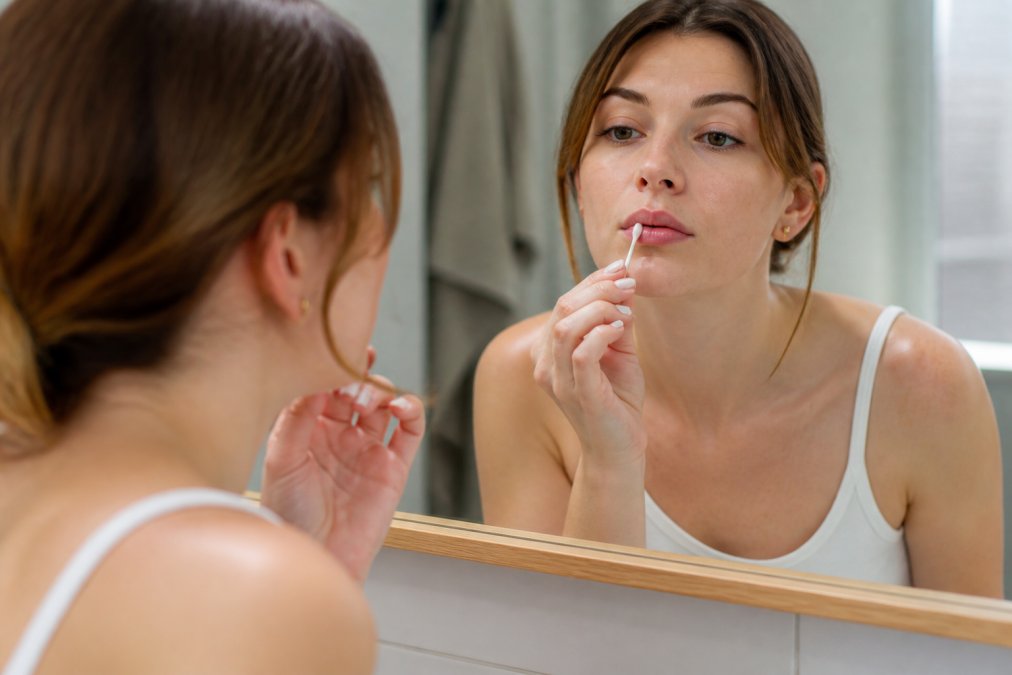
Here's the mechanism behind the urgency. HSV-1 travels down a nerve to the skin surface, then copies itself inside skin cells. That replication is what produces the fluid-filled blister and the inflammation around it. The earlier you interrupt replication, the smaller the lesion stays, the less inflammation reaches the dermis, and the lower your odds of a lasting mark.
The practical window is short. Antiviral treatment started within the first 24 hours of symptoms can shorten the outbreak and reduce peak lesion size. After 48 hours, the benefit may drop sharply because the blister has already formed.
What to do at the first tingle
- Apply a topical treatment at the first tingle, before the blister appears
- Start prescription antiviral therapy if you have it on hand or can reach a clinician quickly
- Keep the area clean and dry, and blot rather than rub
- Avoid touching or rubbing the spot, and wash your hands if you do
- Skip heavy lip balms that trap moisture over a forming blister
- Stay hydrated and get enough sleep, since fatigue and stress are common triggers
Antiviral medication and topical ointment options
Two main paths exist for early treatment, and they work differently.
Prescription antivirals (acyclovir, valacyclovir, and famciclovir) are nucleoside analogs. They block the viral enzyme that copies HSV DNA, which is why they only help while the virus is actively replicating. Valacyclovir is a prodrug of acyclovir, which means it converts in the body and can be taken fewer times per day. A clinician can advise on dosing and whether you're a candidate for episodic or suppressive therapy.
Over-the-counter topicals don't stop viral replication the way antivirals do.
How Long Do Cold Sore Scabs Last and Why Picking Makes It Worse
A cold sore scab usually lasts three to seven days. It forms as the blister dries and the skin begins to close. Once the scab falls off on its own, the skin underneath is often pink or slightly dark.
Signs you should leave it alone:
- The scab is still attached at the edges
- The skin underneath looks raw or shiny
- It bleeds when you touch it
Best Practices for Cold Sore Aftercare to Protect Healing Skin
Aftercare decides how the skin looks once the sore is gone. The goal is simple: keep the area calm, moist, and protected.
Good aftercare habits include:
- Wash your hands before and after touching the area
- Use a clean cotton swab to apply products
- Don't share towels, lip balm, or utensils during an outbreak
- Change your pillowcase every few days
- Keep the area out of harsh wind and cold
Moisturizing Techniques and Skin Barrier Repair
Skin barrier repair means helping the outer layer of skin rebuild itself. A healthy barrier holds in water and keeps irritants out.
Ingredients that support repair:
- Ceramides help rebuild the skin barrier
- Panthenol supports skin hydration
- Allantoin helps soothe irritated skin
- Hyaluronic acid draws in moisture
Apply twice a day, and always with clean hands.
Sun Protection and UV Avoidance During an Outbreak
UV exposure is a known cold sore trigger, and it also darkens healing skin. That's why sun protection matters twice over during an outbreak.
What to do:
- Use a lip balm with SPF 30 or higher
- Reapply every two hours outdoors
- Avoid direct sun during peak hours
- Skip tanning beds entirely
Scar Prevention for Different Skin Tones and Makeup Application Safety
This is where most cold sore articles stop short, and it's where the real risk lives. The care steps are the same for everyone, but the consequences of a cold sore differ by skin tone, and the way you cover a sore can either protect healing skin or undo it.
Why skin tone changes the risk profile
Post-inflammatory hyperpigmentation (PIH) happens when inflammation triggers melanocytes, the pigment-producing cells in the epidermis, to overproduce melanin. In darker skin tones (Fitzpatrick types IV through VI), those melanocytes are more active, so even a minor cold sore can leave a flat brown or dark mark that lingers for months.
What may help PIH fade:
- Daily broad-spectrum SPF 30 or higher on the lip and perioral skin
- Azelaic acid, which is commonly used for PIH and is available by prescription
- Tranexamic acid topicals, increasingly used for stubborn pigment
- Niacinamide, which supports the barrier and may reduce pigment transfer
- Time, most PIH resolves on its own, but it is slow
Safe makeup application over a healing cold sore
Covering a cold sore is a common and understandable goal, but the wrong technique can push bacteria into open skin, drag off a forming scab, or trap moisture that slows healing. Here's how to do it without setting yourself back.
Dietary Support for Collagen Production and Skin Repair
Collagen production supports skin strength and repair. Your body builds collagen using protein, vitamin C, and other nutrients.
Foods that support skin repair:
- Lean protein like chicken, fish, and beans
- Vitamin C from citrus, peppers, and berries
- Zinc from nuts, seeds, and whole grains
- Plenty of water for skin hydration
When to See a Dermatologist for Scarring Concerns
Most cold sores heal without a dermatologist's help. But some cases need a closer look.
Book a visit if you notice:
- A sore that hasn't healed after two weeks
- A mark that hasn't faded after several months
- A raised, firm, or pitted area
- Frequent outbreaks, more than six a year
- Signs of infection like pus, heat, or spreading redness
Frequently Asked Questions
Why did my cold sore turn into a scar?
A cold sore can leave a mark when the healing skin is damaged before it fully closes. Picking or peeling the scab, scratching, or letting the area dry out can break down new tissue and lead to scar tissue. Post-inflammatory hyperpigmentation, which looks like a dark spot, is more common than a true scar. Using a topical ointment and keeping the area moisturized helps the epidermis repair without lasting marks.
Should I let my cold sore scab or keep it moist?
Keep it moist. A dry, cracked scab is more likely to split, bleed, and leave a mark. Applying a gentle topical ointment or lip balm with ingredients like allantoin, panthenol, or ceramides supports skin barrier repair. How long do cold sore scabs last depends on the individual, but moisturized scabs typically heal with less texture change than dry ones. Avoid picking or peeling at every stage.
What is the best way to treat a cold sore to avoid permanent marks?
Start treatment at the first tingle. Antiviral medication or a fast-acting topical ointment used early can shorten the outbreak and reduce how much skin is affected. Keep the area hydrated, apply sun protection factor 30 or higher when outdoors, and never pick the scab. If you notice a dark mark that lingers for weeks, a dermatologist can recommend dermatological treatment options.
Can I wear makeup over a cold sore while it heals?
You can, but use clean applicators and avoid sharing products. Apply makeup after your topical ointment has absorbed, and never apply directly over an open blister or scab with a finger. Use disposable applicators where possible. Remove makeup gently at night with a mild cleanser, and wash your hands before and after. If the sore is weeping or crusted, skipping makeup reduces the risk of secondary infection and irritation.
Cold sore scarring is mostly preventable, but it depends on speed and patience. Treat the tingle early, leave the scab alone, and protect the skin from sun and irritation. LipCur makes the first step easier with a fast-acting, gentle formula that works within 24 hours, soothes irritation, and helps stop outbreaks before they take hold. Get started with LipCur and give your skin the best chance to heal clean.