

Table of Contents
- Cold Sore Tingling vs Itching: What Each Sensation Signals
- Cold Sore Prodromal Stage Symptoms: Reading the Warning Signs
- How to Stop a Cold Sore Before It Appears
- Cold Sore Healing Stages Timeline: Blistering to Scabbing
- Stress, Sun, and Hormones: Why Reactivation Happens
- Cold Sore vs Canker Sore vs Chapped Lips: Quick Comparison
- When to See a Doctor and Treatment Options
- Frequently Asked Questions
Last Updated: September 18, 2026
Cold Sore Tingling vs Itching: What Each Sensation Signals
A cold sore tingling sensation is an early warning sign that the herpes simplex virus is waking up in your nerve cells. Itching, by contrast, usually means the outbreak has already moved past that first stage. This guide from LipCur breaks down the difference so you can act fast.

Most people feel the tingle before they see anything on their lip.
Cold Sore Prodromal Stage Symptoms: Reading the Warning Signs
The prodromal stage is the first phase of a cold sore outbreak, when the virus reactivates in a nerve ganglion and travels back down the nerve toward the skin. No blister has formed yet. It lasts anywhere from a few hours to a full day, and it is the only stage where you can realistically interrupt the outbreak.
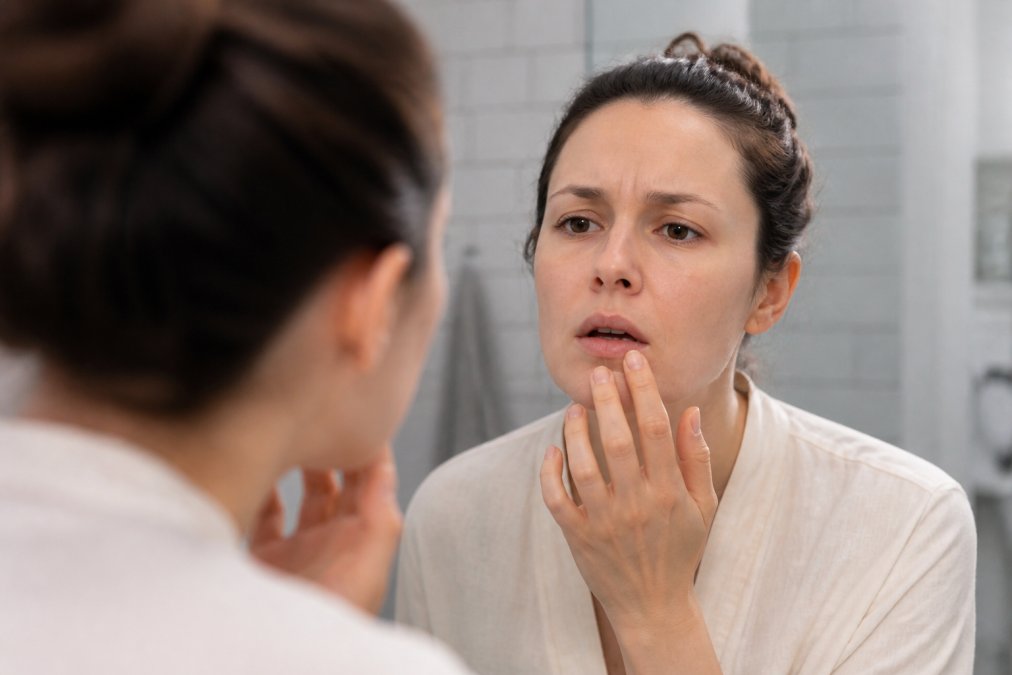
Symptoms during this stage include:
- Tingling in one concentrated spot
- A slight burning or warmth under the skin
- Numbness around the lip edge
- Mild tightness or pulling
- Occasionally, a dull ache near the jaw
Tingling vs. Itching: How to Tell Them Apart by Feel
Most guides lump tingling, itching, and burning into one symptom list. They are not the same sensation, they do not come from the same process, and they do not mean the same thing for your timeline.
-
Pins and needles, the same "falling asleep" feeling you get in a foot
-
A faint electric buzz or vibration under the skin
-
A single, pinpoint spot you can cover with a fingertip
-
A sensation that sharpens when you press it
-
A surface-level urge to scratch
-
A broader area, often the whole lip or a quadrant of it
-
A sensation that does not change much with pressure
-
Something that intensifies as a scab forms or cracks
Why the Tingle Is One-Sided
The prodrome is almost always unilateral. HSV-1 reactivates in a ganglion on one side of your face and travels down one nerve branch, so the sensation stays on that side. If both sides of your mouth itch evenly, at the same intensity, at the same time, it is far more likely to be dry skin, an allergic reaction, or chapped lips than a cold sore.
The Sensory Timeline
A common pattern looks like this:
- Tingle, nerve-level, one spot, hours before anything is visible
- Burn or throb, inflammation begins, still no visible lesion
- Itch, appears once the blister has formed and the skin starts repairing
- Itch again at crusting, the scab tightens and pulls on surrounding skin
If you feel itching first with no preceding tingle, that is a meaningful clue. It usually points away from a cold sore and toward something else on the lookalike list.
LipCur - 120 Day Money Back Guarantee →
How to Stop a Cold Sore Before It Appears
Acting during the tingling phase gives you the best shot at keeping a sore from ever becoming visible. The virus hasn't reached the skin surface yet, so there's less to fight.
- Apply a targeted treatment right away, not hours later
- Skip lip balm on the spot; it can trap moisture and spread the virus
- Avoid touching, picking, or rubbing the area
- Wash your hands after any contact with your lips
- Cut back on salty and acidic foods for a day or two
- Get extra sleep; your immune system does the heavy lifting
Cold Sore Healing Stages Timeline: Blistering to Scabbing
A cold sore moves through five stages, and each one looks and feels different. Most outbreaks run their course in about 7 to 10 days.
| Stage | What You Feel | What You See | Typical Timing |
|---|---|---|---|
| Prodrome | Tingling, burning, numbness | Nothing yet | Hours to 1 day |
| Blistering | Pain, throbbing | Small fluid-filled bumps | Day 1-2 |
| Ulceration | Sharp pain, rawness | Open, weeping sore | Day 2-4 |
| Crusting | Itching, tightness | Yellow-brown scab | Day 4-7 |
| Healing | Mild itching | Pink skin, fading | Day 7-10 |
Stress, Sun, and Hormones: Why Reactivation Happens
HSV-1 never leaves your body. After the initial infection, it retreats into a sensory nerve ganglion and goes dormant. Reactivation happens when the virus travels back down the nerve to the skin, and the triggers that send it back are mostly about your immune system losing its grip on the ganglion, not about the virus getting stronger.
Common triggers include:
- Stress triggers: emotional strain, poor sleep, illness
- Sun exposure: UV light weakens the skin's local defenses
- Hormonal shifts: menstruation, pregnancy, menopause
- Physical strain: surgery, fever, or a weakened immune system
The Cortisol Connection
When you are under sustained stress, your body releases cortisol. Cortisol is useful in short bursts, but when it stays elevated for days or weeks, it suppresses the parts of the immune system that keep latent herpesvirus in check. That is the mechanism behind the "I always get one before a big presentation" pattern.
The Anticipation Loop
There is a second layer that most trigger lists skip. Anxiety about an upcoming outbreak can itself raise cortisol, which can itself trigger the outbreak you were worried about. If you have had cold sores for years, you may have noticed this loop: you feel a tingle, you worry it is a cold sore, the worry spikes your stress response, and the sore arrives bigger than it might have otherwise.
Sun Exposure: The Most Predictable Trigger
UV light is one of the most reliable reactivation triggers because the mechanism is direct. UV radiation suppresses local immune cells in the skin, which gives the virus an easier path to the surface. That is why outbreaks cluster around vacations, hikes, and long drives with the windows down.
Hormonal Shifts
Estrogen and progesterone fluctuations appear to influence immune response, which is why some people notice outbreaks tracking with their menstrual cycle, pregnancy, or perimenopause. The pattern is individual, not everyone with HSV-1 reacts to hormonal shifts, but if yours do, tracking them alongside your cycle can make outbreaks more predictable.
Physical Strain and Illness
A fever, a surgery, a bad flu, or a stretch of poor sleep all do the same thing: they pull immune resources toward the immediate problem and away from surveillance of latent virus. This is why cold sores often show up alongside or just after another illness.
Cold Sore vs Canker Sore vs Chapped Lips: Quick Comparison
These three get confused constantly, but they have different causes and different treatments. Getting the label right saves you from using the wrong product.
| Feature | Cold Sore | Canker Sore | Chapped Lips |
|---|---|---|---|
| Location | Outer lip edge | Inside the mouth | Whole lip surface |
| Contagious | Yes | No | No |
| First sign | Tingling | Sharp pain | Dryness, flaking |
| Look | Blisters, then scab | Round white ulcer | Cracks, peeling |
| Cause | HSV-1 | Unknown | Weather, licking |
When to See a Doctor and Treatment Options
See a doctor if:
- The sore lasts longer than two weeks
- You have frequent recurrences, such as more than six a year
- Sores spread to your eyes, fingers, or other body parts
- You have a weakened immune system
- You run a fever alongside the outbreak
- The sore is unusually large or painful
If you're unsure whether what you're feeling is a cold sore or something else, a quick visit to a healthcare provider can settle it. General information is helpful, but a proper diagnosis needs a professional.
Frequently Asked Questions
Why is my cold sore itchy and tingly?
The tingling and itching come from the herpes simplex virus reactivating along nerve cells just beneath the skin. As HSV-1 travels toward the surface, it triggers inflammation and sensory nerve irritation, which your brain reads as tingling, itching, burning, or numbness. Tingling usually starts first, up to 24 hours before a blister appears. Itching tends to follow once the skin begins to swell or crust. Catching either sensation early gives you the best window to act.
Is it a cold sore if it's not tingling?
Not every cold sore announces itself with tingling. Some people feel itching, burning, numbness, or nothing at all before a blister forms. A cold sore can still appear without any prodromal sensation, especially during a first outbreak. If you notice a small cluster of fluid-filled bumps on or near your lip, assume it is contagious and avoid sharing utensils, towels, or lip products until it fully heals. When in doubt, a healthcare provider can confirm.
How can I stop a cold sore before it appears?
Act at the first tingle, itch, or burn. Apply a targeted cold sore treatment like LipCur as soon as you feel that sensation, up to five times daily. LipCur is formulated to soothe irritation and help you heal within 24 hours, and it can be used daily to help prevent future outbreaks. Keeping lips moisturized and protected from sun exposure also reduces reactivation triggers. If outbreaks are frequent, ask a doctor about antiviral medication.
What is the cold sore healing stages timeline?
A typical cold sore moves through five stages: prodrome (tingling or itching, day 1), blistering (fluid-filled bumps, days 1-2), weeping or ulceration (blister opens, days 2-4), crusting and scabbing (days 4-9), and healing (scab falls off, days 9-12). Healing usually completes within 8 to 12 days. Early treatment at the prodromal stage can shorten this timeline and reduce the size of the lesion.