

Table of Contents
- How We Chose the Best OTC Cold Sore Treatments
- Comparison Table: Top OTC Cold Sore Treatments
- LipCur: Fast-Acting Cold Sore Relief
- How to Get Rid of a Cold Sore Fast
- Cold Sore Healing Stages: What to Expect
- When to See a Doctor for a Cold Sore
- Lifestyle Triggers and Prevention Tips
- Frequently Asked Questions
Last Updated: September 11, 2026
How We Chose the Best OTC Cold Sore Treatments
Finding the best over the counter cold sore treatment comes down to three things: how fast it works, how easy it is to apply, and whether it actually shortens an outbreak rather than just masking symptoms. This guide from LipCur evaluates options on those criteria, plus cost per outbreak and skin tolerability.

Most drugstore creams rely on a single FDA-approved ingredient, docosanol, which can slow viral replication but often takes several days to show visible results. That delay is exactly why so many people with recurrent outbreaks feel underserved.
We weighed application frequency, onset of relief, and real-world feedback from users who get cold sores multiple times a year. The result is a comparison built for people who want the outbreak gone, not just less annoying.
Comparison Table: Top OTC Cold Sore Treatments
| Treatment Type | Key Ingredient | Application Frequency | Best For |
|---|---|---|---|
| LipCur | Fast-acting soothing formula | As directed, early onset | Stopping outbreaks fast, healing within 24 hours |
| Docosanol creams | Docosanol 10% | Up to 5x daily | Mild, occasional outbreaks |
| Penciclovir cream | Penciclovir 1% | Every 2 hours while awake | Shortening healing time |
| Lysine supplements | Lysine | Daily | Prevention-minded users |
| Cold compress + pain relief | None (symptom only) | As needed | Managing pain and swelling |
The table makes one thing clear: delivery mechanism matters as much as the active ingredient. A cream you apply five times a day is a different commitment than a targeted formula designed to work quickly.
What the FDA Has Actually Approved
Only two active ingredients are FDA-approved in over-the-counter cold sore products: docosanol 10% (a cream) and, in some formulations, benzyl alcohol as a pain-relieving topical. Penciclovir 1% is available by prescription in the U.S., not OTC, so any drugstore product marketed as "penciclovir" without a prescription should be treated with suspicion (accessdata.fda.gov). Everything else on the shelf, lysine, zinc, lemon balm, camphor, phenol, is sold as a cosmetic or supplement, not as an FDA-approved antiviral.
Docosanol works by interfering with the viral envelope's ability to fuse with your skin cell membrane, which is why it has to be applied at the very first tingle and reapplied up to five times a day. Miss the window and you're mostly treating symptoms.
Creams vs. Patches vs. Gels: The Delivery Trade-Off
Most competitors list products without explaining why the format matters. It does, and here's the honest breakdown:
- Creams (docosanol), easy to apply, invisible, but require frequent reapplication and can smear. Best for outbreaks on the lip line where a patch won't sit flat.
- Hydrocolloid patches, cover the sore, reduce touching and picking, and hide the blister during the weeping stage. They don't deliver an antiviral, so pair them with a cream underneath if you want active treatment. Best for daytime coverage and for people who can't stop touching the sore.
- Gels, dry down faster than creams and feel less greasy, but many gel formulas rely on drying agents (alcohol, camphor) that can sting cracked skin. Best for the crusting stage, not the blister stage.
- Ointments, occlusive and soothing on cracked, healing skin, but they can trap moisture over a weeping blister. Best for the final healing days.
A common pattern is to rotate: cream at the tingle, patch over it during the day, ointment at night once the blister has crusted.
Cold Sores vs. Canker Sores: Not the Same Thing
A surprising number of people treat a canker sore with an antiviral cream and wonder why nothing happens. They're different conditions:
- Cold sores are caused by herpes simplex virus type 1 (HSV-1), appear on or around the lips and outside the mouth, are contagious, and tingle before they appear.
- Canker sores are not viral and not contagious. They form inside the mouth, on the tongue, gums, or inner cheek, and typically have a white or yellow center with a red border.
Antivirals do nothing for canker sores. If your sore is inside your mouth and there's no tingling phase, you're looking at the wrong aisle.
LipCur: Fast-Acting Cold Sore Relief
LipCur is a fast-acting cold sore formula built to stop outbreaks and support healing within 24 hours. Unlike traditional creams that require constant reapplication, LipCur's gentle, soothing formula repairs and protects the skin while preventing the itching and tingling that signal an outbreak is worsening.
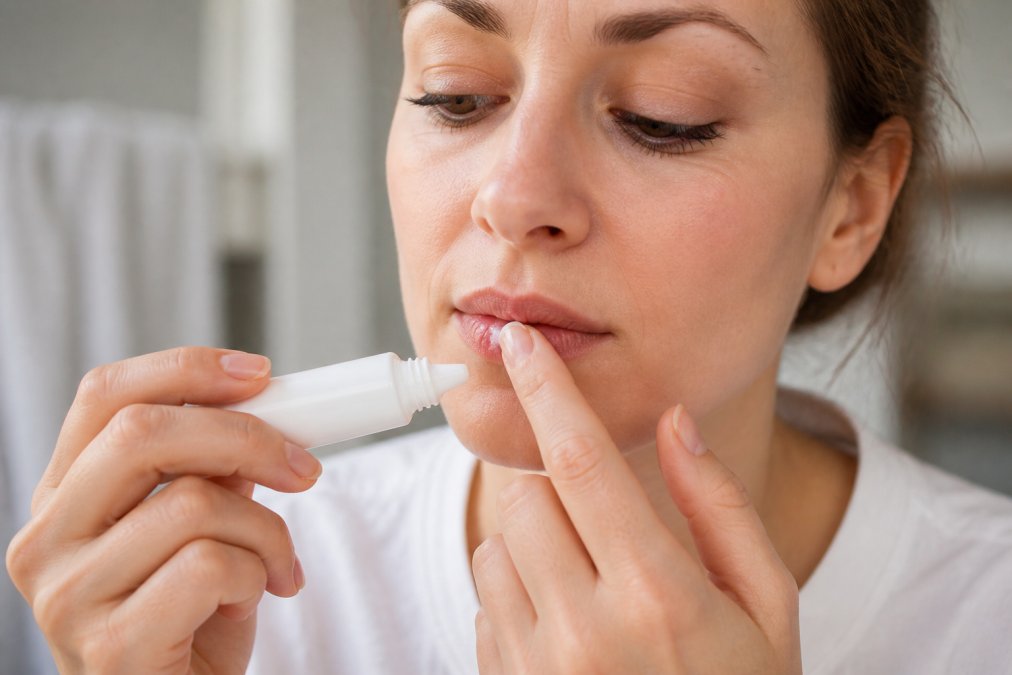
What sets LipCur apart is timing. Catching a cold sore at the prodromal stage, when you feel that first tingling sensation, gives any treatment its best shot. LipCur is designed for exactly that moment: apply early, and it works to keep the sore small and short-lived.
Verified buyer Carrie Clark described her experience: "Gone in two days. My sore stayed small and was gone completely in two days. It never got itchy or tingly." That matches the goal of any good cold sore treatment: fewer days of discomfort and less visibility.
LipCur costs $24.95 and comes with a 120-day money-back guarantee, so you can test it through more than one outbreak before deciding.
How to Get Rid of a Cold Sore Fast
Getting rid of a cold sore fast means acting at the first sign, not waiting for the blister to fully form. The earlier you start treatment, the shorter the outbreak tends to be.
Here's the practical sequence:
- Apply treatment at the first tingle. The prodromal stage is your window. Once a blister forms, you're managing symptoms rather than preventing them.
- Keep the area clean and dry. Wash gently, pat dry, and avoid touching or picking at the sore.
- Use a cold compress. A cool cloth reduces swelling and eases the burning sensation.
- Manage pain with OTC options. Ibuprofen or acetaminophen can help with discomfort, though neither shortens the outbreak.
- Avoid triggers. Sun exposure, stress, and illness all give the virus an opening.
- Don't share items. Towels, lip balm, and utensils can pass the virus while the sore is contagious.
The Centers for Disease Control and Prevention notes that herpes simplex virus spreads through direct contact with sores or saliva, which is why hygiene during an outbreak matters as much as treatment.
Cold Sore Healing Stages: What to Expect
Cold sores follow a predictable pattern, and knowing the stages helps you time treatment correctly. A typical outbreak moves through five phases over roughly one to two weeks without treatment (peer-reviewed research).
- Tingling (prodromal stage): Itching, tingling, or burning before anything is visible. This is the best time to start treatment.
- Blister formation: One or more small, fluid-filled blisters appear, usually within a day.
- Weeping and crusting: The blisters break, ooze, and form a crust. This stage is the most contagious.
- Healing: The crust dries and flakes away as new skin forms underneath.
- Resolution: The sore disappears, though the virus stays dormant in the body and can reactivate later.
Treatment doesn't change the sequence, but it can shorten how long each stage lasts. Starting at the tingling phase is the difference between a sore that lingers and one that resolves quickly.
When to See a Doctor for a Cold Sore
Most cold sores resolve on their own, but some situations call for a doctor's evaluation. Seek medical care if a sore lasts more than two weeks, spreads widely, or comes with fever and swollen lymph nodes.
You should also see a provider if you have a weakened immune system, if sores appear near the eyes, or if outbreaks are frequent enough to disrupt daily life. Prescription antivirals such as acyclovir, valacyclovir, and famciclovir can be appropriate for recurrent or severe cases, and they work best when started early.
For people who get cold sores constantly, a doctor can also help identify whether hormonal changes, stress, or an underlying condition is driving the frequency. A pharmacist can advise on OTC options and flag when a prescription makes more sense.
Lifestyle Triggers and Prevention Tips
Prevention starts with understanding what reactivates the virus in your body. Common triggers include stress, sun exposure, fatigue, illness, and hormonal shifts. Many people notice a pattern once they start tracking outbreaks.
The Lysine-Arginine Balance Most Articles Skip
HSV-1 needs the amino acid arginine to replicate. Lysine competes with arginine for absorption, which is the theory behind lysine supplements and lysine-heavy diets for people with frequent outbreaks. The evidence is mixed, some small studies show fewer outbreaks, others show no difference, but the dietary angle is worth knowing because it's actionable and low-risk.
Foods higher in arginine: chocolate, nuts (especially peanuts and almonds), seeds, and gelatin. Foods higher in lysine: dairy, eggs, fish, chicken, potatoes, and most legumes.
A common pattern among people who track their outbreaks is that a chocolate-and-nut-heavy stretch precedes a flare. That's not proof of cause, but it's a reasonable thing to test on yourself. If you want to try lysine supplements, most labels suggest 1,000-3,000 mg daily for prevention, though you should check with a pharmacist or physician before starting, especially if you take other medications.
Pediatric and Sensitive-Skin Considerations
Most cold sore guides are written for adults with normal skin. Two groups get left out:
- Children, cold sores in kids are common and often more uncomfortable because they don't recognize the tingling phase. OTC docosanol is generally considered appropriate for children 12 and older; for younger children, ask a pediatrician before applying anything. Never use a product containing benzocaine on a child under 2, and be cautious with it under 12 because of the risk of methemoglobinemia (the FDA).
- Sensitive or broken skin, products with alcohol, camphor, phenol, or menthol can sting badly on cracked or weeping sores. If your skin reacts to everything, a plain occlusive ointment plus a cold compress may be more tolerable than an active cream, even if it doesn't shorten the outbreak.
Practical Prevention Steps
- Apply lip balm with broad-spectrum sun protection (SPF 30 or higher) before prolonged sun exposure.
- Prioritize sleep and manage stress where you can.
- Avoid sharing drinks, utensils, or lip products during an outbreak.
- Wash your hands frequently, especially after touching your face.
- Replace your toothbrush after an outbreak resolves, and don't share lip balm.
- Keep a treatment on hand so you can act at the first tingle.
The psychological side of cold sores is real and often overlooked. Visible sores affect confidence at work and in social settings, which is why fast treatment isn't just about physical comfort. It's about getting back to normal quickly.
Frequently Asked Questions
What is the fastest over the counter cold sore treatment?
The fastest options are topical creams containing docosanol or penciclovir, which can shorten healing time if applied at the first tingle. LipCur is designed to stop outbreaks and help heal within 24 hours. Prescription antivirals like acyclovir or valacyclovir may work faster but require a doctor's visit. For OTC relief, start treatment at the prodromal stage for the best results.
Is lysine or Abreva better for cold sores?
Abreva (docosanol) is FDA-approved for cold sores and has clinical evidence for shortening healing time. Lysine is an amino acid supplement with mixed study results; some people find it helps reduce frequency, but it is not FDA-approved for treating outbreaks. For acute relief, a topical cream like LipCur or docosanol is generally more effective than lysine alone.
Can over-the-counter creams stop a cold sore from forming?
Yes, if used at the first sign of tingling or itching (prodromal stage). Products like LipCur are formulated to stop outbreaks in their tracks. Apply as soon as you feel symptoms to prevent the blister from fully forming. Once a blister appears, treatment can still speed healing but cannot reverse it.
How do I know if my cold sore is healing properly?
Cold sores heal in stages: tingling, blister, weeping, crusting, and scabbing. Healing is on track if the blister dries and crusts within a few days without spreading. See a doctor if the sore worsens, spreads, or lasts more than two weeks. LipCur can help speed up the healing process and reduce discomfort.
Cold sores rarely wait for a convenient moment, and the standard drugstore creams often take longer than people expect. That's the gap LipCur was built to close. With a fast-acting formula designed to stop outbreaks, support healing within 24 hours, and prevent the itching and tingling that make an outbreak worse, LipCur gives you a targeted option backed by a 120-day money-back guarantee. Get started with LipCur and take back control of your next outbreak.