

Table of Contents
- What Actually Happens Under Your Skin During an Outbreak
- Cold Sore Healing Stages: A Day-by-Day Timeline
- Why the Healing Cycle Stalls: Triggers, Immune Stress, and Inflammation
- How to Get Rid of a Cold Sore Fast (Without Making It Worse)
- How to Hide a Cold Sore While It Heals
- When Slow Healing Means Something Else: Secondary Infection and Doctor Visits
- Conclusion
- Frequently Asked Questions
Last Updated: September 13, 2026
What Actually Happens Under Your Skin During an Outbreak
A cold sore lingers for one reason: the virus that causes it never leaves your body. Herpes simplex virus type 1 (HSV-1) is the culprit behind most cold sores, and it hides in nerve tissue where your immune system struggles to reach it (the CDC). That biological reality, not poor hygiene or weak willpower, is why do cold sores take so long to heal compared to a scraped knee or a paper cut.
This guide from LipCur breaks down the full healing cycle, stage by stage, and shows you where you can realistically speed things up.

From Nerve Ganglia to the Surface: The HSV-1 Path
HSV-1 travels along nerve pathways to clusters of nerve cells called ganglia, where it settles into a dormant state known as viral latency. When something wakes the virus, it reactivates and moves back down the nerve to your skin's surface.
That journey explains the tingling sensation many people feel before anything visible appears. The prodrome stage is your warning sign, and it usually arrives hours before a blister forms.
Cold Sore Healing Stages: A Day-by-Day Timeline
Most cold sores follow a predictable pattern that runs roughly 7 to 14 days from first tingle to fully healed skin (mayoclinic.org). Knowing which stage you're in helps you set realistic expectations and treat the sore correctly.
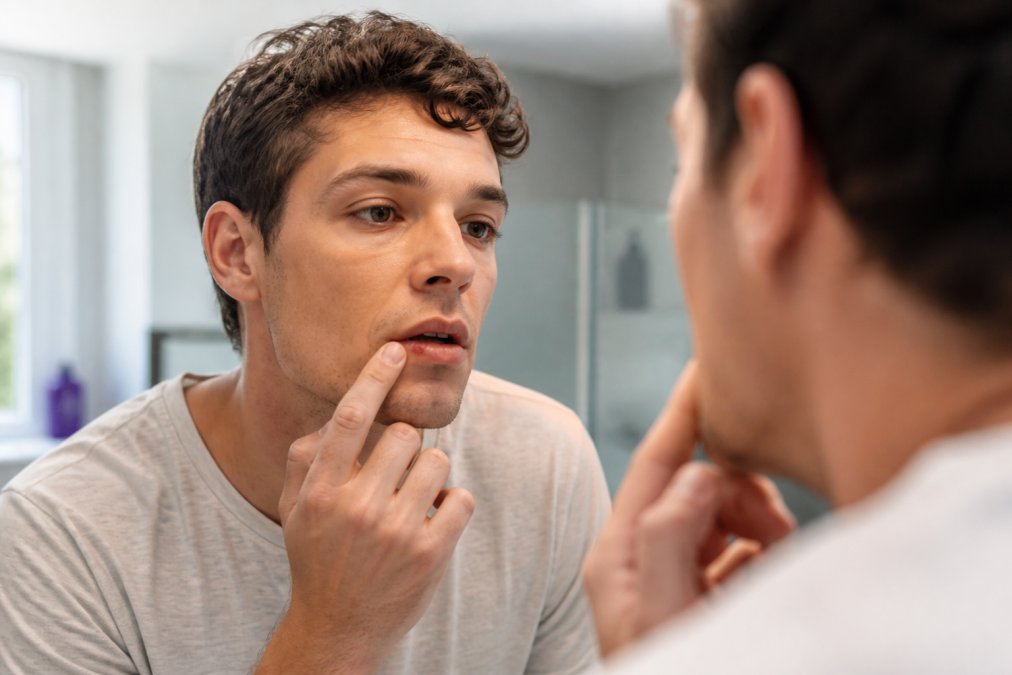
Here's the typical progression:
- Prodrome (hours 0-24): Tingling, itching, or burning at the site. Nothing visible yet.
- Blister formation (days 1-2): Small, fluid-filled blisters appear and may cluster.
- Ulceration (days 2-4): Blisters break open, leaving a shallow, painful lesion.
- Crusting and scabbing (days 4-8): A yellowish or brown crust forms over the sore.
- Healing (days 8-14): The scab flakes off and new skin closes the wound.
Why the Blister Stage Feels Like the Longest
The blister and ulceration stages cause the most discomfort because the skin barrier is broken. Nerve endings are exposed, so even talking or eating can sting. This phase also carries the highest risk of transmission, since fluid from the blister contains live virus.
Why the Healing Cycle Stalls: Triggers, Immune Stress, and Inflammation
Reactivation happens when your immune system is under strain. Common outbreak triggers include physical illness, lack of sleep, sun exposure, hormonal shifts, and emotional stress (the NHS).
When you're run down, your T-cells respond more slowly. That delay lets the virus replicate longer before your body mounts a full defense, and the sore sticks around. Inflammation at the site is a normal part of healing, but it also contributes to redness, swelling, and the drawn-out timeline.
A few factors reliably slow things down:
- Picking or squeezing the blister, which spreads fluid and invites secondary infection
- Dry, cracked lips that split and reopen the sore
- Poor sleep and high stress, which blunt immune response
- Nutritional gaps, particularly low levels of zinc, vitamin C, and B vitamins
How to Get Rid of a Cold Sore Fast (Without Making It Worse)
You can't erase a cold sore overnight with home remedies alone, but you can shorten the worst of it by acting early. The single biggest factor is timing: treatment started during the tingling stage works far better than treatment started once the blister is full.
A practical routine:
- Apply a targeted cold sore treatment at the first tingle, not after the blister appears
- Keep the area clean and dry, and wash your hands after any contact
- Use a separate lip balm and don't share towels, cups, or utensils
- Apply a cool compress to ease pain and swelling
- Get consistent sleep and manage stress during the outbreak
- Wear lip balm with sun protection outdoors
Antiviral medication and topical creams can help, and oral prescriptions may be appropriate for frequent or severe outbreaks. Talk to a healthcare professional about what fits your situation.
This is where LipCur fits in. LipCur is a fast-acting, gentle formula designed to stop outbreaks in their tracks and support healing within 24 hours. It also helps prevent the itching and tingling that make the early stage so uncomfortable.
How to Hide a Cold Sore While It Heals
Covering a cold sore is mostly about discretion, not deception. But the way you cover it matters more than most people realize: the wrong product can trap moisture, irritate the open lesion, or transfer virus to new skin and stretch a 10-day outbreak into two weeks. The goal is to reduce visual impact while keeping the sore clean, dry, and undisturbed.
What Actually Works
- Hydrocolloid patches made for cold sores. These thin, clear or flesh-toned patches seal over the lesion, flatten its appearance, and create a barrier that keeps you from touching it. Look for patches sized for lip and mouth-area use. Change them per the package directions, and wash your hands before and after.
- A matte, non-comedogenic concealer applied with a clean disposable applicator. Cream-to-powder and stick formulas tend to stay put better than liquid concealers, which can migrate into the open sore. Use a fresh cotton swab or disposable sponge each time, then discard it.
- A thin layer of petroleum jelly or a plain occlusive balm on the crust. Keeping the scab flexible prevents it from cracking, which is what makes a healing sore look worse and re-open. This is the single most underrated step for both appearance and comfort.
- Sun protection on and around the lip. Ultraviolet exposure is a known reactivation trigger, and sunburned, cracked lips heal more slowly. A lip balm with broad-spectrum SPF 30 or higher, applied to the surrounding lip, not scrubbed into the open sore, helps.
What Backfires
- Heavy or long-wear lipstick directly on an open sore. Pigments, waxes, and preservatives can irritate broken skin, and the applicator becomes a contaminated surface you'll re-use.
- Exfoliating lip scrubs, lip plumpers, and products with menthol, camphor, or high concentrations of salicylic acid. These sting on intact lips and can delay closure on an open lesion.
- Picking at the crust to 'smooth it out' before applying makeup. This removes the protective scab, exposes raw skin, and is one of the most common ways people introduce bacteria.
- Reapplying makeup with the same finger or brush. You transfer viral fluid and skin bacteria from the sore to the rest of your lip and to the product itself.
- Sharing lip balm, lip liner, or a partner's kiss. The virus is most contagious from the first tingle through the crusting stage.
The Hygiene Routine That Protects Healing
A simple sequence keeps the area from getting re-contaminated:
- Wash your hands before and after any contact with the sore.
- Clean the area gently with a mild, fragrance-free cleanser and pat, don't rub, dry with a disposable tissue.
- Apply treatment or balm with a clean cotton swab, not your finger.
- If you cover it, apply the patch or concealer last, over a fully dry surface.
- Replace your toothbrush at the end of the outbreak, and don't share towels, cups, or utensils.
A Note on Makeup and Reinfection
If you wore lipstick or gloss over the sore, set that product aside until the outbreak fully resolves, or sanitize the surface of a stick product by wiping the top layer off with a clean tissue. Cream and liquid products in pots or tubes are harder to clean and are best replaced. This isn't about being wasteful; it's about not re-introducing virus to skin that's already fighting it.
When Slow Healing Means Something Else: Secondary Infection and Doctor Visits
A cold sore that lingers past two weeks, or one that gets worse instead of better, may signal something beyond a routine outbreak. The tricky part is that normal healing and a brewing infection can look similar for a day or two. Here's how to tell them apart, a distinction most cold sore guides skip entirely.
Normal Viral Healing vs. a Bacterial Secondary Infection
A cold sore is a viral lesion. When bacteria get into that open sore, usually from picking, from contaminated fingers, or from a cracked crust, you get a secondary bacterial infection layered on top of the viral one. That's the scenario that turns a 10-day sore into a three-week problem, and it needs a different treatment than an antiviral alone.
Signs that healing is on track:
- The sore moves through the expected stages: tingle, blister, ulceration, crusting, then flaking.
- Pain and swelling peak around days 2 to 4 and then steadily improve.
- The crust is yellow-brown and dries down; the skin underneath closes from the edges inward.
- You feel otherwise well, no fever, no swollen lymph nodes, no spreading redness.
Signs that point to a bacterial infection:
- Increasing pain, redness, or swelling after day 4 instead of decreasing.
- Pus, a foul smell, or a crust that keeps weeping instead of drying.
- Redness that spreads outward past the original sore border, or feels hot to the touch.
- A fever, chills, or swollen, tender lymph nodes in the neck or jaw.
- A sore that stalls, no change for several days, or one that re-opens repeatedly.
If you see the second set of signs, an antiviral cream or oral antiviral won't address the bacterial component. A clinician may prescribe a topical or oral antibiotic. Don't apply antibiotic ointment left over from a previous prescription without guidance; the wrong one can irritate the lesion or select for resistant bacteria.
Who Should Call a Clinician Early
Some people shouldn't wait the full two weeks to check in:
- Immunocompromised individuals, including people on immunosuppressants, undergoing chemotherapy, or living with untreated HIV, can have more severe, longer-lasting, and atypical outbreaks.
- Pregnant people, especially near delivery, should talk to their obstetric provider, since HSV can be transmitted to a newborn during birth.
- Infants and young children with a first cold sore, or anyone with sores near the eyes, should be evaluated promptly. HSV near the eye is a medical concern, not a cosmetic one.
- People with eczema or other chronic skin conditions, because the broken skin barrier raises the risk of a more widespread infection.
When to See a Doctor
See a clinician if any of the following apply:
- The sore hasn't improved after 10 to 14 days.
- It gets worse after day 4, or you develop a fever or swollen lymph nodes.
- You have frequent, recurring outbreaks, many clinicians consider six or more per year a threshold worth discussing.
- The sore spreads, or you have trouble eating or drinking because of the pain.
- You have sores inside the mouth, on the gums, or near the eyes.
Conclusion
Waiting out a cold sore is frustrating, especially when you have a meeting, a date, or a big event on the calendar. The biology behind the slow timeline is real, but the length of each outbreak is not fixed. Catching it at the first tingle and treating it consistently makes a measurable difference in how quickly you get back to normal.
LipCur was built for exactly that moment: fast-acting relief designed to stop outbreaks and support healing within 24 hours, with a gentle formula that repairs and protects your skin and calms the itching and tingling before it takes over. Backed by 5.0/5.0 star reviews and a 120-day money-back guarantee, it's a low-risk way to take control of your next outbreak.
Get started with LipCur and stop letting a cold sore dictate your week.
Frequently Asked Questions
How can I speed up the healing of a cold sore?
Start treatment at the first tingle, not when the blister appears. Antiviral creams and oral prescriptions work best during the prodrome stage, before the virus fully reaches the skin surface. Keep the area clean, avoid picking at scabs, and use a targeted formula like LipCur that is designed to stop outbreaks early and support faster healing. Sleep, stress management, and staying hydrated also help your immune system do its job.
What is the main trigger for cold sores?
The herpes simplex virus stays dormant in nerve ganglia and reactivates when your immune system is under stress. Common triggers include emotional stress, fever, hormonal changes, sun exposure, and fatigue. Some people notice outbreaks around their period or during illness. Identifying your personal triggers helps you anticipate outbreaks and start treatment during the prodrome stage, which can shorten the cold sore healing cycle.
What's the worst day for a cold sore?
Most people find days two and three the worst, when the blister is fully formed, swollen, and most visible. This is the blister formation stage, and it is also when the virus is most contagious. Pain, itching, and tingling peak here. After that, the lesion begins to crust and scab, which is uncomfortable but signals that healing is underway.
When should I see a doctor for a persistent cold sore?
See a doctor if a cold sore lasts more than two weeks, spreads, or comes with fever and swollen lymph nodes. People who are immunocompromised may need oral antiviral medication. If you get outbreaks frequently, a doctor can discuss daily suppressive therapy. Persistent or unusually painful sores can also signal a secondary infection that needs medical treatment.