

Table of Contents
- Why Acting Fast Is the Key to Cold Sore Relief
- Cold Sore Stages and Treatment: What Works at Each Phase
- Best Over the Counter Medicine for Cold Sores
- How Long Do Cold Sores Last and How to Shorten It
- Home Remedies That Ease Pain and Swelling
- What to Avoid During an Outbreak
- When to See a Doctor for a Cold Sore
- Conclusion: Stop Outbreaks Before They Ruin Your Week
- Frequently Asked Questions
Last Updated: September 8, 2026
Why Acting Fast Is the Key to Cold Sore Relief
The moment you feel that familiar tingle, the clock starts ticking. Cold sore relief depends almost entirely on what you do in the first few hours after symptoms appear. That subtle burning or itching is the prodrome phase, the earliest warning sign that the herpes simplex virus is reactivating, and your only window to stop the outbreak before it becomes visible.
Most people wait until they see a blister, and that is exactly the mistake that turns a minor irritation into a week-long embarrassment. Once the blister forms, you are no longer preventing an outbreak, you are simply managing one. Acting during the tingling stage gives you the best chance to keep the sore small, or stop it from surfacing altogether.
Below, we show you how to respond at every stage, which treatments work, and what to avoid to shorten healing time.
Cold Sore Stages and Treatment: What Works at Each Phase
A cold sore progresses through five distinct phases, and each one demands a different approach. The prodrome stage brings tingling and itching, followed by the blister stage where fluid-filled lesions appear. Next comes the weeping phase, then crusting, and finally the healing stage where the scab falls off.
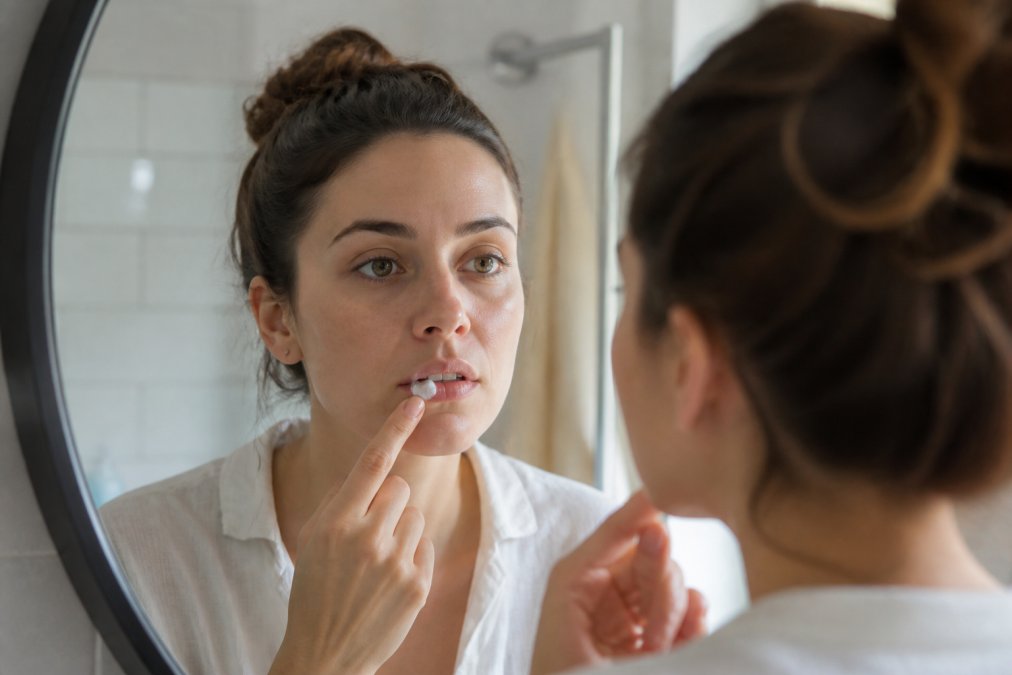
During the tingling stage, antiviral treatments are most effective because they can interrupt viral replication before the blister forms. Once you reach the blister stage, your focus shifts to keeping the area clean and protected. The weeping phase requires careful hygiene to prevent the virus from spreading. During crusting, keep the area moisturized to prevent painful cracking, and in the final healing stage, resist the urge to pick at the scab.
| Stage | What You Feel | Best Action | Goal |
|---|---|---|---|
| Prodrome | Tingling, itching, burning | Apply treatment immediately | Stop the blister from forming |
| Blister | Small fluid-filled bump | Keep clean, avoid touching | Contain the outbreak |
| Weeping | Open, oozing sore | Gentle cleansing | Prevent secondary infection |
| Crusting | Dry, scabbing | Moisturize with ointment | Reduce cracking and pain |
| Healing | Flaking, fading | Continue protection | Minimize scarring |
Best Over the Counter Medicine for Cold Sores
The best over the counter medicine for cold sores targets the virus directly while soothing the surrounding skin. Docosanol, the active ingredient in many popular creams, works by preventing the virus from fusing with healthy cells, which shortens healing time when applied early (PubMed). Acyclovir is also available in topical form without a prescription and interferes with viral DNA replication.
Many people find that standard drugstore options fall short because they only address surface symptoms. They numb the pain or moisturize the area, but do little to stop the outbreak from progressing. This is where LipCur differs. Our fast-acting formula is designed to stop cold sores in their tracks and help you heal within 24 hours.

For those who catch the outbreak early, LipCur prevents the uncomfortable itching and tingling that makes cold sores so miserable. The gentle, soothing formula repairs and protects your skin while it works, so you are not trading one irritation for another.
How Long Do Cold Sores Last and How to Shorten It
Untreated cold sores typically last between 8 and 12 days from the first tingle to complete healing (mayoclinic.org). The blister phase alone can persist for several days, followed by the crusting stage that tests your patience the most. But that timeline is not fixed, and you have more control over it than you might think.
How long do cold sores last depends heavily on when you start treatment and how consistent you are with it. Antiviral medications and fast-acting topical treatments can cut that recovery time significantly, especially when applied during the prodrome phase. Keeping the area moisturized during crusting also prevents the scab from cracking, which reduces pain and speeds up the final healing stage.
Your immune system plays a major role in recovery speed. Stress, lack of sleep, and poor nutrition all suppress immune function, which gives the virus more time to run its course. Supporting your body with rest and hydration while using an effective topical treatment gives you the best chance at a short, mild outbreak.
Home Remedies That Ease Pain and Swelling
Cold compresses are the first-line physical remedy because they directly reduce local inflammation. Apply a clean, damp cloth or a gel pack wrapped in a paper towel to the area for 10 to 15 minutes, three to four times daily. The cold constricts capillaries, slowing the virus's metabolic activity and numbing the nerve endings responsible for that burning ache. Do not apply ice directly to the skin, as the thin tissue of the lip is prone to frostbite-like damage.
For moisture and barrier protection, plain white petroleum jelly is the most reliable choice. It is occlusive, sealing the area from saliva and outside irritants, and prevents the crust from cracking when you talk or eat. Avoid flavored or medicated lip balms containing camphor, phenol, or menthol during the weeping and crusting stages, as these can over-dry fragile new skin and delay healing.
A unique angle most clinical articles miss is the role of diet during an active outbreak. The herpes simplex virus requires the amino acid arginine to replicate, while lysine can inhibit viral growth. During the active phase, shifting your snack choices toward lysine-rich options like plain yogurt, fish, chicken, or eggs may support your topical treatment. This is not a substitute for antiviral therapy, but it is a low-cost, low-risk adjunct.
Some natural oils offer genuine anti-inflammatory benefits, but they require careful handling. Tea tree oil has documented antiviral properties in laboratory settings, yet it is highly irritating to mucosal tissue. If you choose to use it, dilute one drop in a teaspoon of a carrier oil like jojoba or fractionated coconut oil, and apply only to the outer edge of the blister, never to the open weeping surface. Peppermint oil similarly shows antiviral activity in vitro, but the sensation of menthol on an open sore can be intensely painful.
These remedies manage symptoms, but they do not stop viral replication. For true relief that shortens the outbreak itself, pair these comfort measures with an antiviral treatment applied during the prodrome phase. The combination of cold therapy for pain, petroleum jelly for barrier protection, and a lysine-forward diet for systemic support gives you a multi-angle approach.
What to Avoid During an Outbreak
Beyond the physical habits that prolong an outbreak, there is a quieter factor that affects how you cope: the social and emotional weight of a visible sore on your face. Unlike a cut on your hand, a cold sore is public. It invites questions, stares, and assumptions about your health. That stigma often drives people to pick at the scab, cover it with heavy makeup, or cancel plans, all of which make the outbreak worse. Acknowledging this stress is the first step to managing it. Stress itself is a documented trigger for reactivation, so the anxiety about being seen with a cold sore can actually feed the next outbreak.
Touching the sore is the most common physical mistake. Each time your finger contacts the lesion, you risk transferring the virus to your eyes, nose, or other parts of your face, and you introduce bacteria that can cause a secondary infection. If you must touch the area to apply treatment, wash your hands first, use a cotton swab or clean fingertip, and wash again immediately after. Do not share cups, utensils, towels, or lip products while the sore is active, the virus can survive on inanimate surfaces for several hours.
Spicy, salty, and acidic foods are obvious irritants, but the list is broader than most people realize. Citrus fruits, tomato-based sauces, vinegar-heavy dressings, and even crusty bread can abrade the sore or trigger a stinging sensation that makes you wince, which can crack the forming scab. During the weeping and crusting stages, choose soft, neutral-temperature foods like oatmeal, mashed potatoes, or scrambled eggs to minimize mechanical irritation.
Sun exposure is a primary trigger that deserves more attention than a passing mention (the NIH). Ultraviolet light suppresses the local immune response in the lip tissue, which is why many people experience outbreaks within 48 hours of a day outdoors. During an active outbreak, sun exposure can also darken the healing skin and increase the risk of post-inflammatory hyperpigmentation. Use a lip balm with SPF 30 or higher that contains zinc oxide or titanium dioxide as the active ingredient, these physical blockers provide better protection than chemical sunscreens, which can sting on broken skin. Avoid lip products with fragrance or flavoring, as these encourage licking, which dries the area and removes the protective barrier.
If you need to attend a meeting or event during the crusting stage, cosmetic concealment is possible without delaying healing, but the rules matter. Wait until the weeping phase has fully ended and a dry scab has formed. Apply a thin layer of petroleum jelly first, then use a non-comedogenic, fragrance-free concealer with a clean brush, never your fingertip. Avoid cream-to-powder formulas that contain drying alcohols. Remove the makeup gently with a micellar water or oil-based cleanser, and reapply petroleum jelly immediately. Do not wear makeup over an open, weeping sore; the risk of secondary infection is simply not worth the temporary cosmetic benefit.
Finally, do not ignore the role of sleep and stress management during an outbreak. A single night of poor sleep can suppress natural killer cell activity, giving the virus more time to replicate. Prioritizing rest, reducing caffeine intake in the afternoon, and using a basic relaxation technique like controlled breathing for five minutes can meaningfully shorten the duration of an outbreak. These are not passive suggestions, they are active interventions that support your immune system while your topical treatment does the direct antiviral work.
When to See a Doctor for a Cold Sore
Most cold sores resolve on their own or with over-the-counter treatment, but certain situations warrant professional medical advice. If the outbreak does not heal within two weeks, spreads to your eyes, or is accompanied by a high fever, you should consult a healthcare provider. Cold sores near the eyes are particularly concerning because the virus can cause corneal damage if left untreated.
People with weakened immune systems, including those undergoing chemotherapy or living with chronic conditions, should seek medical guidance at the first sign of an outbreak. Frequent recurrences, defined as more than several outbreaks per year, may also justify a conversation about prescription antiviral medications. A doctor can prescribe oral valacyclovir or acyclovir, which are often more effective for severe or frequent cases than topical treatments alone.
For the majority of people, however, a reliable over-the-counter treatment applied at the first tingle is enough to keep the outbreak under control. Understanding your own triggers, whether they are stress, hormonal changes, or sun exposure, allows you to respond faster and more effectively each time.
Conclusion: Stop Outbreaks Before They Ruin Your Week
Cold sores are frustrating, painful, and often arrive at the worst possible moment. The good news is that you are not powerless against them. By recognizing the early warning signs, applying the right treatment immediately, and avoiding the habits that prolong outbreaks, you can dramatically reduce both the duration and the visibility of each episode.
LipCur offers the fast-acting relief that traditional treatments often fail to deliver. Our clinically formulated solution stops outbreaks in their tracks, helps you heal within 24 hours, and prevents the itching and tingling that makes cold sores so uncomfortable. With a 120-day money back guarantee and a 5.0 out of 5.0 rating from verified buyers like Carrie Clark, who reported her sore "gone completely in two days," you have nothing to lose but the outbreak itself.
Get started with LipCur and put an end to cold sores that overstay their welcome.
Frequently Asked Questions
What helps cold sores immediately?
The moment you feel the tingling stage, apply a topical cream with an antiviral or numbing agent. Products like LipCur, which contains docosanol, work best when used before a blister forms. A cold compress also provides instant relief by reducing inflammation and numbing the area. Hold a clean, damp cloth on the spot for 10 to 15 minutes at a time. This combination can stop the outbreak from progressing and cuts down overall healing time.
Can you get rid of a cold sore in 24 hours?
A cold sore will not vanish completely in 24 hours, but you can stop it from turning into a large, painful blister. If you catch the tingling stage early, a fast-acting formula like LipCur can keep the sore small and get you to the crusting stage much faster. Many customers report their sore stayed small and was gone within two days. Early treatment is the single biggest factor in shortening how long a cold sore lasts.
What is the best over the counter medicine for cold sores?
The best over the counter medicine for cold sores contains an active ingredient that targets the herpes simplex virus directly. Docosanol, found in LipCur, works by preventing the virus from entering healthy skin cells. Topical ointments with benzocaine or lidocaine numb the area but do not fight the virus. For the fastest results, choose a cream that combines antiviral action with soothing ingredients to reduce redness and irritation.
How can I stop a cold sore from progressing?
Stop a cold sore from progressing by treating it at the first sign of tingling or itching. Apply an antiviral cream like LipCur five times a day to keep the medication on the sore at all times. Avoid touching the area, and wash your hands if you do. Keep the spot moisturized with lip balm to prevent cracking. Stress, lack of sleep, and sun exposure can make outbreaks worse, so rest and use SPF lip protection while the sore heals.