

Table of Contents
- What Happens During a Cold Sore Outbreak (Stage by Stage)
- Natural Ways to Heal Cold Sores: Topical Remedies That Work
- Lysine for Cold Sores Dosage: What You Need to Know
- Vitamins and Supplements That Support the Healing Process
- Dietary Triggers to Avoid and Stress Management Techniques
- How Long Do Cold Sores Last and How to Shorten That Timeline
- When to See a Doctor for a Cold Sore
- Conclusion
Last Updated: August 7, 2026
What Happens During a Cold Sore Outbreak (Stage by Stage)
A cold sore outbreak is a predictable sequence of five stages, each with distinct symptoms and intervention windows. Understanding this sequence is essential to shortening healing time.
Stage 1, Tingling (prodrome): A burning, itching, or tingling sensation under the lip signals herpes simplex virus (HSV-1) reactivating and traveling along nerve pathways. The virus is contagious at this stage, even though nothing is visible yet.
Stage 2, Blister formation: Small fluid-filled blisters appear in a cluster with red, inflamed surrounding skin.
Stage 3, Weeping: Blisters rupture and release clear or yellowish fluid. This is the most contagious stage.
Stage 4, Crusting: The open sore dries and forms a yellowish-brown crust that may crack and bleed.
Stage 5, Healing: The crust falls away and new skin forms underneath, with mild redness lingering briefly.
Stage-Specific Remedies: Matching Treatment to the Moment
The biggest mistake is treating every stage identically. A cold compress works differently at Stage 1 than at Stage 4. Matching your remedy to your current stage separates a two-day outbreak from a ten-day one.
- Stage 1 (tingling): This is your highest-impact moment. Antiviral topical treatments, lysine supplementation, and cold compresses applied immediately can prevent full blister formation. Act within the first few hours.
- Stage 2 (blistering): Topical lemon balm extract or diluted tea tree oil reduces inflammation and supports the skin barrier. Avoid touching or squeezing.
- Stage 3 (weeping): Focus on hygiene and soothing relief. Aloe vera gel keeps the area moist without trapping bacteria. Avoid petroleum jelly, as it can seal in moisture that promotes secondary infection.
- Stage 4 (crusting): Switch to moisturizing agents like petroleum jelly or vitamin E oil to soften the crust and reduce cracking.
- Stage 5 (healing): Protect new skin from UV exposure with SPF lip balm, as UV exposure is a common trigger for repeat outbreaks.
LipCur is formulated to work across these stages, with a gentle soothing formula designed to stop outbreaks early and help heal cold sores within 24 hours when applied at the first sign of tingling.

Natural Ways to Heal Cold Sores: Topical Remedies That Work
Several natural topical remedies have meaningful evidence behind them and belong in your cold sore management toolkit.
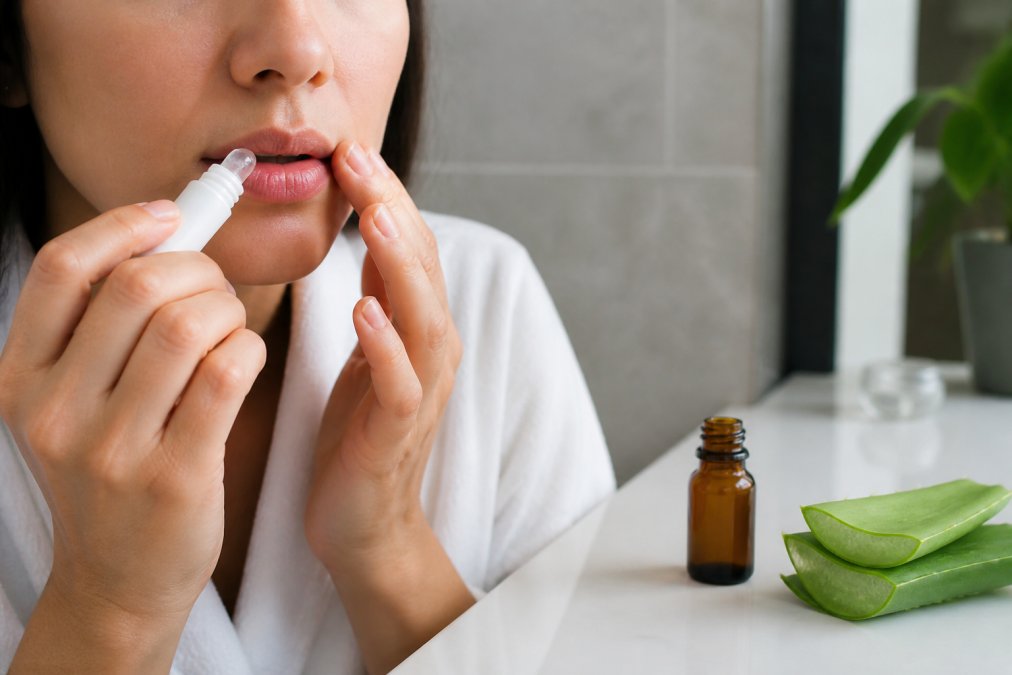
Cold Compress and Aloe Vera for Soothing Relief
A cold compress is one of the most underrated tools in cold sore management. Applied during Stages 1 and 2, it reduces inflammation, numbs tingling, and slows blood flow to limit blister size. Wrap ice cubes in a clean cloth and hold it against the sore for 10 to 15 minutes. Never apply ice directly to skin, as direct contact can cause minor frostbite on already-irritated tissue.
Aloe vera gel soothes and moisturizes. The plant contains compounds with documented anti-inflammatory properties. According to the National Center for Complementary and Integrative Health, aloe vera has been studied for its role in wound healing and skin barrier support. Apply pure aloe vera gel to the sore during Stages 3 and 4 using a cotton swab to avoid spreading the viral infection.
Essential Oils: Tea Tree, Peppermint, and Lemon Balm
Tea tree oil has antiviral properties studied in laboratory settings, and peppermint oil contains compounds that may interfere with herpes simplex virus activity. Lemon balm (Melissa officinalis) has the strongest clinical interest, with studies examining its topical application for reducing healing time and symptom severity.
Essential oils must always be diluted before topical application. Applying undiluted tea tree or peppermint oil directly to a cold sore can cause significant skin irritation and potentially worsen the outbreak. A safe dilution ratio is one to two drops of essential oil per teaspoon of carrier oil such as coconut or jojoba oil.
Lemon balm is available as a topical cream or herbal extract and is the most practical option for direct application.
Lysine for Cold Sores Dosage: What You Need to Know
Lysine is an amino acid that competes with arginine, which HSV-1 requires to replicate. This competition may reduce the virus's ability to reproduce efficiently.
Lysine dosage varies depending on whether you are using it preventively or during an active outbreak:
- Preventive use: 500 mg to 1,000 mg daily for people with frequent outbreaks.
- Active outbreak: 1,000 mg taken two to three times daily during an outbreak, then taper back down once healed.
Lysine supplementation is generally safe for most healthy adults at these doses, but people with kidney disease, liver disease, or cardiovascular conditions should consult a physician before starting. According to the Office of Dietary Supplements at the National Institutes of Health, excess lysine intake over long periods has not been thoroughly studied.
Foods naturally high in lysine include fish, chicken, eggs, and dairy. Foods high in arginine, which can theoretically fuel HSV-1 replication, include peanuts, almonds, chocolate, and whole grains. Adjusting dietary intake alongside supplementation is a common holistic approach.
Vitamins and Supplements That Support the Healing Process
Vitamins and supplements do not directly kill herpes simplex virus. They support the immune system's ability to suppress the viral infection and speed healing.
Vitamin C supports collagen synthesis, directly relevant to skin repair after a cold sore, and plays a role in immune function. Many people take higher doses during active outbreaks.
Zinc has received specific attention for cold sore management. Zinc sulfate in topical form has been studied for its potential to reduce healing time and outbreak frequency. According to the Linus Pauling Institute at Oregon State University, zinc plays a critical role in immune cell development and inflammatory response regulation.
Vitamin E is particularly useful during crusting and healing stages. Applied topically, it softens the crust, reduces scarring, and supports new skin formation.
Treat vitamins as support, not standalone cure. They work best combined with topical remedies and, where appropriate, antiviral treatments.
| Supplement | Primary Role | When to Use | Form |
|---|---|---|---|
| Lysine | Competes with arginine to limit viral replication | Preventive and during outbreak | Oral capsule |
| Vitamin C | Immune support, collagen synthesis | Daily and during outbreak | Oral supplement |
| Zinc | Immune function, antiviral topical action | Daily and topical during outbreak | Oral or topical |
| Vitamin E | Skin repair, moisturizing | Stages 4 and 5 (crusting, healing) | Topical oil |
| Lemon Balm | Anti-inflammatory, antiviral properties | Stages 2 and 3 (blistering, weeping) | Topical cream |
Dietary Triggers to Avoid and Stress Management Techniques
What you eat and how you manage stress often determine whether an outbreak occurs at all.
Dietary triggers to avoid:
Foods with high arginine-to-lysine ratios can theoretically encourage HSV-1 replication. The most commonly reported triggers include chocolate, peanuts, tree nuts, whole grains, seeds, and gelatin. This does not mean eliminating these foods entirely, but being strategic during high-stress periods or when you feel early tingling. Pairing arginine-rich foods with lysine-rich foods like dairy or fish helps offset the ratio.
Stress management techniques:
Stress is one of the most consistent outbreak triggers. Psychological stress suppresses immune function, allowing latent HSV-1 to reactivate. This relationship is well-documented in immunology research.
Practical stress management techniques that may reduce outbreak frequency include diaphragmatic breathing exercises practiced for 10 minutes daily, regular moderate-intensity exercise, consistent sleep schedules, and mindfulness meditation.

How Long Do Cold Sores Last and How to Shorten That Timeline
An untreated cold sore typically runs its full course in 8 to 12 days from first tingling to complete healing. The visible blister phase lasts 3 to 5 days, with crusting and healing adding another 4 to 7 days.
Several factors influence healing time:
- Timing of intervention: Treatment started during the prodrome stage produces shorter outbreaks than treatment started after blistering.
- Immune status: People under stress, illness, or immunosuppressive treatment tend to have longer healing times.
- UV exposure: Sun exposure without SPF lip protection triggers new outbreaks and prolongs existing ones.
- Skin hydration: Dry, cracked skin extends healing time and increases secondary bacterial infection risk.
The most reliable way to shorten the timeline is to act at the first tingling sensation. LipCur is designed specifically for that early-intervention window, with a fast-acting formula built to stop the outbreak before it becomes visible and help heal cold sores within 24 hours of application.
Verified buyer Carrie Clark described exactly that experience: "My sore stayed small and was gone completely in two days. It never got itchy or tingly or anything." That outcome is far more achievable at Stage 1 than at Stage 3.
When to See a Doctor for a Cold Sore
For most healthy adults, cold sores caused by HSV-1 are self-limiting, and the immune system manages them without medical intervention.
Medical attention is appropriate in these situations:
- Outbreaks lasting longer than two weeks without signs of improvement
- Cold sores near the eyes (ocular herpes is a medical emergency that can affect vision)
- Frequent outbreaks (six or more per year) significantly affecting quality of life
- Sores spreading significantly beyond the lip area or appearing on gums, tongue, or throat
- Immunocompromised individuals, including those undergoing chemotherapy, organ transplant recipients, or those with HIV
- Infants and young children exposed to an active cold sore from an adult
For most healthy adults, over-the-counter and natural remedies are sufficient. If uncertain whether symptoms represent a standard cold sore, a brief consultation with a primary care physician or dermatologist is reasonable.
Cold sores are manageable. The challenge most people face is not a lack of options but a lack of a clear, stage-specific plan. If over-the-counter treatments felt slow or ineffective, the issue is often timing rather than the product itself. LipCur's fast-acting, gentle formula is built for the early intervention window, designed to stop outbreaks and help heal cold sores within 24 hours when applied at the first sign of tingling. With 5.0/5.0 star reviews from verified buyers, it is a targeted solution for people who need results quickly. Shop Now at lipcur.com.
Frequently Asked Questions
What vitamin am I lacking if I keep getting cold sores?
Frequent cold sore outbreaks are often associated with low levels of vitamin C, vitamin E, and zinc, all of which play a role in immune system support. Some people also find that a low lysine-to-arginine ratio in their diet contributes to more frequent outbreaks. Rather than self-diagnosing a deficiency, speak with a healthcare provider who can run bloodwork and recommend appropriate supplementation for your specific situation.
What makes cold sores go away fastest?
Starting treatment at the first tingling sensation gives you the best chance of shortening the outbreak. Topical remedies like lemon balm extract, aloe vera, and cold compresses can reduce inflammation and soothe irritation early on. Lysine supplementation and vitamin C support immune response. Specialized fast-acting treatments like LipCur are designed to stop the outbreak early and help heal cold sores within 24 hours when applied at the first sign of symptoms.
Are there natural antivirals for cold sores?
Several plant-based compounds show antiviral properties against the herpes simplex virus in research settings. Lemon balm (Melissa officinalis) is one of the most studied, with evidence suggesting it can reduce healing time and blister severity. Tea tree oil and peppermint oil also show antiviral activity in laboratory studies, though both must be diluted before topical application to avoid skin irritation. These are supportive measures, not replacements for medical treatment when symptoms are severe.
What is the biggest trigger for cold sores?
UV exposure, physical illness, hormonal changes, and psychological stress are among the most common triggers for herpes simplex virus reactivation. Sun exposure on the lips is particularly well-documented; applying an SPF lip balm daily can reduce UV-triggered outbreaks. Stress management, consistent sleep, and avoiding arginine-rich foods during high-risk periods may also help reduce outbreak frequency over time.
This article was written using GrandRanker