

Table of Contents
- How Hydrocolloid Patches Work on Cold Sores
- Cold Sore Stages and Treatment: When to Use a Patch
- Best Over the Counter Medicine for Cold Sores: Where Hydrocolloid Fits
- How to Speed Up Cold Sore Healing with Hydrocolloid
- Pimple Patches vs. Cold Sore Patches: What's the Difference?
- Safety, Side Effects, and Contraindications
- Makeup Compatibility and Everyday Use
- What to Look for in a Cold Sore Patch
- Frequently Asked Questions
Last Updated: September 27, 2026
How Hydrocolloid Patches Work on Cold Sores
A hydrocolloid patch is a thin, gel-forming dressing that seals a cold sore and pulls fluid away while it heals. It is an add-on to antiviral treatment, not a cure or replacement for medication. (Source: the science of moist wound healing)
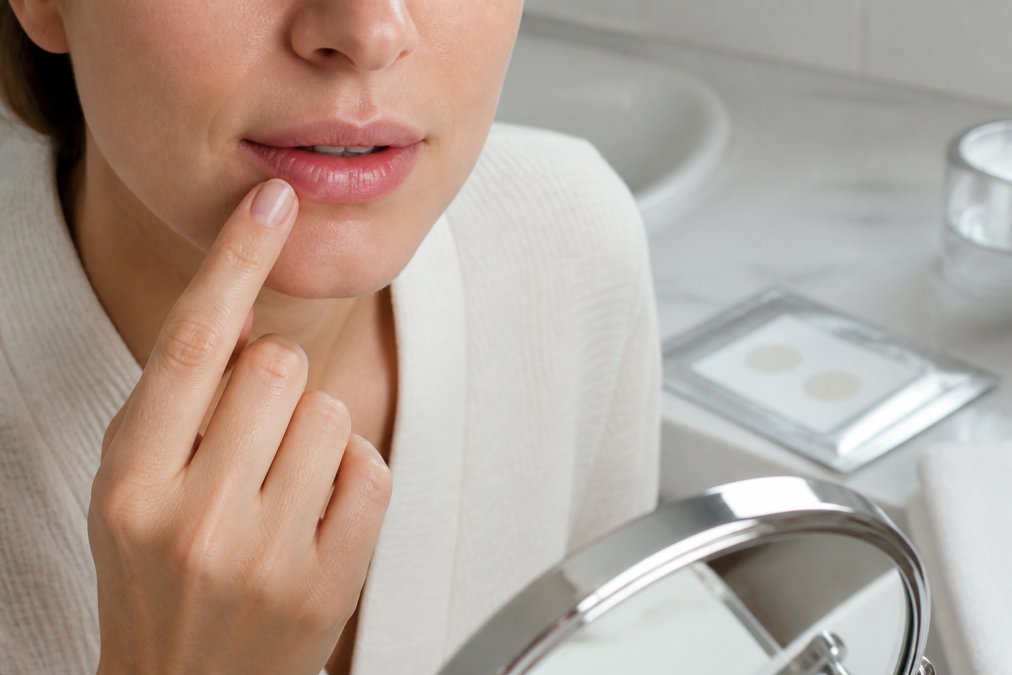
The Science of Moist Wound Healing
Hydrocolloid technology holds moisture at the wound surface. On a weeping sore, it forms a gel that keeps the area damp instead of letting it dry into a hard scab.
Patch vs. Cream: Key Differences
Creams and gels spread across the sore and sink in; patches sit on top and stay put. That difference drives everything else.
| Feature | Hydrocolloid Patch | Cream or Gel |
|---|---|---|
| Coverage | Seals the lesion | Spreads and absorbs |
| Wear time | Hours at a time | Reapply several times daily |
| Moisture control | Absorbs fluid, keeps area damp | Varies by formula |
| Makeup over it | Possible with care | Hard to layer |
| Antiviral action | None | Some contain active medicine |
Cold Sore Stages and Treatment: When to Use a Patch
Timing changes what a patch can do. A cold sore moves through three stages, each needing a different approach.
Stage 1: Tingling and Itching (Prodromal)
The prodromal stage is the warning: a tingle, itch, or throb before anything is visible, and the best window to act.
Stage 2: Blisters and Ulceration
This is when the patch earns its place. A blister forms, breaks, and leaves a shallow, contagious, tender ulcer that weeps fluid.
A patch here does three things:
- Covers the lesion so you stop picking at it
- Absorbs fluid so it does not crust over
- Cuts the chance of spreading virus to your fingers or other people
Stage 3: Crusting and Healing
As the sore dries, a crust forms that cracks when you talk or smile, slowing healing and sometimes bleeding.
Best Over the Counter Medicine for Cold Sores: Where Hydrocolloid Fits
Most drugstore options fall into a few groups:
- Topical antivirals: creams and gels that fight the virus directly. Best started at the first tingle.
- Oral antivirals: prescription pills that work system-wide. A doctor decides if these fit.
- Pain and numbing gels: ease discomfort but do not shorten the outbreak.
- Hydrocolloid patches: cover, protect, and manage moisture. No antiviral action.
If you are weighing options, ask a pharmacist what fits your case.
How to Speed Up Cold Sore Healing with Hydrocolloid
Knowing how to speed up cold sore healing comes down to acting early and keeping the sore clean and covered, a patch helps with the second half.
Step-by-Step Application Guide
Total time: about 2 minutes Difficulty: easy
What you'll need:
- A hydrocolloid patch sized for lips
- Clean hands and a mild soap
- A clean towel or tissue
- Wash your hands. Do this before and after touching the sore.
- Clean the area. Rinse with water and pat dry. Skip heavy scrubbing.
- Make sure the skin is dry. Patches stick poorly to damp or oily skin.
- Peel the patch from its backing. Try not to touch the sticky side.
- Center it over the sore. Press down at the edges first, then the middle.
- Hold for a few seconds. Warmth helps the patch seal.
- Leave it for hours. Change it when it turns white or lifts at the edges.
Expected result: the sore stays covered, feels less tender, and crusts less.
Removal Techniques to Avoid Skin Tearing
This is the step most people rush, and it causes damage. Lip skin is thin, and ripping a patch off can tear the healing surface and start the cycle over.
Do this instead:
- Wait until the patch is soft and white. A saturated patch lifts on its own.
- Peel slowly from one edge, pulling the patch flat against the skin, not up and away.
- If it resists, dab a little warm water at the edge to loosen the adhesive.
- Never pull a dry patch off a dry crust.
Pimple Patches vs. Cold Sore Patches: What's the Difference?
Pimple patches and cold sore patches look almost identical on the shelf, which is why people mix them up, but they are built for two different problems.
Here is what actually separates them:
- Ingredients. Plain hydrocolloid is the base for both. Acne patches often add salicylic acid, tea tree oil, or niacinamide to dry out a pimple. Cold sore patches are usually plain hydrocolloid or add soothing ingredients like allantoin or lidocaine. Some newer lip patches include an antiviral like docosanol, but that is the exception. Read the label, if it lists acne actives, keep it off a cold sore.
- Absorbency. Cold sore fluid is thinner and comes out faster than pus. Lip patches are formulated to absorb more fluid per square inch so they do not break down mid-blister.
- Size and shape. Pimple patches are round dots sized for a single pore. Cold sore patches are oval or lip-shaped to follow the curve of the mouth. A round dot on the lip line lifts at the corners within an hour.
- Adhesive strength. Lip skin moves constantly, talking, eating, smiling. Cold sore patches use a tackier adhesive that still releases gently, because tearing lip skin reopens the sore.
- Transparency. Both are clear, but cold sore patches are usually thinner at the edges so they disappear under concealer.
Can You Use a Pimple Patch on a Cold Sore in a Pinch?
If it is plain hydrocolloid with no added acne actives, it will cover the sore and absorb some fluid, but three things go wrong:
- The round shape will not seal along the lip line, so virus-laden fluid can leak out and spread to your fingers or the other side of your mouth.
- The adhesive is tuned for flat cheek or forehead skin, not the moving lip border, so it lifts early.
- Salicylic acid or tea tree oil on an open viral blister stings and can irritate the already-compromised skin.
How to Tell Which One You Have
If you are not sure whether the spot is a pimple or a cold sore, the pattern usually gives it away:
- Cold sore: tingles or itches before anything shows, clusters of tiny blisters, sits right on or near the lip border, weeps clear fluid, crusts yellow-brown.
- Pimple: no tingle, single raised bump with a white or dark center, sits on the skin surface, may be tender but not itchy.
Safety, Side Effects, and Contraindications
Hydrocolloid patches are well tolerated, but not right for every sore. Know when a patch helps and when it can trap fluid, hide an infection, or delay needed care.
When NOT to Use a Patch
Skip the patch, or check with a doctor first, in these situations:
- The sore is weeping heavily. A sore pouring out fluid will saturate the patch in an hour or two. Once saturated, the seal breaks, fluid leaks around the edges, and you have created a moist pocket that can macerate the surrounding skin. If the patch turns white and puffy within an hour, the sore is too wet for a patch right now. Let it dry down first.
- Signs of a secondary bacterial infection. Cold sores are viral, but bacteria love an open blister. Watch for pus (yellow or green, not clear), spreading redness beyond the sore, warmth, swelling, or a throbbing pain that gets worse instead of better. A patch over a bacterial infection traps the bacteria against the skin and can make it worse. See a doctor.
- A sore inside the mouth. Patches are for the outer lip. On the gums, tongue, or inner cheek, saliva and movement will not let a patch seal, and you risk swallowing it.
- A weakened immune system. If you are on chemotherapy, have an organ transplant, or live with untreated HIV, cold sores can spread and become serious. Do not self-treat with a patch. Call your doctor at the first tingle.
- Adhesive allergy. If you have reacted to bandages, medical tape, or other adhesives before, test a small patch on your forearm for a few hours before putting one on your lip.
- Broken or raw skin around the sore. A patch on cracked, bleeding skin can pull the wound open on removal.
Common Side Effects
Most side effects are mild and go away once you stop using the patch:
- Redness or a faint rash where the adhesive sat
- Itching or a warm feeling under the patch
- Dryness or flaking at the patch edges
- A small amount of skin lifting when you remove the patch
When to Call a Doctor
A cold sore is usually a nuisance, not an emergency. But call a healthcare provider if:
- The sore spreads across a wide area of your lip or face
- You have a fever, body aches, or feel generally unwell
- Sores keep coming back and disrupt work, sleep, or eating
- The sore has not started healing after 10 to 14 days
- You get sores near your eyes, this needs urgent care, because HSV can damage the cornea
The Bottom Line on Safety
A patch is a dressing, not a treatment. It does not kill the virus, and it will not stop an outbreak that is already underway. If you get frequent outbreaks, many clinicians use a rough threshold of six or more per year, ask about prescription antiviral options.
Makeup Compatibility and Everyday Use
You can wear makeup over a hydrocolloid patch, but the order and products matter. Get it wrong and the patch lifts within the hour.
The basics:
- Apply the patch first, then makeup on top.
- Use a light concealer, patted on with a fingertip.
- Skip powder directly over the patch. It dries the edges and causes lifting.
- Avoid oil-based products near the patch. Oil breaks down the adhesive.
What to Look for in a Cold Sore Patch
Not all patches are built the same. A few features separate one that stays put from one that peels off by lunch.
Look for:
- Lip-shaped sizing that follows the curve of your mouth
- Strong but gentle adhesive that holds for hours without pulling skin
- Thin edges that taper into the skin so makeup sits flat
- A hypoallergenic formula if your skin reacts easily
- Clear or skin-toned material for everyday wear
Frequently Asked Questions
Can a cold sore heal in 3 days?
Cold sores typically heal in 7 to 10 days without treatment, though some people see faster results. Using hydrocolloid patches or antiviral creams early can shorten the duration. A 2023 review found that hydrocolloid dressings may reduce healing time by maintaining a moist environment. If you catch the tingling stage and apply a patch immediately, you might see improvement in 3 to 5 days, but complete healing often takes longer.
How do hydrocolloid patches help with cold sore healing?
Hydrocolloid patches create a moist wound healing environment that supports the body's natural repair process. They absorb exudate, protect the blister from irritation and secondary infection, and prevent scab formation that can crack and bleed. The occlusive barrier also reduces viral transmission risk by containing fluid. Unlike creams, patches stay in place for hours, providing continuous protection and allowing you to go about your day without frequent reapplication.
Are there risks to using hydrocolloid bandages on open sores?
Hydrocolloid patches are generally safe for cold sores, but there are a few considerations. Do not apply them to infected wounds with pus or heavy exudate, as this can trap bacteria. People with sensitive skin or allergies to adhesive should test on a small area first. If you experience increased redness, swelling, or pain, remove the patch and consult a healthcare professional. Never reuse a patch, and avoid using them on deep ulcers without medical advice.
Does cold sore medicine have side effects?
Topical cold sore medications can cause side effects like dry skin, burning, or itching at the application site. Hydrocolloid patches are non-medicated, so they carry a lower risk of chemical irritation. However, adhesive allergies are possible. Oral antivirals may cause headache, nausea, or dizziness. Always read labels and talk to your doctor if you have concerns, especially if you are pregnant or taking other medications.