

Table of Contents
- How Abreva Works and Why Results Vary
- What the Best Over the Counter Cold Sore Medicine Can and Cannot Do
- How to Stop a Cold Sore Before It Starts
- Cold Sore Treatment Duration: What to Expect
- Why Abreva May Not Work for You: Individual Factors
- When to Consider a Different Approach
- Conclusion
- Frequently Asked Questions
Last Updated: September 14, 2026
How Abreva Works and Why Results Vary
Abreva is an over-the-counter topical cream built around a single active ingredient: docosanol. The FDA approved it as an antiviral for treating cold sores, one of the few non-prescription options with that designation. But "FDA-approved" and "works for everyone" are two very different claims.
Clinical trials measure average outcomes across hundreds of people. Your cold sore is not an average, it has its own timeline, triggers, and biology.
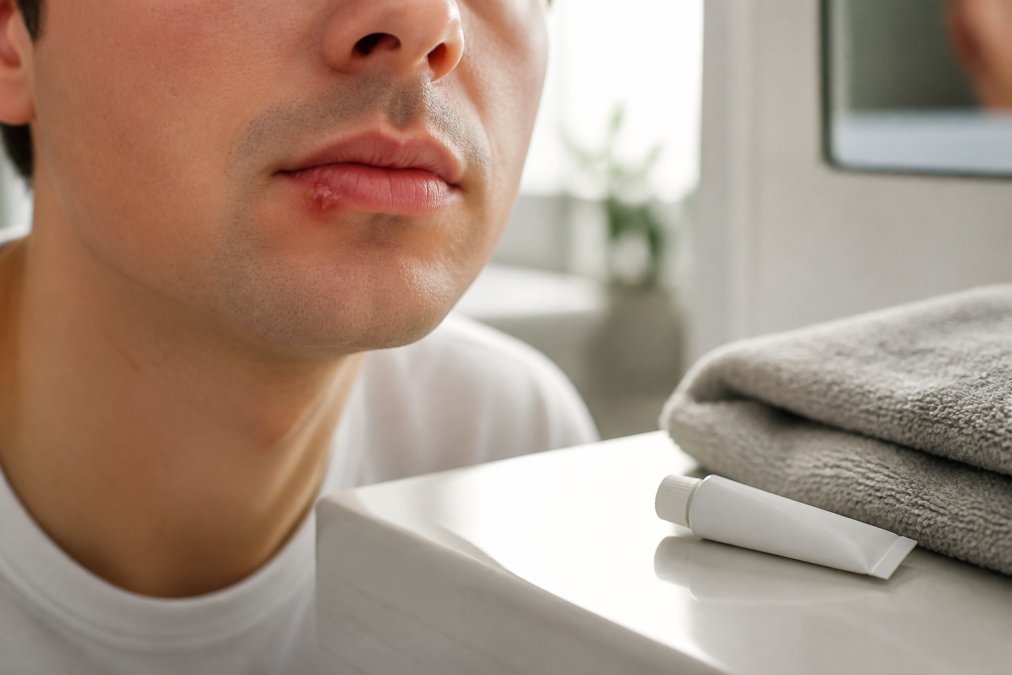
The Science Behind Docosanol
Docosanol works by interfering with viral replication at the cell membrane. According to FDA prescribing information for docosanol cream, the compound blocks the fusion between the herpes simplex virus and the host cell, which can slow how quickly the virus spreads.
That mechanism explains the product's biggest limitation: docosanol doesn't kill virus already inside your cells, it only interrupts new viral particles from infecting neighboring cells. Start during the prodrome stage, when you feel that first tingle, and you give the cream a chance to contain the outbreak before it becomes a full blister. Start on day three, and you're applying lotion to a fire that's already burning.
Many dermatologists call this a "race against replication." The earlier you apply, the more you slow the spread; the later you start, the less the antiviral has to work with.
What the Best Over the Counter Cold Sore Medicine Can and Cannot Do
The best over the counter cold sore medicine can shorten healing time and reduce symptom severity, but it cannot eliminate the virus or guarantee fast resolution for every user. The more useful question for recurring sufferers isn't "which OTC cream is strongest" but "is an OTC cream the right tier of treatment for my outbreak pattern at all."
What OTC antivirals like docosanol-based creams can do:
- Reduce the duration of an outbreak when applied at the first sign
- Lessen pain, burning sensation, and inflammation during the blister stage
- Lower the risk of the sore spreading to surrounding skin
- Provide a protective skin barrier while the sore heals
What they cannot do:
- Cure herpes labialis or remove the virus from your system
- Work identically for every person regardless of immune status
- Replace prescription antivirals for severe or frequent outbreaks
- Prevent future outbreaks on their own
That last point trips people up: a topical cream treats what's already happening, but it doesn't address the immune response that determines how often you get cold sores.
The OTC vs. Prescription Decision Framework
Most guides stop at "ask your doctor if outbreaks are frequent." A clearer way to decide is to sort yourself by outbreak frequency and severity, because the right tier of treatment changes as those numbers climb.
Roughly one to two outbreaks a year, mild, with a clear prodrome you can catch. An OTC topical is usually the right first line: apply at the tingle, the sore stays small, and the cost per outbreak is low. This is the population docosanol trials were designed around.
Three to five outbreaks a year, or outbreaks that consistently run past a week. This is the gray zone. Many practitioners find episodic prescription oral antivirals, taken only when a prodrome hits, outperform a topical alone, because an oral drug reaches the nerve ganglion where the virus reactivates while a cream only acts on the skin surface. If an OTC cream keeps underperforming here, the issue may be the delivery route, not the active ingredient.
Six or more outbreaks a year, or outbreaks triggered by a known recurring factor (hormonal cycles, immunosuppressive medication, unavoidable intense sun). This is where suppressive therapy, a daily prescription antiviral taken continuously, becomes the standard conversation with a clinician. Suppression reduces how often the virus reactivates; no OTC topical can do that.
Severe presentations at any frequency. Cold sores near the eye, widespread blistering, sores in immunocompromised people, or a first-ever outbreak with systemic symptoms like fever and swollen lymph nodes are not self-treat-at-home situations. See a clinician.
What This Means If You've Been Disappointed by OTC Creams
If you've tried an OTC cream and felt let down, the problem may not be the product category, it may be timing, formulation, delivery route, or your immune response. Before concluding topicals don't work for you, check three things: did you start at the prodrome, did you apply frequently enough (docosanol is typically dosed five times a day), and does your outbreak frequency put you in the tier where a topical is the right tool?
For people whose outbreaks sit in the mild-to-moderate band and who want a topical that acts at the first tingle, a targeted option like LipCur enters the conversation: it's designed to act fast at the first tingle, before the blister fully forms, and to support the skin barrier through the full healing window rather than only the blister stage.

How to Stop a Cold Sore Before It Starts
Stopping a cold sore before it starts comes down to recognizing the prodrome stage and acting within hours, not days. That tingling, itching, or burning sensation is your window.
A practical early-intervention routine looks like this:
- Identify your prodrome signal. Most people feel a distinct tingling or slight numbness around the lip line 12 to 24 hours before a blister appears (A Comprehensive Overview of Epidemiology, Pathogenesis and the Management of Herpes...).
- Apply treatment immediately. Don't wait to "see if it gets worse." By then, viral replication is already underway.
- Keep the area clean and dry. Moisture and touching can spread the virus to nearby skin.
- Avoid triggers you can control. Sun exposure, stress, and lack of sleep are common outbreak triggers.
- Don't share towels, lip balm, or utensils. Transmission risk is highest when a blister is present.
For people with frequent outbreaks triggered by hormonal changes or medical treatments, keeping a treatment on hand at all times matters more than buying the strongest product on the shelf.
Cold Sore Treatment Duration: What to Expect
Cold sore treatment duration varies by product, timing, and individual factors. A typical untreated cold sore runs 7 to 10 days; with early antiviral treatment, many people heal in 3 to 5 days (Overview: Cold sores).
| Stage | Typical Duration | What's Happening |
|---|---|---|
| Prodrome | 12-24 hours | Tingling, itching, no visible sore |
| Blister | 1-2 days | Fluid-filled blister forms |
| Ulcer | 2-3 days | Blister opens, most contagious phase |
| Crusting | 2-4 days | Sore dries and scabs over |
| Healing | 2-3 days | Skin repairs, redness fades |
The median healing time reported in clinical trials for docosanol sits around 4 to 5 days when treatment begins at the prodrome stage. Start later, and that number stretches.
What most guides miss is that "healing time" is measured differently across studies, some count until the scab falls off, others until pain stops. When you read a fast-healing claim, ask what endpoint is being measured.
LipCur approaches this differently by targeting the full outbreak window, from the first tingle through the final stages of skin repair. Its formula is built to soothe irritation and support the skin barrier while the sore resolves.
Why Abreva May Not Work for You: Individual Factors
Abreva may not work for you because cold sore outcomes depend on factors the product can't control: your immune response, how quickly you started treatment, your genetics, and whether outbreaks are triggered by internal changes like hormonal shifts. Walking through each variable shows what a topical antiviral can realistically do.
Individual biological variability is the angle most product comparisons ignore. Two people can use the same cream, at the same stage, and see completely different results, and the reasons are specific, not mysterious.
1. Immune Status and Prior Exposure
Cold sores are a reactivation event, not a new infection. Most adults carry herpes simplex virus type 1 (HSV-1), dormant in nerve tissue near the lip. What brings it to the surface is a dip in local immune control, from stress, illness, fatigue, sun exposure, or hormonal shifts.
Two people with the same viral load can have very different outbreaks because their immune systems suppress reactivation differently. Someone well-rested may shed virus briefly and never form a blister; someone run down, on immunosuppressive medication, or managing another illness may get a full, painful sore from the same trigger. A topical cream cannot change how well your immune system contains the virus in the nerve ganglion, it can only slow virus that has already reached the skin.
2. HSV-1 vs. HSV-2
Most cold sores are HSV-1, but HSV-2 can also cause oral lesions, and the two strains behave differently, HSV-2 oral outbreaks are less common but can be more severe. If your "cold sores" are unusually painful, frequent, or located away from the lip line, confirm which strain you're dealing with, because it affects both your immune response and how well any topical performs.
3. Viral Load at First Application
This is the variable people underestimate most. Docosanol blocks fusion between the virus and the host cell, slowing the spread of new viral particles, but it does not kill virus already inside your cells. The amount of virus already replicating when you first apply sets a ceiling on how much the product can help.
Apply at the first tingle and you interrupt the spread early, when viral load is low. Apply after the blister forms and the virus has already established itself in surrounding tissue, so the cream works against a much larger starting population. Same product, same person, same outbreak, different outcome, purely because of when you started.
4. Skin Barrier Condition
Topical drugs have to cross the skin barrier to reach their target, and dry, cracked, sun-damaged, or heavily moisturized skin absorbs them differently. Exfoliating lip products, retinoids near the mouth, or occlusive balms layered over the cream can change how much docosanol reaches the affected cells. Applying to clean, dry skin and letting the cream absorb before layering anything else can move your results.
5. Strain-Level and Formulation-Level Resistance
Antiviral resistance is rare with docosanol because its mechanism is physical (blocking membrane fusion) rather than enzymatic, but it is not zero. More commonly, what looks like "resistance" is a formulation mismatch: the cream base, concentration, or delivery format doesn't suit your skin or outbreak pattern. A product that works beautifully on one person's lip-line blister may underperform on another's larger, more inflamed outbreak simply because the vehicle doesn't stay in contact with the skin long enough.
6. Frequency of Outbreaks and Cumulative Frustration
Chronic sufferers often develop a practical tolerance to the "wait and see" approach. When you've had ten outbreaks and the cream clearly helped on only three, the product feels like it failed even if it worked as labeled on the other seven. Tracking your prodrome signals and start times separates "the product didn't work" from "I started too late for any topical to work."
What to Do With This Information
To find out whether a topical antiviral can work for you, run a simple experiment on your next outbreak: log the hour you first felt the tingle, the hour you applied, and the hour the blister appeared. Do that for two or three outbreaks. If you consistently start within a few hours of the prodrome and still get full blisters, a topical may not be your best tier of treatment. If you consistently start late, the product may be fine, your timing is the variable to fix.
There's also the question of interactions. Other skincare products, lip balms, or makeup over the affected area can dilute the antiviral or introduce irritants that slow healing. Apply treatment to clean, dry skin and let it absorb before layering anything else.
For people whose outbreaks are frequent enough that timing alone can't explain the misses, a formula built for the full outbreak window, from first tingle through skin repair, can close some of the gap that a blister-stage-only topical leaves open. LipCur is formulated to act at the first sign and to support the skin barrier through healing.
When to Consider a Different Approach
Switching treatments makes sense when your current option consistently underperforms, when outbreaks are frequent enough to disrupt work or social life, or when you're tired of the slow healing times of standard OTC creams.
Signs it's time to try something else:
- Your outbreaks routinely last longer than a week
- The sore becomes visible despite early treatment
- You get more than four or five outbreaks a year
- You've developed sensitivity or irritation from your current product
- You want a formula that also addresses the itching and tingling, not just the blister
This is where LipCur positions itself differently. It's formulated to work within 24 hours, stop outbreaks at the first sign, and prevent the uncomfortable tingling associated with cold sores. The formula is gentle and designed to repair and protect the skin barrier while the sore heals.
For chronic sufferers, the cost-benefit math matters. A product you use a few times a year needs to work reliably or cost little enough that trying it isn't a risk. LipCur's $24.95 price point and 120-day money-back guarantee lower that risk considerably.
Carrie Clark, a verified buyer, described her experience this way:
"GONE IN TWO DAYS! I was skeptical when I got the sample but decided to give it a go. My sore stayed small and was gone completely in two days. It never got itchy or tingly or anything."
That's one person's experience, not a guarantee. But it reflects a pattern many users report when they treat early and consistently.
Conclusion
Cold sores don't care about your calendar. They show up before meetings, dates, and everything else you'd rather not deal with a blister for. The question isn't whether Abreva works for everyone, because no single treatment does, it's whether you have a plan that accounts for your triggers, your timing, and your biology.
At LipCur, we built our formula for people who've tried the drugstore options and walked away frustrated: fast-acting relief, healing support within 24 hours, and a formula gentle enough to use at the first tingle. Backed by a 120-day money-back guarantee and a 5.0-star average from verified buyers.
Get started with LipCur and stop your next outbreak before it becomes visible.
Frequently Asked Questions
Is it bad to use Abreva if it's not a cold sore?
Yes, using Abreva on a non-cold sore can irritate your skin without providing any benefit. Abreva is FDA-approved specifically for treating cold sores caused by the herpes simplex virus. If you have a canker sore, bug bite, or other lip irritation, Abreva won't help and may cause dryness or burning. Always confirm you have a cold sore before applying any antiviral cream. If you're unsure, consult a healthcare professional for a proper diagnosis.
Does Abreva work if you already have a blister?
Abreva works best when applied at the first sign of a cold sore, such as tingling or itching. Once a blister has formed, the virus has already replicated, and the cream's ability to shorten healing time is reduced. You can still apply it to potentially ease symptoms and prevent the sore from worsening, but it won't make the blister disappear immediately. For best results, start treatment during the prodrome stage.
How long does it take for Abreva to work?
Clinical trials show that Abreva can shorten healing time by about a day when used at the first tingle. However, individual results vary. Some people see improvement in 2-3 days, while others may take longer. The median healing time for a cold sore without treatment is 7-10 days. Abreva may reduce that to 4-5 days for some users. If your cold sore persists beyond 10 days or worsens, consult a doctor.
Can I use Abreva with other skincare products or makeup?
You can use Abreva with other skincare products, but apply it first and let it absorb before layering moisturizer or makeup. Avoid sharing lip products or applying makeup directly over the sore to prevent irritation and spread. If you experience burning or redness, stop using other products and consult a professional. LipCur is formulated to soothe and repair skin.