

Table of Contents
- Understanding Cold Sores and Hormonal Triggers
- How Hormonal Fluctuations Activate the Herpes Simplex Virus
- How to Prevent Cold Sores During Your Period
- How Long Do Hormonal Cold Sores Last and What Speeds Healing
- Prescription Antivirals for Cold Sores: When and How They Work
- Fast-Acting Treatment for Hormonal Cold Sores
- Managing Cold Sores During Pregnancy and Menopause
- Conclusion
Last Updated: August 14, 2026
Understanding Cold Sores and Hormonal Triggers
Cold sores are painful fluid-filled blisters on or around the lips, caused by the herpes simplex virus (HSV-1). They often flare up at specific points in your menstrual cycle, during pregnancy, or around menopause. Estrogen and progesterone fluctuations directly influence your immune system's ability to keep the latent virus in check. When hormone levels shift, your immune response weakens temporarily, allowing the virus to reactivate.
At LipCur, we understand that one-size-fits-all cold sore treatments often miss the mark for people whose outbreaks follow hormonal patterns. Recognizing your personal trigger is essential before choosing a treatment strategy. With the right combination of prevention strategies and fast-acting treatment options, you can minimize both the frequency and severity of hormonally triggered cold sores.

How Hormonal Fluctuations Activate the Herpes Simplex Virus
The herpes simplex virus retreats into nerve ganglia at the base of your spine after your first cold sore, where it remains dormant indefinitely. Hormonal changes are among the most common triggers for viral reactivation in people assigned female at birth.
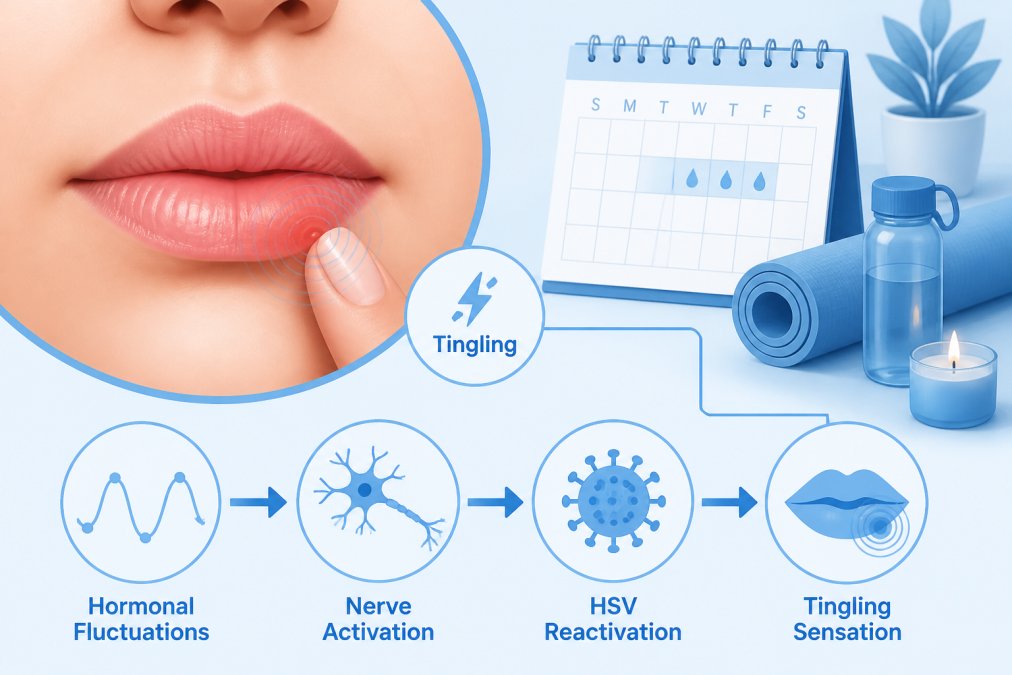
During the luteal phase of your menstrual cycle (the two weeks before your period), estrogen levels drop while progesterone rises. This hormonal shift temporarily reduces your immune system's ability to suppress the latent virus. The prodromal stage, that tingling or itching sensation preceding a visible cold sore, often occurs during this window of reduced immune function.
Progesterone also suppresses certain immune cells, making it harder for your body to keep HSV-1 in check. Research shows that estrogen impacts the production of interferon, a critical antiviral protein your immune system uses to fight viral reactivation. When estrogen dips, interferon production drops, giving the virus an opening. Understanding this biology helps explain why stress management and immune support become critical during high-risk hormonal phases.
How to Prevent Cold Sores During Your Period
Prevention is more effective than treatment, especially when you know your cold sores follow a hormonal pattern. The key is intervening before the prodromal stage.
Track your cycle and identify your vulnerable window. Most people with hormonally triggered cold sores experience outbreaks during the luteal phase, typically 7-10 days before their period. Use a period tracking app to mark when your cold sores appear, then increase preventive measures during that window.
Boost immune support during high-risk phases. During the week before your period, prioritize sleep, hydration, and nutritional support. Increasing vitamin C, zinc, and lysine intake during this window reduces outbreak frequency.
Manage stress proactively. Stress hormones suppress immune function further. Even a 10-minute daily meditation can meaningfully reduce outbreak risk during your vulnerable hormonal window.
Use prophylactic topical treatment. Starting a protective cold sore treatment during your high-risk window, before any symptoms appear, can prevent the outbreak entirely.
Avoid known secondary triggers during this time. If sun exposure, certain foods, or other factors trigger your cold sores, avoid them during your vulnerable hormonal window.
Consider nutritional supplementation. L-lysine supplements taken during your luteal phase may help suppress viral reactivation. Many practitioners recommend 1,000-3,000 mg daily during high-risk periods, though consult a healthcare provider about the right dose for your situation.
How Long Do Hormonal Cold Sores Last and What Speeds Healing
A typical cold sore progresses through several stages: prodromal (tingling), inflammation (redness and swelling), blistering, crusting, and healing. The entire cycle usually takes 7-10 days from first symptoms to complete healing.
The prodromal stage lasts 12-24 hours. This is the critical window for intervention. Starting treatment during this stage, before the blister forms, can significantly shorten the overall duration and reduce severity.
The inflammatory stage (days 2-3) brings visible redness, swelling, and fluid-filled blisters. This is the most contagious and uncomfortable phase.
The crusting stage (days 4-7) is when the blister breaks and a yellowish crust forms. The sore is still contagious but less painful.
The healing stage (days 7-10) sees the crust fall off and skin repair.
What speeds healing? Early intervention is paramount. Starting treatment during the prodromal stage can cut healing time nearly in half compared to waiting until the blister appears. Immune support accelerates healing, adequate sleep, hydration, and nutrition directly impact how quickly your immune system repairs tissue. Keeping the sore clean and protected prevents secondary bacterial infection. Topical antiviral treatment directly addresses the virus replicating in the sore by inhibiting viral replication, which shortens the outbreak duration.
Prescription Antivirals for Cold Sores: When and How They Work
Prescription antiviral medications represent the most evidence-based approach to treating cold sores, especially for people with frequent, severe, or hormonally triggered outbreaks. The two most commonly prescribed are acyclovir and valacyclovir.
Acyclovir is the foundational antiviral medication for HSV-1. It works by inhibiting viral DNA replication. Topical acyclovir is most effective when applied during the prodromal stage and typically shortens an outbreak by 1-2 days. Oral acyclovir is more effective for systemic treatment and is often prescribed for people with frequent outbreaks.
Valacyclovir is an improved version with better absorption and bioavailability. For people with hormonally triggered cold sores, valacyclovir offers two advantages: it can be used for acute treatment (taken at first symptoms) or for prophylactic treatment (taken daily during high-risk hormonal phases to prevent outbreaks entirely).
If you experience cold sores more than twice yearly, if they're severe or long-lasting, or if they're triggered by predictable hormonal patterns, prescription treatment is worth discussing with your healthcare provider. Topical antivirals work best when applied at the first sign of tingling. Oral antivirals are typically taken 2-5 times daily for 5-10 days during an active outbreak, or daily during prophylactic treatment phases. Prescription antivirals don't eliminate the virus, only suppress its replication, but they significantly reduce the duration and severity of outbreaks.
Fast-Acting Treatment for Hormonal Cold Sores
When a cold sore appears, fast-acting treatment focuses on two goals: stopping viral replication and providing symptomatic relief from pain, itching, and tingling.
Topical antiviral creams provide direct action on the sore. Applied every 2-3 hours during the active outbreak, they inhibit viral replication at the site of infection. Best results come from applying during the prodromal stage.
Glycyrrhizic acid (derived from licorice root) has antiviral and anti-inflammatory properties, reducing both viral activity and the inflammatory response that causes swelling and pain.
solutions provide antimicrobial protection and reduce secondary bacterial infection risk.
LipCur Cold Sore Relief is specifically formulated for fast-acting relief of hormonally triggered cold sores. The gentle, soothing formula works within 24 hours to stop outbreaks in their tracks, preventing the uncomfortable itching and tingling that characterizes the prodromal stage. At $24.95, it's positioned as a specialized solution for people frustrated by slower-acting over-the-counter alternatives. The formula repairs and protects your skin while delivering rapid symptom relief when a cold sore appears during your vulnerable hormonal window.
What makes a treatment truly "fast-acting"? It must work during the prodromal stage, before the blister forms. The moment you feel tingling or itching, apply your chosen treatment immediately. Many people find that combining topical treatment with oral antiviral medication accelerates results further.
Managing Cold Sores During Pregnancy and Menopause
Pregnancy and menopause create unique hormonal environments that often trigger cold sore outbreaks.
During pregnancy, estrogen levels rise dramatically and remain elevated throughout all three trimesters. Pregnancy also suppresses certain aspects of immune function to prevent rejection of the fetus, which further increases cold sore risk. If you're pregnant and experiencing cold sores, topical antiviral treatments like acyclovir cream are generally considered safe. Discuss any treatment with your obstetrician before starting. Prevention during pregnancy focuses on immune support: adequate sleep, stress management, and nutritional support become critical. Many pregnant people find that increasing lysine intake and maintaining strong vitamin D and zinc levels reduces outbreak frequency.
During menopause, the dramatic decline in estrogen can paradoxically trigger cold sore outbreaks in some people, while reducing them in others. Some experience increased outbreaks during perimenopause as hormones fluctuate wildly, then see improvement once menopause stabilizes. Tracking when cold sores occur relative to your symptoms can help identify whether hormones are truly the trigger. Hormone replacement therapy (HRT) can influence cold sore frequency. If you're on HRT and experiencing frequent cold sores, discuss whether adjusting your regimen might help.
Conclusion
Cold sores triggered by hormonal fluctuations follow predictable patterns, which means you can take control rather than simply enduring monthly outbreaks. By understanding how estrogen and progesterone affect your immune system's ability to suppress the herpes simplex virus, you can intervene strategically during your vulnerable hormonal windows.
The most effective approach combines prevention during high-risk phases with fast-acting treatment when symptoms first appear. LipCur Cold Sore Relief delivers the rapid symptom relief and antiviral action you need, stopping outbreaks in their tracks and helping you heal within 24 hours. With its gentle, soothing formula that prevents itching and tingling while repairing and protecting your skin, LipCur gives you the confidence to manage hormonal cold sores proactively. Shop Now and experience the difference specialized, fast-acting treatment can make.
Frequently Asked Questions
Do hormones trigger cold sores?
Yes. Hormonal fluctuations, particularly shifts in estrogen and progesterone, can reactivate the herpes simplex virus that lies dormant in nerve tissue. Many people experience cold sores tied to their menstrual cycle, pregnancy, or menopause. The immune system's response to hormonal changes creates the conditions for viral reactivation, making hormonal cold sores a distinct pattern worth tracking and managing proactively.
How to stop hormonal cold sores?
Start treatment at the first sign of tingling or itching, the prodromal stage, before a visible sore forms. Prescription antivirals like acyclovir or valacyclovir work best when taken early. For faster relief of existing sores, use a targeted topical treatment like LipCur Cold Sore Relief, which is designed to stop outbreaks and help healing within 24 hours. Combine medication with stress management, adequate sleep, and tracking your cycle to anticipate outbreaks.
What is the biggest trigger for cold sores?
Stress and hormonal fluctuations are the two most common triggers. Stress weakens immune response and elevates cortisol, while hormonal shifts during menstruation, pregnancy, and menopause can reactivate the latent virus. Other significant triggers include sun exposure, illness, and nutritional deficiencies. For people with hormonal cold sores specifically, cycle tracking and stress-reduction strategies often prevent more outbreaks than any single treatment.
Can hormonal cold sores be prevented entirely?
Complete prevention is difficult because the virus remains in your nerve ganglia for life. However, you can significantly reduce outbreak frequency by identifying your personal triggers, managing stress, maintaining immune health, and using prophylactic treatment during high-risk periods. Prescription antivirals taken daily during your highest-risk cycle days can reduce outbreak rates by 70-80%. Early intervention at the first tingling sensation also stops many sores from becoming visible.
This article was written using GrandRanker