

Table of Contents
- How the Main Cold Sore Prevention Methods Compare
- How to Stop Cold Sores Early: Acting at the Prodromal Stage
- L-Lysine for Cold Sore Prevention: What the Evidence Shows
- Cold Sore Triggers to Avoid: UV, Stress, and Hormonal Shifts
- Daily Habits That Reduce Outbreak Frequency
- The Psychological and Life-Stage Angles Most Guides Skip
- Conclusion: Building a Prevention Plan That Fits Your Triggers
- Frequently Asked Questions
Last Updated: September 20, 2026
How the Main Cold Sore Prevention Methods Compare
Cold sore prevention comes down to three broad approaches: prescription antivirals, topical treatments, and daily lifestyle changes. Each works differently, and most people with recurring outbreaks get the best results by combining at least two. This guide from LipCur breaks down what each method actually does, where it falls short, and how to match a plan to your own triggers. (Source: CDC overview of herpes simplex virus)

Roughly half of adults in the country carry the virus that causes cold sores, according to the CDC overview of herpes simplex virus, yet most never get a prescription until outbreaks become frequent. That gap explains why so many people rely on drugstore creams alone and stay frustrated by slow healing.
The short version: antivirals reduce how often outbreaks happen, topicals shorten the ones you already have, and lifestyle changes remove the triggers that set them off.
| Method | How It Works | Best For | Main Limitation |
|---|---|---|---|
| Prescription antivirals | Suppress viral replication | Frequent or severe outbreaks | Requires a clinician visit |
| Topical treatments | Soothe and speed healing at the site | Early-stage sores | Little effect on recurrence |
| Lifestyle changes | Reduce known triggers | Everyone, alongside other methods | Results take consistency |
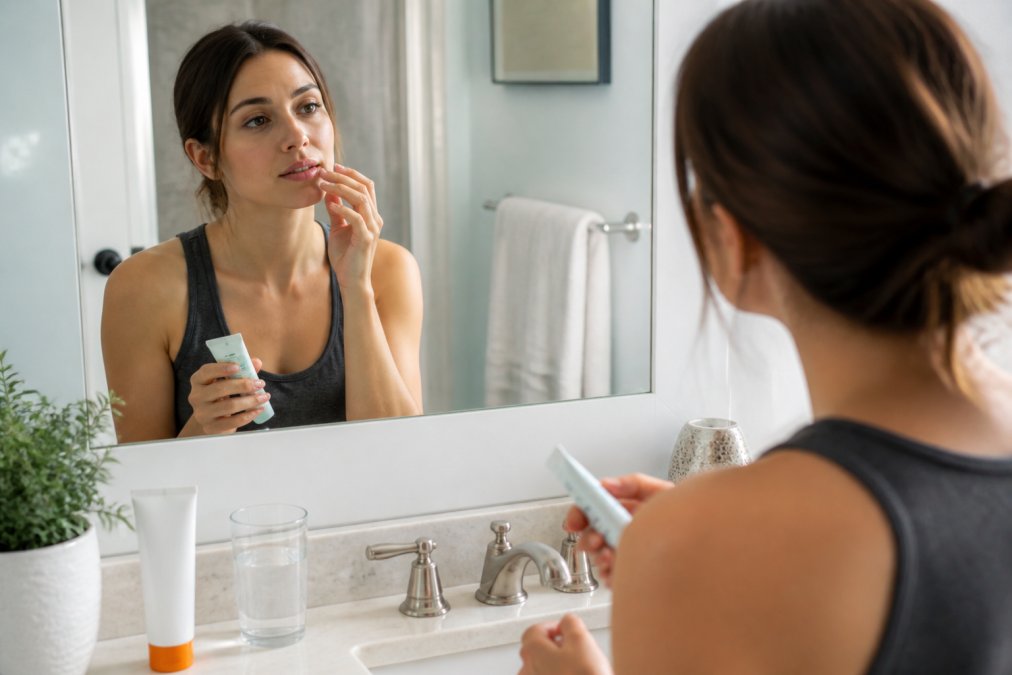
Prescription Antivirals vs. Topical Treatments vs. Lifestyle Changes
Prescription antivirals are oral medications that interfere with how the virus copies itself. Drugs like acyclovir and valacyclovir are the standard antiviral therapy doctors prescribe, and they work systemically rather than at the surface. Taken daily as suppressive therapy, they can meaningfully lower recurrence rates for people who get outbreaks often.
Topical treatments include over-the-counter creams and gels. They target the sore itself, easing pain and supporting the skin barrier. A common mistake is expecting a topical to stop future outbreaks. It won't. Topicals treat what's already there.
Lifestyle changes address outbreak triggers: UV exposure, stress, poor sleep, and illness. These changes rarely work overnight, but they compound. Someone who manages stress and protects their lips from sun may find outbreaks become less frequent over time.
How to Stop Cold Sores Early: Acting at the Prodromal Stage
The prodromal stage is the window before a blister forms, when you feel tingling, itching, or a dull ache around the lip. Acting here is the single most effective way to stop cold sores early. Once a blister appears, you're managing healing rather than preventing a visible sore.
That tingling is your warning. It usually lasts a few hours to a day. What you do in that window shapes how bad the outbreak gets.
Start treatment the moment you feel it. Topical products applied at the first tingle have the best chance of keeping a sore small. LipCur is formulated for exactly this moment, with a gentle, soothing base of castor seed oil, beeswax, and lemon balm extract that repairs and protects skin while it works.
- Apply at the first tingle, not after the blister shows
- Keep the area clean and avoid touching it
- Skip lipstick and shared lip products until it heals
- Use a cold compress to ease discomfort
The American Academy of Dermatology guidance on cold sores notes that early treatment is key to shortening an outbreak, which is why catching the prodromal stage matters more than any single product.
L-Lysine for Cold Sore Prevention: What the Evidence Shows
L-lysine is an amino acid sold as a supplement, and it's one of the most talked-about non-prescription options for cold sore prevention. The theory is straightforward: the virus needs arginine, another amino acid, to replicate, and lysine competes with arginine for absorption. If lysine wins that competition, the theory goes, the virus has less raw material to work with.
The clinical picture is more complicated than the theory. Some smaller studies suggest lysine may reduce recurrence frequency, while others show little to no effect. The pattern across that research is what most guides skip: studies that showed benefit used higher daily amounts, commonly in the range of 1,000 to 3,000 milligrams per day, taken consistently over months, not just when a tingle appears. Casual use, like taking a single tablet at the first sign of an outbreak, is unlikely to do much because the mechanism depends on sustained lysine levels, not a one-time dose.
That dosage detail matters because it reframes lysine as a daily habit rather than an acute treatment.
Cold Sore Triggers to Avoid: UV, Stress, and Hormonal Shifts
Knowing your triggers is the foundation of any prevention plan, but a trigger list alone doesn't prevent anything. What matters is understanding how each trigger reactivates the virus, how controllable it is, and what countermeasure actually works. The three most common triggers differ sharply on all three counts.
| Trigger | How It Reactivates the Virus | Controllability | Strongest Countermeasure |
|---|---|---|---|
| UV radiation | Damages lip tissue and suppresses local immune response at the site | High | Daily broad-spectrum lip balm with SPF 30 or higher |
| Psychological and physical stress | Raises cortisol, which blunts immune surveillance the virus relies on staying dormant | Moderate | Consistent sleep, stress-reduction routine, daily suppressive antiviral if frequent |
| Hormonal shifts | Fluctuations in estrogen and progesterone alter immune response | Low | Track patterns and pre-empt with antivirals around predictable windows |
- Wear a broad-spectrum SPF 30+ lip balm daily, reapplied every two hours outdoors
- Build stress management into your routine, not just your crisis moments
- Track outbreaks alongside your cycle to spot hormonal patterns
- Get consistent sleep to support immune function
- If outbreaks cluster around a predictable trigger, ask a clinician about pre-emptive antiviral use
Daily Habits That Reduce Outbreak Frequency
Daily habits do more for outbreak frequency than any single product. Sleep, diet, and hygiene each play a role, and they reinforce one another. The goal is a routine that keeps your immune system steady and limits opportunities for the virus to reactivate or spread.
Sleep, Diet, and Immune Support
Sleep is when your immune system does much of its repair work. Adults who consistently get seven to nine hours tend to report fewer stress-related outbreaks. Sleep hygiene matters here: a consistent bedtime, a dark room, and limiting screens before bed all help.
Hygiene and Cross-Contamination Prevention
Hygiene protocols limit viral transmission to other people and to other parts of your own body. Cold sores are contagious from the first tingle until the sore fully crusts over.
- Wash hands often, especially after touching your face
- Don't share cups, utensils, towels, or lip products during an outbreak
- Replace your toothbrush after an outbreak heals
- Avoid kissing and close contact while a sore is present
- Keep your hands away from your eyes, since the virus can spread there
The Psychological and Life-Stage Angles Most Guides Skip
Two angles get almost no attention in standard prevention advice: the psychological toll of chronic outbreaks and how prevention needs change across life stages.
Conclusion: Building a Prevention Plan That Fits Your Triggers
No single method prevents every cold sore. The people who get the fewest outbreaks are the ones who combine approaches: antivirals if outbreaks are frequent, a topical at the first tingle, and daily habits that manage their specific triggers.
Frequently Asked Questions
What is the best preventative for cold sores?
There is no single best option for everyone. Prescription antivirals taken daily can reduce outbreak frequency for people with frequent recurrences, while trigger management, sun protection, and targeted topical products like LipCur help many people shorten or avoid outbreaks. The right combination depends on how often you get cold sores and what sets them off. Talk to a healthcare professional about whether suppressive antiviral therapy suits your situation.
Can I take L-lysine every day to prevent cold sores?
Some people take L-lysine daily as part of their prevention routine, and it is generally available without a prescription. Research results are mixed, so it works better for some people than others. If you are considering daily L-lysine for cold sore prevention, check with a healthcare professional first, especially if you take other medications or have kidney concerns. Keep track of your outbreaks so you can tell whether it is actually helping.
How quickly can targeted treatments stop an outbreak before it starts?
Acting at the first tingle or itch gives you the best chance of keeping a cold sore small or stopping it from becoming visible. LipCur is designed to be applied liberally as needed up to five times per day at the first sign of symptoms, and the brand states it helps heal cold sores within 24 hours. One verified buyer reported her sore stayed small and was gone in two days. Results vary by person.
Are there lifestyle changes that reduce the frequency of cold sores?
Yes. Managing stress, getting consistent sleep, using lip balm with sun protection, and avoiding shared items during an outbreak all help reduce recurrence. Cold sore triggers to avoid include prolonged UV exposure, illness, and hormonal shifts. Since outbreaks often follow the same patterns, tracking yours for a few months makes it easier to see which changes actually cut your recurrence rate.
These statements have not been evaluated by the Food and Drug Administration. This product is not intended to diagnose, treat, cure, or prevent any disease. Individual results may vary. Consult a healthcare professional if symptoms persist.