

Table of Contents
- How to Stop a Cold Sore From Spreading Fast: The First 24 Hours
- How to Stop Cold Sores Early Before a Blister Forms
- Cold Sore Transmission Prevention: Stopping the Spread to Others
- How Long Do Cold Sores Last and What Speeds Recovery
- Antiviral Creams and Prescription Medication Options
- Home Comfort Measures and Hygiene During an Outbreak
- When to See a Doctor and What to Avoid
- Conclusion
- Frequently Asked Questions
Last Updated: September 15, 2026
How to Stop a Cold Sore From Spreading Fast: The First 24 Hours
The first 24 hours decide how bad a cold sore gets. Learning how to stop a cold sore from spreading fast comes down to one rule: act at the first tingle, before a blister forms. At LipCur, we built our formula around that window.
Cold sores are caused by the herpes simplex virus, usually HSV-1, which travels along a nerve to the skin's surface and begins replicating. Interrupt it before visible damage, and many outbreaks stay small.
Below, we'll show you how to handle the first day, step by step.
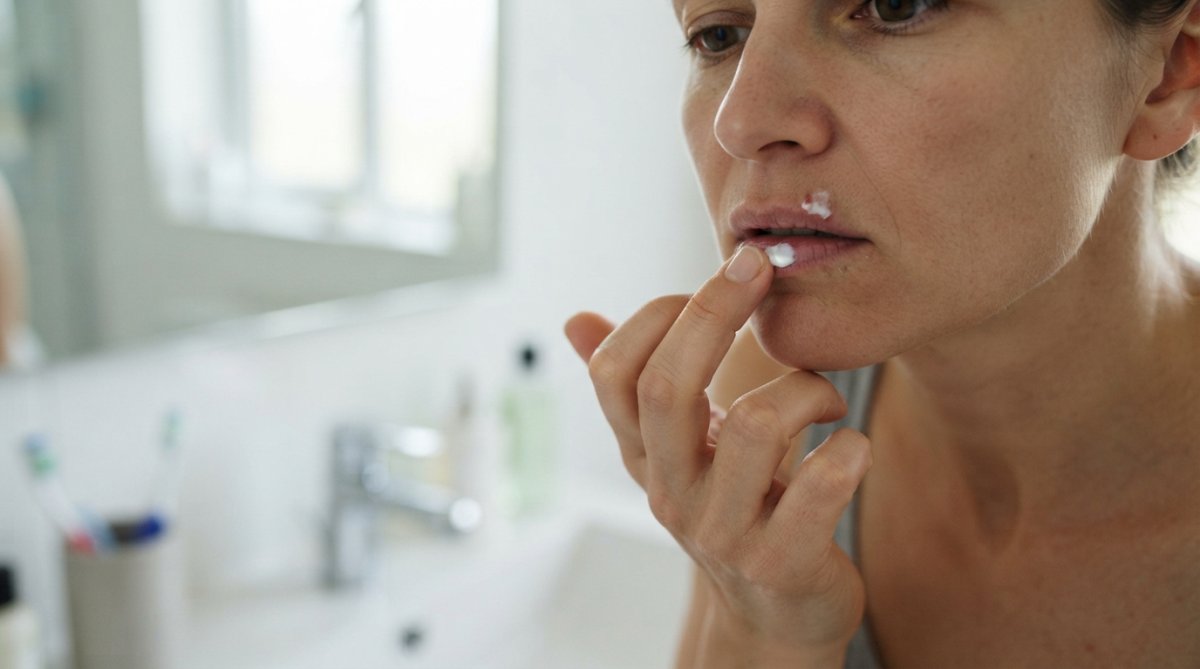
Step 1: Act at the First Tingle
A tingle, itch, or tightness on or around the lip is the prodromal stage, the earliest phase of an outbreak.
Start treatment the moment you feel it. Wash your hands, then apply your antiviral product to the spot and a small margin of skin around it. Do not wait for a blister, by then the virus has spread across a wider patch of skin.
Step 2: Apply a Fast-Acting Treatment Correctly
Application technique matters as much as the product. A common mistake is dabbing once and forgetting it for hours.
- Wash hands before and after every application
- Use a clean cotton swab or freshly washed fingertip, never a shared applicator
- Cover the tingle area plus a small border of clear skin
- Reapply on the schedule your product directs, not just when it itches
- Never dip a used finger back into the container
LipCur is designed for exactly this moment: a gentle, soothing formula that repairs and protects skin while working to stop the outbreak in its tracks.

How to Stop Cold Sores Early Before a Blister Forms
Cold sores can often be stopped early, before a blister forms, if treatment begins during the tingling stage. Once blisters appear, the goal shifts to shortening healing.
The window is short, often only a few hours, so knowing your own warning signs matters more than any single product.
Common early signals to watch for:
- Tingling, itching, or burning around the lip
- A small area of tightness or swelling
- Slight redness with no visible sore yet
- A faint numb feeling on one side of the lip
If you get outbreaks often, track them. Note what you felt in the hours before each one, and you'll recognize your pattern faster than any general advice can teach you.
Cold Sore Transmission Prevention: Stopping the Spread to Others
Cold sores are contagious from the first tingle until the sore has fully crusted over and healed, typically 7 to 12 days (the CDC). The virus spreads through direct skin-to-skin contact with the sore or its fluid, not through the air, so most transmission happens through hands, lips, and shared objects.
The Contagious Window, Stage by Stage
Knowing when you are most infectious helps you direct your caution where it matters.
| Stage | Contagious? | Why |
|---|---|---|
| Tingling (prodromal) | Yes | The virus is already replicating at the skin surface before anything is visible |
| Blister | Highly | Fluid inside the blister is loaded with virus |
| Weeping / open sore | Highly | Fluid is exposed and easily transferred |
| Crusting | Yes | Virus can still be present under and around the crust |
| Fully healed | No | Once new skin has formed, the sore is no longer contagious |
The tingling stage catches people off guard. Nothing is visible, so you touch your lip, then a doorknob, a phone, a child's face, the most common route of household spread.
Hand Washing and Cross-Contamination
Hand washing is the single most effective habit during an outbreak. Wash with soap and warm water for at least 20 seconds after any contact with the sore, after applying treatment, and before touching your face or preparing food (the CDC). If soap is unavailable, an alcohol-based hand sanitizer with at least 60% alcohol is a reasonable stand-in.
Cross-contamination happens through shared objects. The virus can survive on hard, non-porous surfaces for hours and on porous items like cloth for shorter periods. That means:
- Towels, washcloths, and pillowcases: use your own, and change pillowcases every couple of days
- Cups, utensils, and water bottles: keep yours separate until healed
- Phones and earbuds: wipe down with a disinfecting wipe if they touch your face
- Razors: never share, and replace yours after the outbreak
- Toothbrushes: keep separate from household members and replace at the end of the outbreak
Makeup, Lip Balm, and Shared Items
Anything that touches your lips should be treated as contaminated during an outbreak. This is where most people slip, because lip products are reused by habit.
- Set aside lip balm, lipstick, and lip liner until the sore heals, do not just wipe them off and reuse
- Never share lip products, even with family members
- Clean makeup applicators with soap and warm water, or switch to disposable ones
- Avoid kissing, especially infants and anyone with a weakened immune system
- Skip lip waxing, tattoos, or cosmetic procedures near the area until healed
Lip balm and lipstick are the two items people reuse without thinking, and they are a common route for reinfection of a new spot on the same lip. To keep coverage during an outbreak, see the section on covering a cold sore safely below.
Who Is Most at Risk From You
Not everyone faces the same risk. Take extra care around:
- Infants and young children, whose immune systems are still developing
- People undergoing chemotherapy or taking immunosuppressant medication
- Anyone with eczema, whose broken skin gives the virus an easier entry point
- People who have never had a cold sore, since they have no prior antibodies
For most healthy adults with prior exposure, the risk of new infection is lower, but you can still pass the virus to a new site on your own body, which is why self-contamination matters as much as protecting others.
How Long Do Cold Sores Last and What Speeds Recovery
Cold sores typically heal in one to two weeks without treatment. With early antiviral treatment, healing often moves noticeably faster.
Recovery time depends on three things: how early you started treatment, how strong your immune system is, and whether you picked at the sore.
| Stage | Typical Timing | What Speeds It Up |
|---|---|---|
| Tingling (prodromal) | First few hours | Start treatment immediately |
| Blister formation | Day 1-2 | Antiviral cream, hands off |
| Weeping and crusting | Day 3-5 | Gentle cleansing, no picking |
| Healing and scabbing | Day 6-10 | Moisturize, protect from sun |
| Fully healed | Up to 2 weeks | Sunscreen, stress management |
Picking at the crust is the most common mistake. It reopens the skin, invites secondary infection, and resets the healing clock.
Antiviral Creams and Prescription Medication Options
Over-the-counter antiviral creams are the standard first line for most outbreaks.
Home Comfort Measures and Hygiene During an Outbreak
Covering a Cold Sore With Makeup Without Spreading It
A workable approach:
What to avoid:
Post-Outbreak Hygiene Checklist
The Part Most Guides Skip: The Social Side
A few practical notes:
When to See a Doctor and What to Avoid
Things to avoid during an outbreak:
Conclusion
Frequently Asked Questions
Why are my cold sores spreading so much?
Cold sores spread when the herpes simplex virus travels through saliva or direct skin contact. Touching the sore and then touching another area, sharing utensils, or kissing can move the virus. The outbreak itself stays in one spot, but you can pass it to others or to new areas of your own skin. Washing hands often and avoiding touching the sore keeps it from spreading.
What is the ice trick for cold sores?
Wrapping an ice cube in a clean cloth and holding it on the tingling area for a few minutes can ease pain and reduce swelling. It does not kill the virus or stop the outbreak. Some people use a cold compress to calm irritation before applying an antiviral cream. Never place ice directly on bare skin, because it can damage tissue and make the sore worse.
Can I get rid of a cold sore in 24 hours?
Cold sores usually heal in 7 to 10 days, and no product erases them overnight. Starting an antiviral cream at the first tingle can shorten the outbreak and keep the blister smaller. LipCur is designed to help stop outbreaks and support healing within 24 hours when used early, and it comes with a 120-day money-back guarantee if you are not satisfied.
What should I avoid doing when I have a cold sore?
Avoid touching or picking at the blister, sharing cups, utensils, towels, or lip balm, and kissing anyone until the sore has fully crusted over. Skip squeezing or popping the blister, since that pushes fluid onto nearby skin and can cause a secondary infection. Wash your hands after any contact with the sore, and replace your toothbrush once the outbreak clears.