

Table of Contents
- How Long Does Instant Cold Sore Treatment Take to Work?
- The Stages of a Cold Sore and Why Timing Decides Everything
- Valacyclovir Effectiveness Timeline: What Prescription Antivirals Can and Cannot Do
- Best Over the Counter Medicine for Cold Sores: What to Look For
- How to Shorten an Outbreak: OTC and Lifestyle Synergy
- The Social and Emotional Toll of a Slow Healing Cold Sore
- Post-Healing Care: Protecting Skin and Reducing Recurrence
- Frequently Asked Questions
Last Updated: September 24, 2026
How Long Does Instant Cold Sore Treatment Take to Work?
No cold sore product works instantly, despite what the label suggests. Most treatments need consistent use before you see real change, and the biggest factor is how fast you start. This guide from LipCur breaks down the real timeline so you know exactly what to expect.
Here's the honest answer: "instant" means fast action on the virus, not a sore that disappears in an hour. The earlier you catch the tingle, the better your odds of a short outbreak.
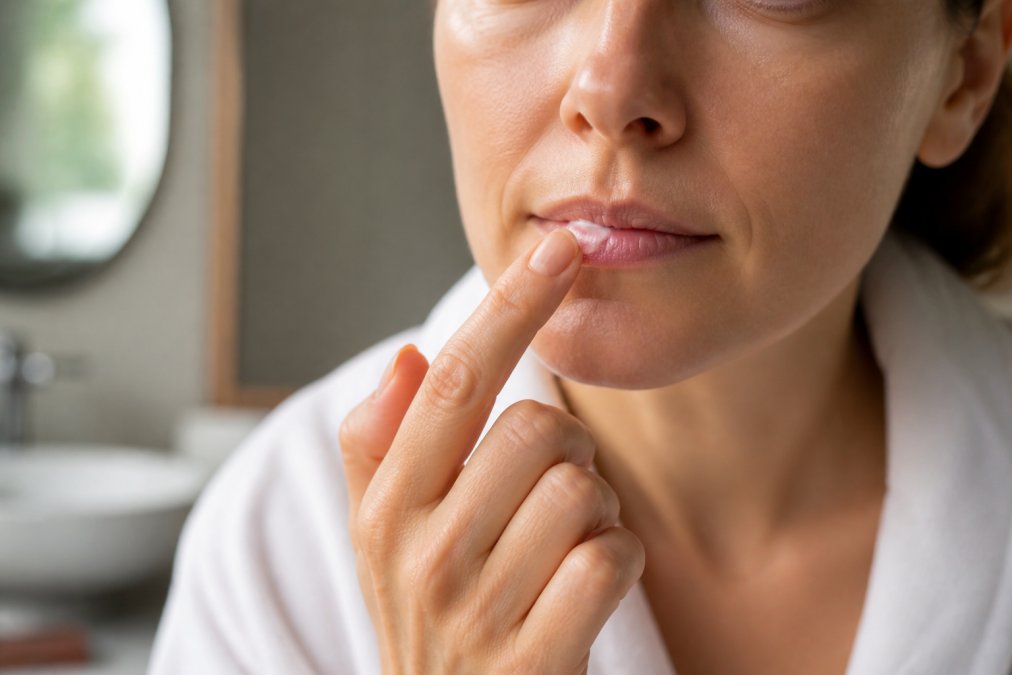
What 'Instant' Really Means for a Cold Sore
Instant cold sore treatment is a product that starts working on contact to calm the area and slow the virus, not one that erases a sore on the spot. The word "instant" describes how quickly the formula gets to work, not how fast the blister vanishes.
A cold sore is caused by the herpes simplex virus. Once it wakes up, the virus copies itself in your skin cells. No cream stops that process in minutes. What a good formula does is ease the tingle, cut redness, and help your skin repair faster.
A Realistic Hour-by-Hour Timeline
Most people want a simple answer, so here it is:
- First hour: The formula soothes the area and eases itching or tingling.
- Hours 2 to 12: Redness and swelling start to calm down.
- Day 1 to 2: The sore stays smaller and heals faster than it would on its own.
- Day 2 to 3: Many users see the sore clear up.
Carrie Clark, a verified LipCur buyer, put it this way: "My sore stayed small and was gone completely in two days. It never got itchy or tingly or anything."
That timeline depends on one thing above all: starting early.
The Stages of a Cold Sore and Why Timing Decides Everything
A cold sore moves through clear stages. Each one gives you a chance to act, and the earlier you do, the shorter the whole thing lasts.
- Tingle phase: itching, burning, or a tight feeling
- Blister phase: a small, raised, fluid-filled bump
- Rupture phase: the blister opens and oozes
- Crusting phase: a scab forms over the sore
- Healing phase: the scab falls off and skin repairs
Tingle Phase: The Window That Matters Most
The tingle phase is your best shot. This is when the virus is active but the sore isn't visible yet. Start treatment here and you have the best chance of keeping the sore small, or stopping it from fully forming.
Blister, Rupture, and Crusting Stages
Once a blister forms, treatment still helps, but it can't undo the stage you're in. The goal shifts to keeping the sore small and speeding up healing.
Valacyclovir Effectiveness Timeline: What Prescription Antivirals Can and Cannot Do
Prescription antivirals like valacyclovir and acyclovir work from the inside. They slow viral replication, which can shorten an outbreak and ease symptoms. But they are not instant either.
A few things to know:
- These are prescription-only, so you need a doctor's visit or telehealth call.
- They work best when started within the first 48 hours of symptoms.
- They help most with frequency and severity for people who get outbreaks often. (Source: clinical studies on antiviral efficacy)
Best Over the Counter Medicine for Cold Sores: What to Look For
The best over the counter medicine for cold sores is the one you can apply the moment you feel a tingle, and that actually does something once it is on. Speed of access matters more than a long ingredient list, because the tingle phase can pass in a few hours.
| Treatment class | How it works | Typical time-to-heal (early use) | Typical time-to-heal (late use) | Access |
|---|---|---|---|---|
| Topical OTC (docosanol, petrolatum-based, or soothing formulas) | Forms a barrier, eases tingle, supports skin repair at the surface | Often 2 to 4 days for mild outbreaks | Little change vs. untreated | No prescription |
| Oral antiviral (acyclovir, valacyclovir) | Slows viral replication system-wide | Can cut healing by about a day when started at the tingle | Benefit drops sharply after 48 hours | Prescription or telehealth |
| Home remedies (ice, lysine, honey, aloe) | Comfort and skin support; evidence is mixed | May ease symptoms; limited effect on duration | Comfort only | No prescription |
| Combination (topical + oral) | Surface relief plus systemic viral suppression | Often the shortest window for people with frequent outbreaks | Still helps, but less | Prescription plus OTC |
A few things to know before you buy:
- Docosanol is the only OTC topical ingredient FDA-approved for cold sores. It works by interfering with the virus's ability to fuse with your skin cells. It is not a cure, and it works best when started at the tingle.
- Petrolatum-based and soothing formulas do not fight the virus directly, but they keep the sore moist, reduce cracking, and make the crusting stage less painful. For mild outbreaks, that is often enough.
- Lysine and other supplements have weak and inconsistent evidence. They are not a substitute for an antiviral if your outbreaks are frequent or severe.
- "Numbing" ingredients like benzocaine or lidocaine ease pain but do nothing for duration. Do not confuse comfort with healing.
- Sun protection on the lips is not a treatment, but it is one of the few things that reliably reduces recurrence for people whose outbreaks are triggered by UV exposure.
When you shop, look for:
- A formula you can apply at the first tingle, up to five times a day as directed
- A soothing base that protects the skin barrier while it works
- Clear directions and a size you can keep in a bag or pocket
- A return policy, since not every formula works for every person
How to Shorten an Outbreak: OTC and Lifestyle Synergy
Topical treatment works better when your body is helping, not fighting you. This is the part most people skip.
Pair your product with a few simple habits:
- Apply at the first tingle, up to five times a day as directed
- Get more sleep, since poor rest weakens your immune response
- Manage stress, a common trigger for outbreaks
- Use lip balm with sun protection outdoors
- Skip sharing cups, towels, or lip products during an outbreak
The Social and Emotional Toll of a Slow Healing Cold Sore
A cold sore is small, but the stress it causes is not. Many people feel self-conscious at work, on dates, or in photos, and that worry can last as long as the sore itself.
Post-Healing Care: Protecting Skin and Reducing Recurrence
Healing doesn't end when the scab falls off. The skin underneath is new and easily irritated, so give it a little care.
- Keep the area moisturized to help skin repair
- Use sun protection on your lips, since sun exposure is a common trigger
- Use daily to prevent future cold sore outbreaks.
- Track your triggers so you can act faster next time
Frequently Asked Questions
Can a cold sore clear up in 2 days with instant treatment?
It can, but only if you start treatment at the first tingle. Cold sores that are caught in the prodromal stage and treated immediately can stay small and resolve in about 2 days. LipCur is designed to stop outbreaks and help you heal within 24 hours when used at the first sign. Individual results vary.
How quickly will a cold sore go away with valacyclovir?
The valacyclovir effectiveness timeline depends on when you start. Clinical guidance suggests taking the first dose within 48 hours of symptom onset. When started in that window, prescription antivirals can shorten healing by about a day and reduce pain. They work by slowing viral replication, not by erasing a sore that has already formed. Talk to a healthcare professional about whether an oral prescription is right for you.
Do over-the-counter treatments actually stop cold sores instantly?
No topical treatment stops a cold sore instantly. What the best over the counter medicine for cold sores can do is reduce how long the outbreak lasts and how severe it gets, especially when applied at the tingle phase. Look for a formula that soothes irritation, supports skin repair, and is gentle enough to apply up to five times a day. LipCur is formulated to stop outbreaks and help you heal within 24 hours.
What is the worst day for a cold sore outbreak?
Days 2 to 4 are usually the worst. The blister is fully formed, it may rupture, and the sore is most visible and uncomfortable. After that, a scab forms and healing accelerates. Starting treatment at the tingle phase, before the blister appears, is the single best way to avoid the worst days entirely. Keep your treatment within reach so you can act the moment you feel itching or tingling.
Cold sores rarely pick a convenient time to show up, and waiting for one to heal on its own can cost you days of confidence. LipCur was made to change that: a fast-acting formula that stops outbreaks, works within 24 hours, and prevents the itching and tingling that signal a sore is coming. With a gentle, soothing blend that repairs and protects your skin, plus a 120-day money-back guarantee, it's a low-risk way to take control. Get started with LipCur and stop letting a cold sore run your week.