

Table of Contents
- The Herpes Simplex Virus: What Causes Cold Sores
- How Cold Sores Spread: Transmission Methods
- Is a Cold Sore Contagious? Understanding the Contagion Period
- How Long Do Cold Sores Last? Stages and Healing Timeline
- How to Prevent Cold Sore Outbreaks: Triggers and Daily Habits
- Treatment Options: Home Care, OTC, and Prescription
- Frequently Asked Questions
Last Updated: September 28, 2026
The Herpes Simplex Virus: What Causes Cold Sores
Cold sores come from the herpes simplex virus, a common viral infection that stays in your body for life. Most cases trace back to HSV-1, which spreads through skin-to-skin contact and settles into nerve cells near your mouth. (Source: Centers for Disease Control and Prevention (CDC) estimates)
The virus never fully leaves. It goes dormant, then wakes up when your immune system dips. That is why the same sore tends to return in the same spot. The World Health Organization's fact sheet on herpes simplex virus estimates billions of people carry HSV-1 worldwide, and most got it in childhood.
At LipCur, we hear the same question constantly: why me, why now, why again? The answer usually comes down to the virus plus a trigger.

HSV-1 vs. HSV-2: Key Differences
HSV-1 is the usual cause of cold sores around the mouth. HSV-2 is the usual cause of genital herpes. But the two can swap places through oral sex.
Both are contagious. Both can stay latent for years. A clinical diagnosis often cannot tell them apart without a test.
How Cold Sores Spread: Transmission Methods
Cold sores spread through direct skin-to-skin contact with an active sore or with saliva that carries the virus. You do not need a visible blister to pass it on.
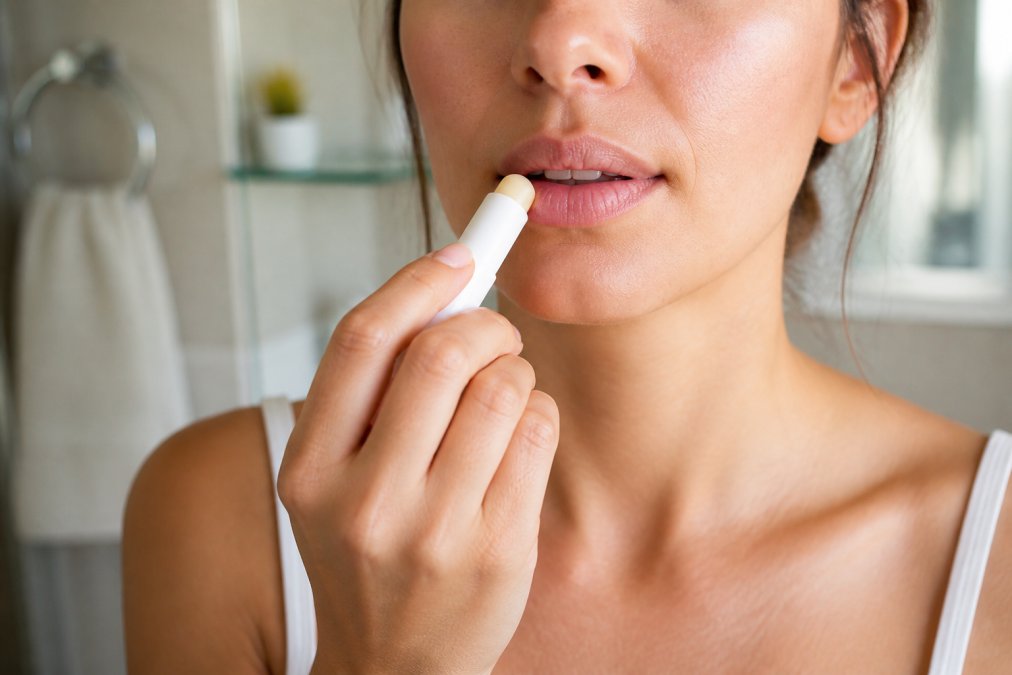
The virus enters through mucous membranes or a break in the skin.
Kissing, Sharing Utensils, and Other Common Routes
Common transmission routes include:
- Kissing someone with an active sore
- Sharing cups, forks, spoons, or straws
- Using the same lip balm, towel, or toothbrush
- Touching a sore, then touching your eyes or genitals
- Oral sex with a partner who has an active sore
A common mistake is assuming the virus only spreads when a blister is visible. It can shed from the skin before a sore appears and after it heals.
The Viral Shedding Window: When You Are Actually Contagious
This is the part most articles skip, and it is the part that matters most. HSV-1 does not only leave your body when a sore is open. It sheds in three distinct windows:
| Window | What Is Happening | Can You Pass It On? |
|---|---|---|
| Prodromal (before the blister) | Virus reactivates in the nerve and travels to the skin surface; tingling or itching may or may not appear | Yes, shedding often starts 12 to 24 hours before any visible sign |
| Active outbreak | Blister, ulcer, and crusting stages; viral load is at its highest | Yes, highest risk of all |
| Post-healing (after the scab falls off) | Skin looks normal again but the virus can still be present for a short time | Yes, for roughly 1 to 2 days after the skin closes |
Why This Changes How You Protect Others
Because shedding starts before you feel anything and continues after the skin looks healed, the safest rule is not "avoid contact when I see a sore." It is "treat the first tingle as day one of a contagious window that runs until a few days after the skin is fully closed."
Practical guardrails during that window:
- Skip kissing, including cheek kisses with babies and young children
- Do not share utensils, straws, water bottles, or lip products
- Use your own towel and wash it in hot water after the outbreak
- Wash your hands after any contact with the mouth area
- Avoid touching your eyes or genitals after touching your face
Is a Cold Sore Contagious? Understanding the Contagion Period
A cold sore is contagious from the first tingle until the sore has fully crusted over and new skin has formed. That window usually runs one to two weeks.
How Long Do Cold Sores Last? Stages and Healing Timeline
Cold sores usually heal in 7 to 10 days, but the timeline has clear stages. Knowing them helps you act at the right moment.
| Stage | What You Notice | Typical Timing |
|---|---|---|
| Prodromal | Tingling, itching, burning | Day 0-1 |
| Blister | Fluid-filled sore forms | Day 1-2 |
| Ulcer | Sore opens, oozes, hurts most | Day 2-4 |
| Crusting | Yellow or brown scab forms | Day 4-9 |
| Healing | Scab falls off, skin repairs | Day 9-12 |
How to Prevent Cold Sore Outbreaks: Triggers and Daily Habits
Preventing cold sore outbreaks starts with knowing your triggers and protecting your immune system. The virus is already there, so your job is keeping it asleep.
Common triggers include:
- Stress and poor sleep
- Fever, colds, or the flu
- UV exposure from sun or tanning beds
- Hormonal changes, like periods or pregnancy
- Dry, cracked lips
- Surgery, illness, or a weakened immune system
The Arginine-to-Lysine Balance: A Dietary Trigger Most People Miss
Beyond stress and sun, one of the most under-discussed outbreak triggers is what is on your plate. HSV-1 needs an amino acid called arginine to replicate. Another amino acid, lysine, competes with arginine for the same pathways in the body. When lysine is high relative to arginine, the virus has a harder time copying itself. When arginine is high relative to lysine, outbreaks tend to come more easily.
- Foods high in arginine (the ones to watch during flare-prone periods): chocolate, cocoa, peanuts, almonds, other nuts and seeds, and gelatin
- Foods high in lysine (the ones to lean on): dairy, eggs, fish, chicken, beef, and legumes like beans and lentils
UV Exposure: The Trigger You Can Block in Seconds
Sun and tanning beds are among the most reliable outbreak triggers because UV light directly reactivates the virus sitting dormant in the nerve. The fix is simple and cheap:
- Use a lip balm with broad-spectrum SPF 30 or higher, and reapply every two hours outdoors
- Wear a wide-brimmed hat when you will be in direct sun for long stretches
- Skip tanning beds entirely if you are outbreak-prone
- Remember that winter sun, high altitude, and even a sunny window seat on a long drive can add up
A Prevention Stack You Can Actually Keep
Rather than chasing one magic habit, stack the ones with the best effort-to-payoff ratio:
- Sleep: aim for a consistent 7 to 9 hours. Sleep debt is one of the most common pre-outbreak patterns people report.
- Stress: build one reliable downshift into your week, a walk, breathing, whatever you will actually do.
- Lips: keep them moisturized and sun-protected year-round. Cracked lips are an open door.
- Hands: wash often, and keep them off your face during any tingle.
- Track: note what preceded your last two or three outbreaks. Your personal trigger is usually hiding in that pattern.
Treatment Options: Home Care, OTC, and Prescription
One verified buyer put it simply:
"GONE IN TWO DAYS! I was skeptical when I got the sample but decided to give it a go. My sore stayed small and was gone completely in two days. It never got itchy or tingly or anything." -- Carrie Clark, Verified Buyer
Frequently Asked Questions
What is the main cause of cold sores?
Cold sores are primarily caused by the herpes simplex virus type 1 (HSV-1). This virus is highly contagious and spreads through direct skin-to-skin contact, such as kissing or sharing eating utensils. Once infected, the virus remains dormant in your body and can reactivate periodically, causing outbreaks. Triggers for reactivation include stress, illness, sun exposure, and hormonal changes. Understanding these causes helps you manage and prevent future cold sores.
Can you get cold sores without kissing?
Yes, you can get cold sores without kissing. HSV-1 can spread through any direct contact with infected saliva or skin, such as sharing utensils, water bottles, towels, or lip balm. It can also be transmitted by touching a cold sore and then touching your own mouth or eyes. Additionally, the virus can spread even when no visible sore is present, through asymptomatic shedding. Practicing good personal hygiene and avoiding sharing personal items can reduce your risk.
How long do cold sores last?
Cold sores typically heal within 7 to 10 days without treatment. The healing process goes through stages: tingling or itching (prodromal stage), blister formation, weeping, crusting, and finally healing. With antiviral medication or a fast-acting treatment like LipCur, which is designed to stop outbreaks and help you heal within 24 hours, the duration may be shortened. Keeping the area clean and avoiding picking at the sore can also promote faster healing.
Is a cold sore contagious?
Yes, cold sores are highly contagious. The virus can spread through direct contact with the sore, saliva, or skin during an active outbreak. It can also spread even when no symptoms are present, a phenomenon known as asymptomatic shedding. The contagion period typically starts from the first sign of tingling until the sore has completely crusted over and healed. To prevent spreading, avoid kissing, sharing utensils, and touching the sore, and wash your hands frequently.
Cold sores are stubborn, and the virus never truly leaves. But you can shorten outbreaks and cut down how often they return with the right habits and fast action. LipCur was built for exactly that moment: a gentle, soothing formula that stops outbreaks, helps you heal within 24 hours, and prevents the itching and tingling that ruin your day. Get started with LipCur and take back control of your next outbreak.